FAUVE Project: Rovensa Next and UTC Collaborate on Innovative Drone Spraying for Water Savings and Agricultural Efficiency

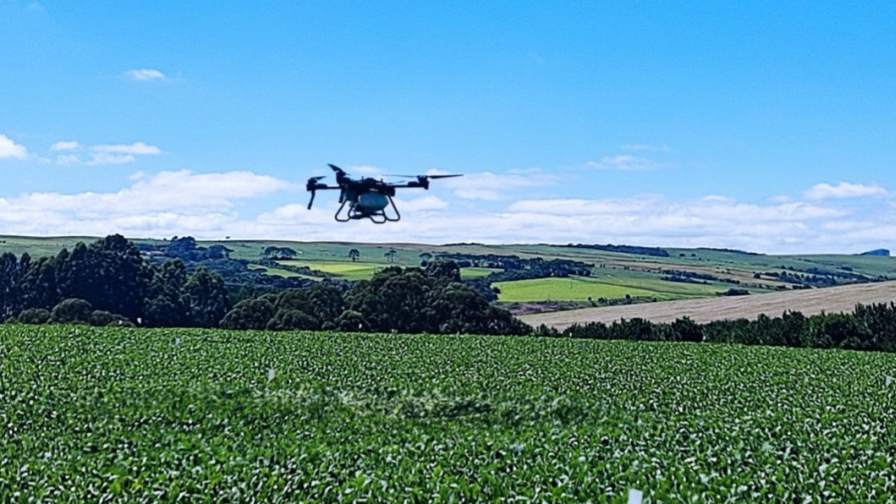
Rovensa Next is driving new lines of innovation in R&D as a key partner in the FAUVE project, led by the Université de Technologie de Compiègne (France). This initiative explores how drones and ultra-low-volume spraying technologies can make crop adjuvant applications more sustainable, efficient, and profitable for farmers.

Rovensa Next is driving new lines of innovation in R&D as a key partner in the FAUVE project, led by the Université de Technologie de Compiègne (France). This initiative explores how drones and ultra-low-volume spraying technologies can make crop adjuvant applications more sustainable, efficient, and profitable for farmers.

Rovensa Next, the global leader in biosolutions for agriculture, is driving new lines of innovation in R&D as a key partner in the FAUVE project, led by the Université de Technologie de Compiègne (France). This initiative explores how drones and ultra-low-volume spraying technologies can make crop adjuvant applications more sustainable, efficient, and profitable for farmers. Early trials are already demonstrating remarkable results in spray precision, including a significant reduction in wind-drift by up to 57% and a decrease of up to 63% in finer droplets during herbicide applications.

The initiative in cooperation with the UTC research team TIMR (Integrated Transformation of Renewable Matter), and funded by the Hauts-de-France Region, which started in January 2024 and will end in July 2026, advances more targeted and effective applications to reduce water use, avoid drift and minimize environmental impact in agriculture with field trials in France and Brazil.

Agricultural drones are already delivering measurable environmental benefits. According to the latest DJI Agriculture Industry Insight Report , the global fleet of 400,000 units has helped save 222 million tons of water and reduce 30.87 million tons of CO₂ emissions. As drone use in farming continues to grow, understanding how ultra-low-volume spraying works and how adjuvants can improve its efficiency and sustainability is increasingly important for farmers adapting to climatic and regulatory pressure.

A FUTURE WITH LESS WATER USE AND FEWER PESTICIDES

Drone spraying innovation connects with Rovensa Next’s 可持续发展优先事项, which focus on improving resource efficiency while maintaining farm performance.

热门文章
2026年行业现状:全球作物保护领导者充满信心地向前迈进

“This project is a great opportunity to continue pushing innovation in two areas that really matter to us at Rovensa Next: using less water and reducing the amount of product required by farmers in their crops. We want to see how these next-generation adjuvants behave, how they spread and cover the leaf, so growers can minimize water use and inputs while maintaining performance. In some cases, even improving it,” says Cédric Ernenwein, Global R&D Product Design Manager at Rovensa Next.

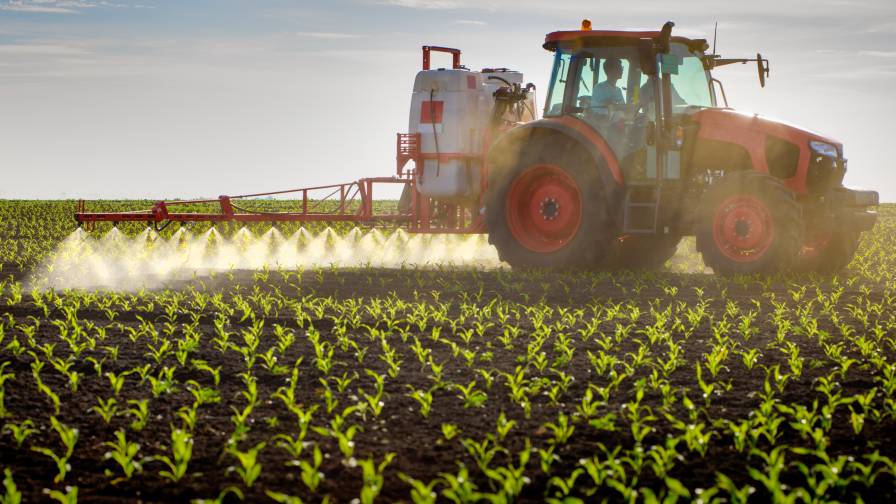
Research parameters include application volume, droplet size, coverage, and spreading, to help understand the efficiency of different active ingredients when sprayed from drones. With this research, Rovensa Next aims to optimize the use of agri-inputs by reducing reliance on chemical fertilizers and pesticides and promoting eco-friendly solutions with a lower environmental impact. These products support integrated and regenerative farming by enabling more efficient application and minimizing runoff.

“We’re already seeing measurable progress in water savings and reducing reliance on conventional chemical inputs through integrated crop strategies tested under real farming conditions, which was a key focus on our Biosolutionize Agriculture campaign,” continues Ernenwein. “Drone spraying applications are proving to be critical in this goal.”

FROM LAB TO FIELD: EARLY RESULTS ACROSS REGIONS

The FAUVE project has progressed through several research phases combining laboratory analysis, controlled testing and early field trials across different crops and regulatory environments.

In France, trials are focused on enabling the authorized use of drones for biocontrol and low-risk substances, particularly in vineyards and banana crops. Early results point to improvements in spray stability and coverage when adjuvants are applied at ultra-low volumes, even with high-load formulations such as copper or sulphur.

In Brazil, trials concentrate on large-scale crops such as soybean and corn. Research activities include fungicide, insecticide and herbicide applications, with a strong emphasis on understanding droplet behavior and minimizing off-target movement. Wind tunnel trials have been used to simulate controlled airflow conditions, allowing researchers to assess drift reduction performance under varying parameters such as nozzle type, pressure and formulation.

A first prototype showed a reduction of finer droplets formed by herbicide SL formulation by 35% to 63% depending on nozzle and pressure, a reduction from 40% to 57% of wind-drift and, at the same time, a 2.5x reduction in foam produced during high-speed blending. These studies have led to the identification of promising adjuvant formulations with improved spray performance.

The next phase of the project will focus on field trials to quantify benefits in terms of deposit, coverage and efficacy, alongside continued compatibility testing across different crop protection products.

In the case of Rovensa Next, the company has developed a solution for the Brazilian market based on natural oil derivatives that acts as an anti-drift, anti-foam, spreading and penetrant helper, with the goal of expanding it globally to other markets. This new development, which has shown positive results at laboratory scale, is now being tested in field conditions and will soon be included in the company’s broad adjuvant portfolio.

One of the most innovative aspects of the research is the focus on Natural Deep Eutectic Solvents (NADES), which are natural, biodegradable liquid mixtures made from plant ingredients. The project studies for the first time how NADES-based adjuvants behave when applied via drones at very low volumes, including whether they maintain spray uniformity, how they interact with plant surfaces or how they may reduce off-target drift. A key aspect is that they improve penetration without the need for surfactants.

The learnings from FAUVE will guide future product development and could open new paths for safer, more efficient and more sustainable crop applications, particularly with the broader goal of studying adjuvant attributes.