


半化学物质在现代综合虫害管理中的前沿作用
Agribusiness stands at a strategic inflection point. For decades, crop protection strategies have leaned heavily on broad-spectrum chemistries that suppress pests by default. Today, tightening regulations, rising resistance, and relentless scrutiny over residues and environmental impact are forcing a fundamental revaluation. The old paradigm of routine, calendar-based spraying is no longer defensible on scientific, regulatory, economic, or commercial grounds.
Into this breach step semiochemicals: nature’s own signalling molecules, repurposed for precision pest management. And in their rising adoption we see not only a technical advance but a shift in how the crop input industry defines value and efficacy.
For companies such as Insect Science®, this shift is not theoretical. It is the foundation of how modern pest management products are developed, validated, and deployed. By working with semiochemicals as biological information carriers rather than blunt control agents, Insect Science focuses on enabling decision-led, species-specific interventions that align with contemporary IPM principles.
Insect Science has formalised this approach under what the company defines as Responsible Pest Management® (RPM): a framework that prioritises data-driven decision-making, biological specificity, and proportional intervention. Rather than defaulting to control for control’s sake, RPM asks whether intervention is necessary, when it is justified, and how it can be achieved with the lowest ecological and regulatory cost. Semiochemicals are central to this philosophy, not as alternatives to IPM, but as tools that make IPM measurable, defensible, and operational in real-world systems.
Rethinking control: from suppression to behaviour
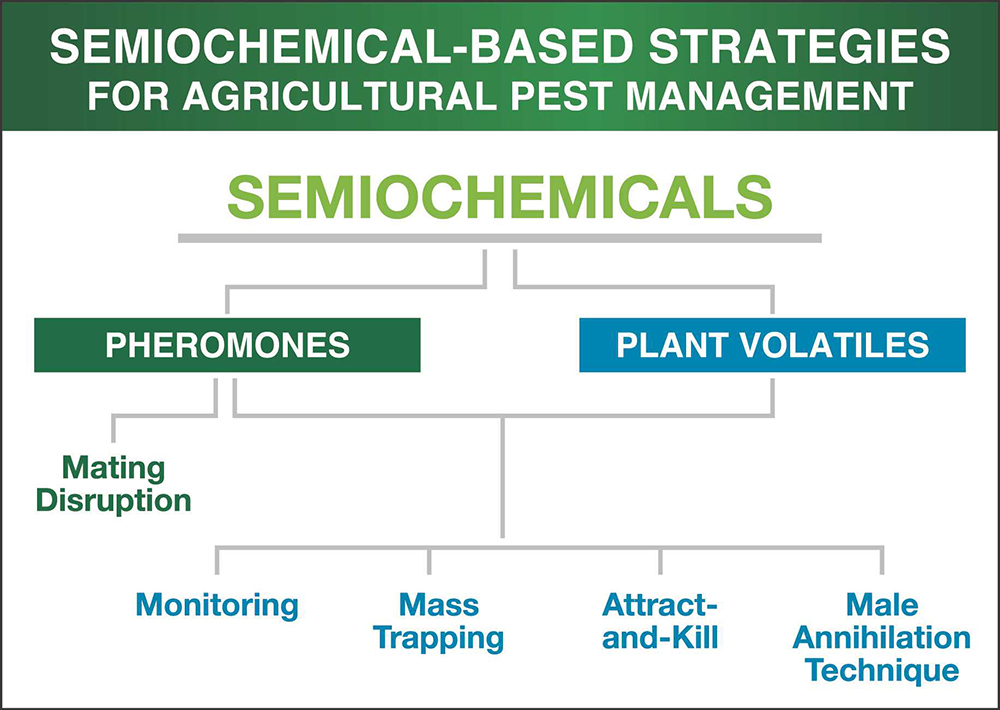
Semiochemicals (pheromones and plant volatiles) are the language through which insects negotiate mating, feeding, and habitat. When deployed strategically, they do more than attract or repel; they provide a behavioural handle on pest populations. This reframing, from chemical spray-based suppression to behavioural modulation, is subtle, but its implications are profound.
In a world where buyers, regulators, and markets increasingly demand traceability and sustainability, precision matters. Semiochemicals permit precisely that. They give growers tools not just to act, but to decide, underpinned by real-time data and species-specific insight.
Insect Science’s approach to semiochemicals centres on this behavioural insight. By supplying rigorously characterised lures and blends designed for specific pests, crops, and environments, the company enables users to move beyond reactive control toward informed, evidence-based management decision.
Precision in practice: strategic applications
Semiochemicals are not abstract curiosities. Their tactical value is already embedded in multiple layers of modern Integrated Pest Management (IPM).
Monitoring that informs
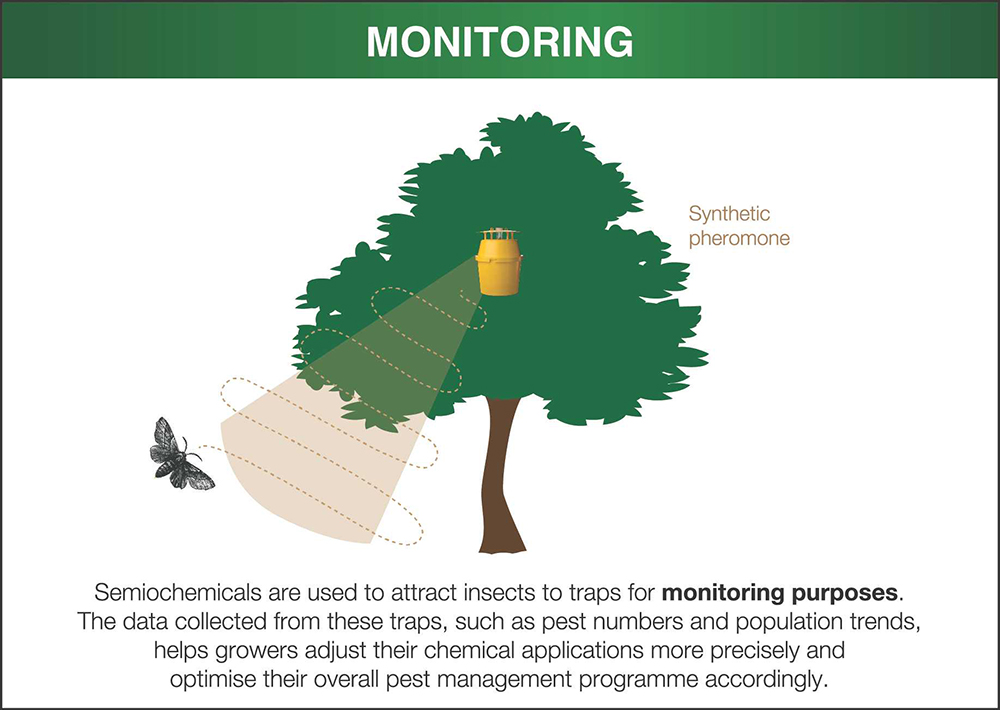
Traditional scouting remains a cornerstone of pest management. It is essential, albeit labour-intensive and limited in scope, providing only a snapshot of pest presence on a single day. Semiochemical-baited traps, by contrast, deliver real-world data on pest abundance, flight activity, and onset of pressure. For agribusiness leaders evaluating product portfolios or deployment strategies, this data returns clarity: when to intervene, and whether intervention is justified. It turns pest control from guesswork into decision science.
This philosophy underpins Insect Science’s monitoring systems, where semiochemical lures are paired with optimised trap designs to generate reliable field data. The emphasis is not merely on catching insects, but on producing actionable intelligence that supports threshold-based intervention and reduces unnecessary inputs.
Mass trapping and population influence
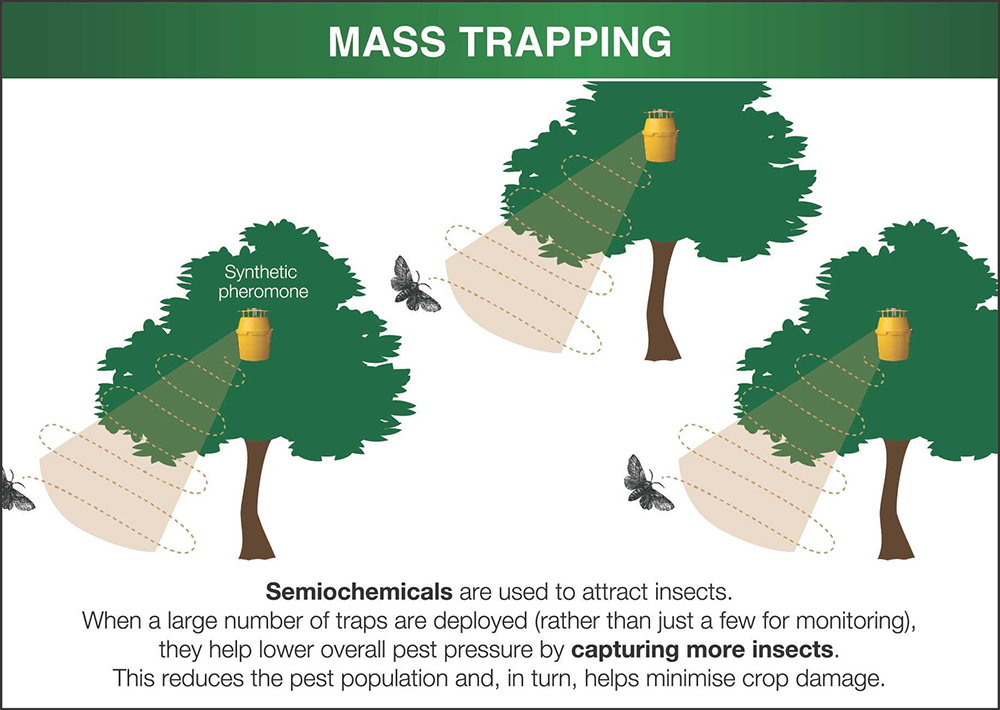
When deployed at scale, attractant-baited traps do more than inform; they reduce reproductive groups and lower infestation pressure. In high-value or export-oriented systems where residues are a liability, this allows tactical suppression without collateral damage.
Hybrid tools: Attract-and-Kill and MAT
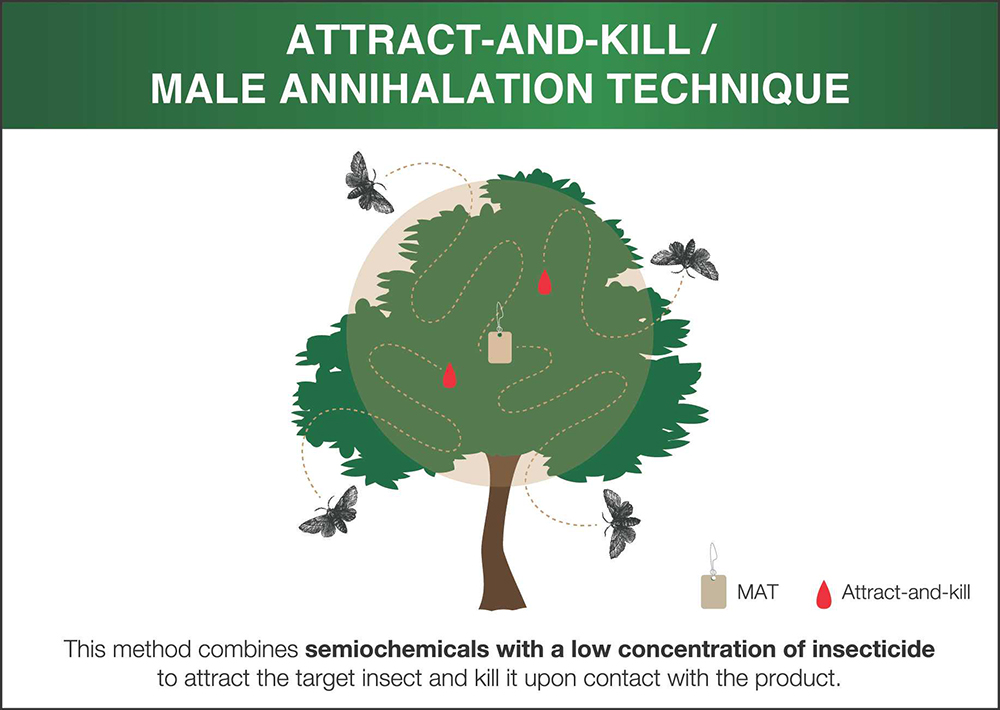
Combining behavioural cues with trace insecticide dosages, as in attract-and-kill and Male Annihilation Techniques (MAT), offers a practical solution where regulation and resistance limit conventional options. These targeted approaches align with RPM principles by reducing overall insecticide load while maintaining effective pest suppression.
Unlike broad-acre spray applications, attract-and-kill systems apply the active ingredient in highly localised points where the pest is drawn to interact with the formulation. Because the treatment is not distributed across the entire crop canopy, the total volume of insecticide introduced into the production system is significantly lower than in conventional broadcast applications.
This localised delivery model offers several advantages, including a reduced overall insecticide load per hectare, minimal off-target deposition and residue drift, lower potential worker exposure compared to full-cover spray applications, and reduced selection pressure across the wider pest population.
By concentrating the active ingredient precisely at the point of pest contact, these systems support residue-sensitive supply chains and are well aligned with modern IPM and sustainability frameworks. Rather than replacing chemistry, they optimise the way chemistry is used by applying small amounts in a behaviourally targeted manner to maximise impact while minimising environmental footprint.
Mating disruption and population dynamics
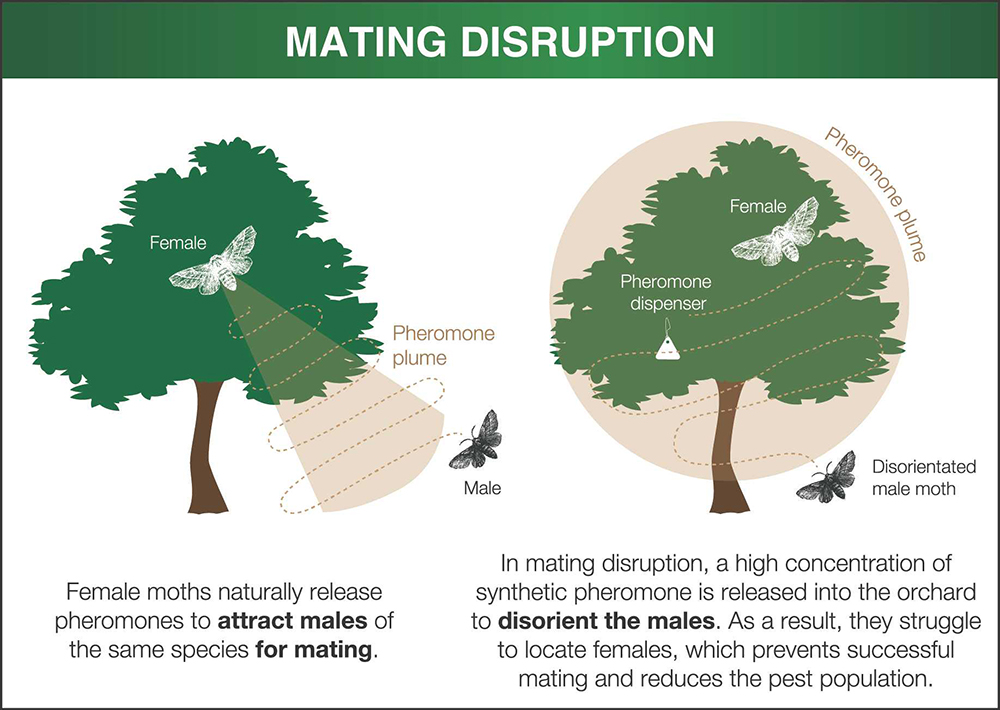
Mating disruption is a proven, scalable approach across multiple pest species. Instead of killing insects directly, it interferes with mating, reducing reproduction over time. Advances in dispenser technology and species-specific blends have made this approach more practical and effective.
Strategic value beyond the field
For agribusiness executives, the case for semiochemicals is not limited to agronomy. It intersects with regulation, market access, risk management, and long-term portfolio positioning.
Regulatory alignment: As authorities tighten limits and re-evaluate conventional chemistries, semiochemicals offer a lower-risk pathway through both compliance and re-registration hurdles. Their non-toxic, residue-free profile fits emerging frameworks aimed at reducing environmental load and protecting non-target organisms.
Sustainability metrics: Environmental, Social and Governance (ESG) imperatives and retailer scorecards increasingly shape buying decisions. Semiochemicals contribute to reduced input intensity and biodiversity-friendly practices not just as a compliance checkbox, but as a differentiator in tender and contract negotiations.
Data-driven product differentiation: The data generated by semiochemical monitoring systems feeds analytics, precision advisories, and digital platforms. For product managers and R&D leaders, this opens avenues for value-added services and subscription models that extend beyond the physical input.
Insect Science views this data layer as an integral extension of the product itself, where semiochemicals support both physical pest management tools and the decision frameworks built around them.
A technology of now, not later
The adoption of semiochemicals should not be viewed as speculative or experimental. The evidence – regulatory, commercial, and agronomic – points to an inflection where behavioural tools support and enhance conventional control measures, rather than compete with them.
For Insect Science, this represents a practical, present-day mandate: to embed semiochemicals into real-world IPM programmes that are scientifically credible, commercially viable, and operationally scalable.
For global agribusiness stakeholders, this is a compelling strategic opportunity: to integrate semiochemicals not as an afterthought, but as a core part of forward-looking IPM strategies that meet the demands of regulators, markets, and growers alike.
In the evolution of modern pest management, semiochemicals are not simply part of tomorrow’s toolkit they are already shaping today’s reality.