Executive Outlook: North America and Southeast Asia — How Two Regions Are Navigating Agricultural Transformation
AgriBusiness Global asked two executives — Brian Naber, President, North America , Bayer Crop Science, and Robert Upton, Business Director, Agricultural Solutions Southeast Asia, BASF — to speak about the opportunities and challenges from North America and Southeast Asia to find out what similarities and differences these regions face.
North America: Balancing Progress with Protection
by Brian Naber, President, North America, Bayer Crop Science
There are two words I use to describe the state of North American agriculture right now: proud and concerned. Here are three trends that support this perspective.
1. Gains in productivity and sustainability
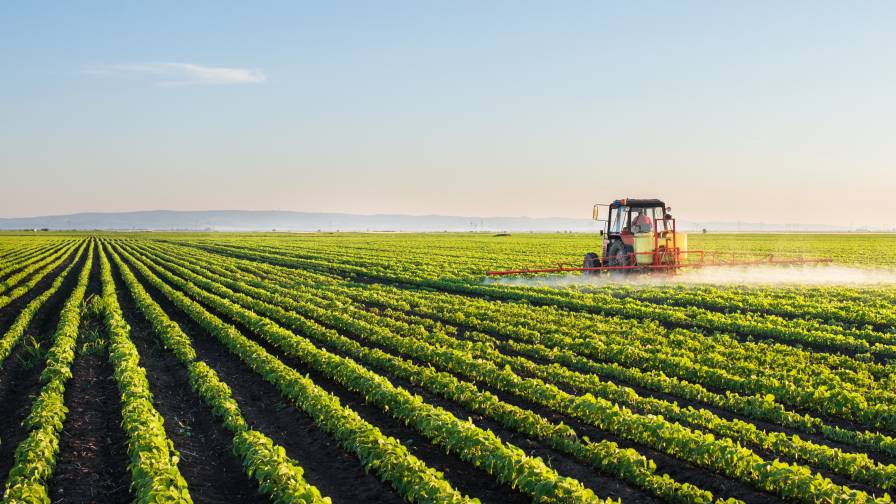
On one hand, the agriculture industry has experienced tremendous progress with huge boosts in productivity and sustainability. Farmers today have access to the newest seeds and traits, advanced crop protection tools, and the latest digital and data science capabilities that were unimaginable a generation ago. These breakthroughs enable higher yields, improved sustainability, and resilience against extreme weather events.
2. Increasing stressors and challenges
Yet, alongside this optimism, there is reason for concern. Farmers face mounting pressures — from climate variability, resource constraints, shifting trade dynamics, and unstable regulatory landscapes — that threaten both profitability and long-term sustainability.

3. The growers’ shrinking toolbox
Legislative uncertainty around critical crop protection tools threatens innovation and could limit farmers’ ability to manage weeds, pests, and diseases effectively. Without clarity and science-based policies, the very tools that underpin productive and sustainable farming practices are at risk.
What Needs to Happen
The path forward requires clarity, collaboration, and commitment.
Agriculture is not just an industry — it’s a cornerstone of national security and economic stability. Farmers need every tool in the toolbox to succeed, including advanced genetics, proven chemistries, and digital solutions. Protecting access to these tools is not just about productivity; it’s about safeguarding food security, supporting rural economies, and achieving shared sustainability goals.
The next decade must be about transformation: leveraging innovation, policy, and collaboration to ensure farmers can produce more with less, profitably and sustainably — even in the face of seasonal volatility. This is a defining moment for the industry. The future of North American agriculture will be defined by how well we balance progress with protection. Policymakers must champion science-based regulations, and industry partners must invest in practical, scalable solutions that help farmers realize the value of innovation on every acre. Together, we can ensure North American agriculture remains resilient, competitive, and capable of feeding, fueling, and clothing a growing world.
Southeast Asia: Driving sustainable agriculture forward
by Robert Upton, Business Director, Agricultural Solutions Southeast Asia, BASF
Over the course of visiting farmers across different Southeast Asia’s nations, it’s clear that agriculture in the region is undergoing a structural transformation, and three big shifts stand out.
1. Climate and sustainability challenges
Rising temperatures, unpredictable rainfall, and new pest pressures are forcing farmers — and companies in agriculture like BASF — to rethink how to make agriculture sustainable for the long term. Governments are tightening regulations and exploring carbon policies, while food value chain players push for traceability and climate-smart sourcing. This means the old model of selling products season by season is giving way to a system-based, outcome-driven approach.
2. Fragmentation and the smallholder reality
Agriculture contributes up to 25% of GDP in some Southeast Asia countries, supported by more than 100 million farmers — many of whom are entrepreneurial smallholders who lack access to knowledge and infrastructure. Today’s market is flooded with low-cost products, often based on outdated active ingredients and lacking effective stewardship measures. Scaling innovations and technology is difficult, but we must find models that respect local diversity while driving efficiency. Stewardship is critical to ensure farmers understand best practices because that’s how we guarantee safe, healthy food for the future.
3. Digital and policy acceleration
Including drone spraying in Vietnam and e-commerce distribution in Indonesia, digital disruption is reshaping how farmers access products and information. At the same time, governments are enforcing stricter registration and environmental safeguards. Agility and compliance are no longer opposites; they’re both essential to navigate the complexities that most farmers can’t solve on their own.
What Needs to Happen
Success in Southeast Asia depends on purposeful diversification — tailoring solutions to local crops, climate, and farmer realities.
While agriculture in Southeast Asia moves from tradition to transformation, what is clear is that the winners will be those who innovate, collaborate, and commit to leaving a legacy of sustainable footprint. For us at BASF, we believe that innovations will enable us to support national food security ambitions across the region while keeping farmers at the center of everything we do.
Get The Newsletter Today!