


Biosolutions strategies are becoming the trusted standard for profitable and sustainable agriculture

Pivotal moment for agriculture
Climate volatility, water scarcity, soil degradation, and increasingly strict residue regulations are reshaping global agriculture. Modern farming is being re‑engineered in real time, and growers urgently need solutions that stabilize yield, protect quality, and maintain profitability without increasing synthetic inputs or compromising environmental goals. In this context, biosolutions have moved from “alternatives” to becoming the trusted, mainstream agronomic strategy, helping growers navigate climate stress while building more resilient production systems.
What are Biosolutions? A comprehensive agronomic strategy. Not just products
Biosolutions are not just products. They are a comprehensive solution, combining biological and natural-based products, innovative technologies, and a series of farming practices to help growers boost profitability while striving for maximum sustainability.
Rovensa Next is leading this transformation. It has the widest science‑backed biosolutions portfolio in the market, including biostimulants, biofertilizers, bionutrition and biocontrol solutions (bioinsecticides, biofungicides, bionematicides), and adjuvants. It provides bespoke crop programs and local expertise in over ninety countries. Every product and every program are tailored to local crops, climates and grower needs, blending global science with local know-how. Through its flagship initiative, Biosolutionize Agriculture, Rovensa Next supports growers with single‑source‑provider strategies, co‑designed with farmers and distributors and validated through extensive trials. These programs help growers adopt clean, sustainable, and profitable agricultural systems, and show them how to integrate biosolutions effectively throughout the crop cycle.
This integrated approach conditions soil, optimizes water and nutrient dynamics, and manages pests and diseases with minimal ecological disruption, resulting in resilient crops, consistent yields, and premium quality produce with reduced dependence on synthetic inputs.
The profitability case: where growers need it most
Managing abiotic stress: securing yield in the face of heat, drought, salinity, and cold
Non‑living factors such as extreme temperatures, drought, salinity, and nutrient imbalance, have become one of the biggest profit risks for agriculture, cutting yields and accelerating soil decline. Rovensa Next’s Biosolutionize Agriculture program provides a structured response to this issue using priming, recovery, and soil‑root strategies.
How the strategy works
- The Primactive effect. Preparation before stress. Phylgreen, a seaweed‑based biostimulant, prepares crops to resist drought, heat and frost, bringing average yield improvements of 12.8%.
- Curactive effect. Support during and after stress. Delfan Plus, a rich in L‑α free amino acid biostimulant and Vegenergy, a plant-based biostimulant, relieve stress and enhance performance, delivering a 9.6% increase in 167 trials.
- Soil-root reinforcement. Unlocking resilience naturally. Produscts such as Rootex and Humistar, a concentrated humic and fulvic acid, improve plants’ capacity to access moisture and minerals under pressure.
Why it matters
Abiotic stress episodes are intensifying. Drought, heat waves, and salinity cause significant yield volatility and increase costs. Biostimulants that improve root development and stress resilience provide a measurable buffer in drought-prone regions, where annual losses can exceed 21% (OECD, 2023). Humistar can recover up to 30–50% of otherwise lost yield in salt-affected areas (FAO, 2021). This positions biosolutions as a practical buffer that reduces risk while improving long‑term soil function.
Soil vitality. Biosolutions strategies that pay off
Soil regeneration programs featuring Wiibio and Humifirst have increased root biomass by 18% and plant‑available phosphorus by 69%, as well as boosting growth in microbial activity and diversity. Stronger soils bring higher nutrient‑use efficiency, more resilient plant growth, and sustained yield improvements across seasons.
Crop quality and pack‑out
Biological fermentation powered by biostimulants such as Biimore achieved an average yield increase of 10.6% across 374 trials, with multiple cases of +20% pack‑out in horticultural crops. Other solutions, including Maxi-Grow Excel, help maintain or improve quality traits under challenging growth conditions while boosting size and overall crop performance.
Containing biotic stress: effective, low‑residue protection with true resistance stewardship
Biotic stress from fungi, bacteria, viruses, insects, and weeds directly erodes crop health, yield stability and ecosystem balance while pushing growers towards greater reliance on synthetic inputs and creating resistance issues. Rovensa Next’s biosolutions are science-driven and focus on restoring soil functionality and plant health. Its portfolio includes products that reduce agrochemical use, enhance plant resilience, and help to restore soil structure and fertility naturally, while also supporting effective resistance management strategies through targeted, sustainable biological approaches.
Proven program outcomes
- Less dependency on synthetic inputs. Integrated programs have achieved up to 20% reductions in this area, while sequences using Prev‑Am® with pyrethrin-based products have cut synthetic insecticide applications by 30–40%.
- Effective pest & disease management. Integrated biocontrol and adjuvant strategies, combining differing modes of action, such as Ospo-Vi55®, Prev-Am®, and/or Tec-Fort® with adjuvants, achieved > 90% knockdown of pests such as whitefly and mites, and reductions of up to 85% in powdery mildew, supporting resistance management.
- Products based on Bacillus subtilis, such as Portento®, Ospo-Vi55®, and Milagrum Plus®, offer targeted control of diseases including downy mildew, powdery mildew, and apple scab. These natural biofungicides contribute to soil and plant health, and are approved for low-residue agricultural systems.
- Plant extracts. Bioinsecticides such as Tec-Fort®, X-Terminator®, and Santem®, formulated with pyrethrins, are widely used in IPM programs given their low-residue profiles and long-term pest control properties. These solutions reduce reliance on synthetic chemicals while maintaining efficacy.
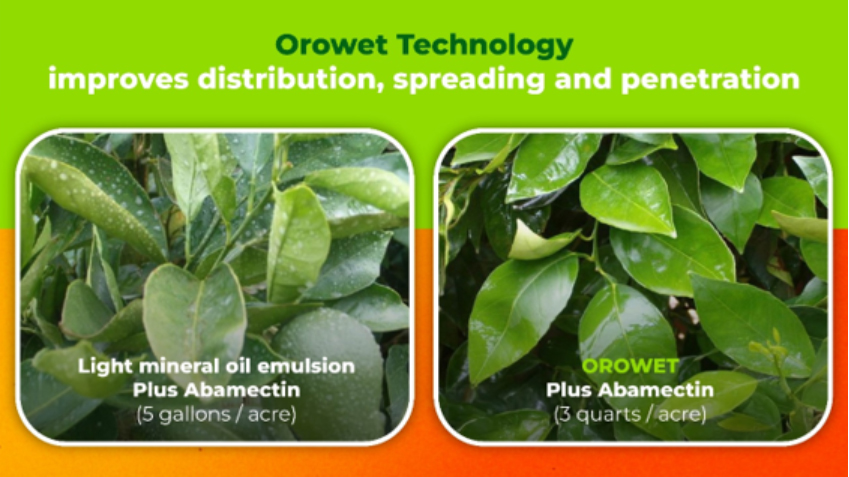
- OROWET® Technology. Orange-oil-based products such as Prev-Am® that combine cold-pressed orange oil with Rovensa Next patented OROWET® Technology. This system uses biodegradable surfactants to encapsulate active ingredients, enhancing their stability, distribution, and absorption. These multi-action bioinsecticides, biofungicides, and bioacaricides provide immediate protection against pests, fungi, and mites, while remaining compatible with beneficial fauna and supporting residue-sensitive agriculture.
Pipeline momentum
New biocontrol products such as Orofusion®, a multifunctional bioinsecticide and biofungicide developed with patented OROWET® Technology, which promotes effective resistance management and reduces sulfur usage per hectare; Palisad®, a dual-action bioinsecticide and biofungicide, and Oronem®, a bionematicide, highlight Rovensa Next’s sustained innovation pipeline, focused on practical, field‑ready, low‑residue solutions for managing biotic stress and enhancing crop resilience across diverse agricultural systems.
Water use efficiency: valuing water means valuing the future
As water scarcity escalates, optimizing water use efficiency (WUE) is critical to profitability and to maintaining a license to operate. Rovensa Next’s Biosolutionize Agriculture programs deliver a broad-ranging portfolio of water‑efficiency biosolutions, from soil conditioners and biostimulants to foliar nutrition and stress‑management tools, enabling growers to capture, retain, and make better use of every drop.
Three levers for higher WUE
- Soil hydrology & storage. Wetting agents and humic substances improve infiltration, promote uniform moisture distribution, enhance aeration, and increase water-holding, reducing losses from runoff, evaporation, and leaching. Transformer and Humifirst are designed to work synergistically: Transformer enhances wettability and distribution, while Humifirst builds root biomass and aggregates to store more plant‑available water.
- Root architecture and uptake. Turbo Root WG and Rootex stimulate root initiation and fine‑root density to increase water and nutrient absorption, particularly at establishment and during critical stages.
- Plant physiology & transpiration. Balanced potassium nutrition (e.g., Amifol K, Final K, Armonika, Final eKo for organic systems in Italy) supports stomatal regulation and efficient transpirational flow, even under low humidity conditions, improving water transport and nutrient mobility.
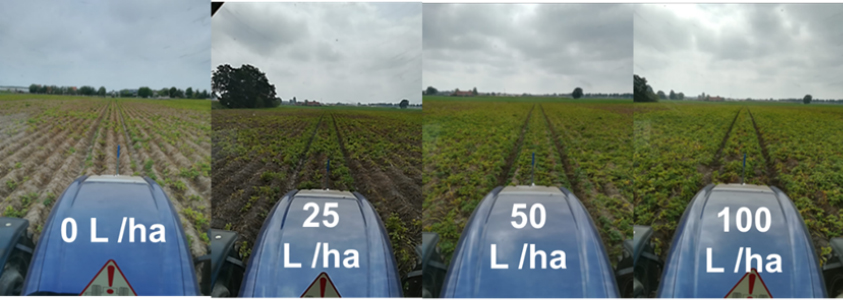
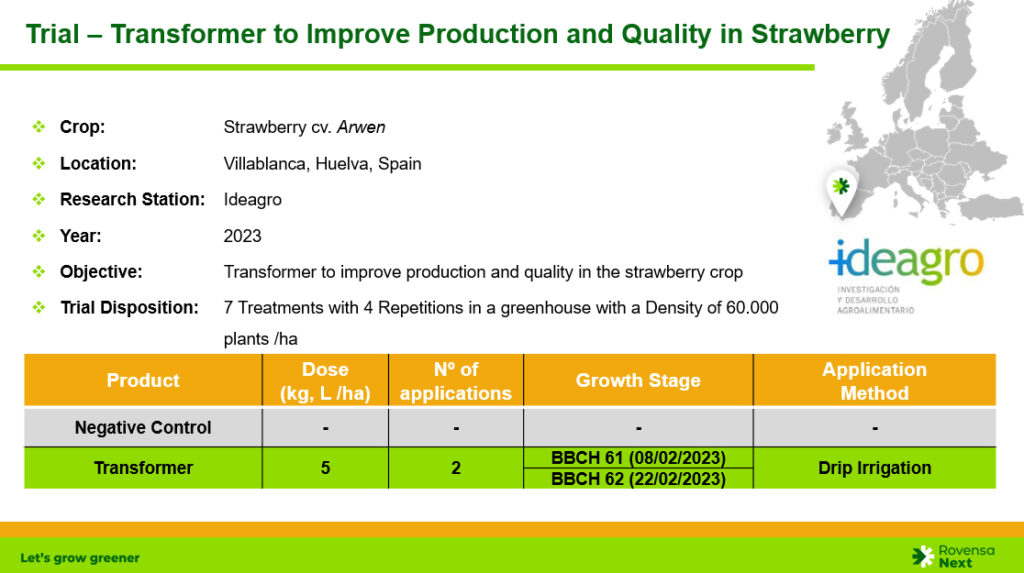
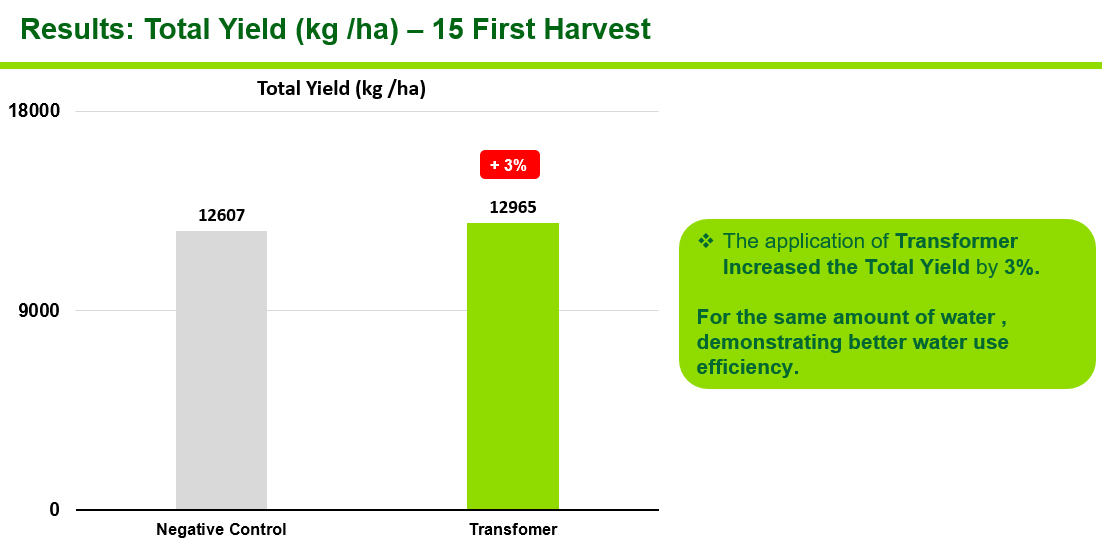
Trial results . Applying Transformer increased total yield by 3%, with the same amount of water, demonstrating better water use efficiency.
Results at a glance
Field programs pairing soil conditioners and biostimulants have demonstrated higher yields with the same or less water, improving WUE and margin protection. Biostimulant priming and curative strategies help crops maintain hydration and recover faster during/after stress events.
Profitability and sustainability are not incompatible
The anchor claim of the Biosolutionize Agriculture campaign is clear: profitability and sustainability can, and must, go together. The evidence is compelling. Integrated biosolution strategies deliver measurable, repeatable results across crops, climates, and production systems.
Biosolutions are no longer optional. They are the trusted, effective pathway to resilience, profitability, and longterm sustainability, helping growers convert stress into strength and ensuring agriculture can thrive in a rapidly changing world.‑term sustainability.