


Veganic’s Germán Guillem Provides Top 3 Tips for Developing Integrated Management
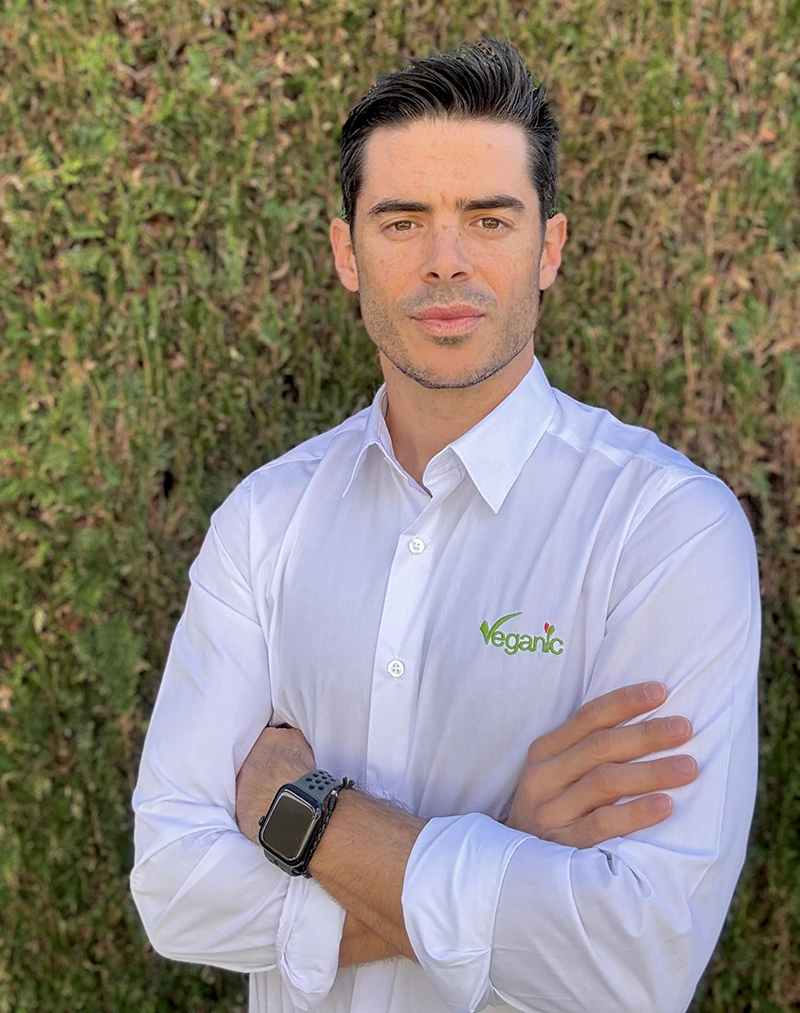
Germán Guillem, Head of North America & Food Care Strategy, at Veganic
Integrated management is becoming more prevalent within the industry. To stay ahead of this trend, Veganic developed Veganic Food Care, an initiative that connects Veganic, growers, and retailers through advanced integrated pest management (IPM) and soil health programs, enabling a significant reduction in synthetic chemical use without compromising productivity or profitability.
Germán Guillem, Head of North America & Food Care Strategy, at Veganic, shares his top three tips for developing an integrated pest management initiative.
1. Build the System Around Measurable Results, Not Just Good Intentions
An effective IPM initiative must go beyond reducing inputs — it must demonstrate efficacy, productivity, and environmental improvement with data.
At Veganic Food Care, we designed complete IPM and soil health protocols that are measured through clear KPIs: pest control efficacy, reduction of synthetic active ingredients, residue levels (MRLs), yield, ROI, microbiome improvement, and environmental impact using the Cornell EIQ model.
For example, in field trials in Almería (Spain), our IPM protocol achieved:
- Same level of control efficacy against pests and diseases
- 10 times fewer residues at harvest
- More than 65% reduction in environmental impact
- 60% reduction in chemical active ingredients
- Productivity and profitability maintained
Sustainability must be scientifically validated and economically viable. Without measurable proof, adoption at scale becomes difficult.
2. Integrate the Entire Value Chain — From Field to Supermarket
True IPM transformation cannot happen in isolation. It requires alignment between producers, technical teams, distributors, and retailers.
Veganic Food Care was designed as a collaborative model connecting:
- Growers implementing IPM protocols in the field
- Technical specialists providing continuous agronomic support
- Distribution partners supplying biocontrol and soil health tools
- Supermarkets seeking lower residues, regulatory compliance, and supply consistency
Retailers increasingly demand transparency, traceability, and reduced chemical residues. By aligning agronomic programs with these expectations from the beginning, we ensure that sustainability objectives translate into commercial security and reduced reputational risk.
An IPM initiative becomes scalable when it solves challenges for both growers and retailers simultaneously.
3. Strengthen Soil and Plant Health as the Foundation of Pest Control
IPM should not focus solely on suppressing pests — it must enhance the biological resilience of the agroecosystem.
Our approach combines:
- Advanced foliar IPM protocols using biocontrol tools, beneficial insects, and carefully selected inputs
- Soil microbiota regeneration strategies using beneficial microorganisms
- Progressive replacement of synthetic chemistry with biological alternatives
When soil microbiology improves and nutrient assimilation (N-P-K and micronutrients) becomes more efficient, crops show greater vigor, stress tolerance, and balanced growth, naturally reducing pest and disease pressure.
IPM is most powerful when it moves from a reactive model to a preventive, regenerative, and systemic approach.
Developing an IPM initiative like Veganic Food Care requires scientific rigor, collaboration across the value chain, and a long-term commitment to measurable sustainability.
The goal is clear: effective pest control, significant reduction of synthetic chemicals, improved food safety, lower environmental impact, while maintaining productivity and farmer profitability.
The future of food must be safer, more transparent, and better for the generations to come.