Three Key Positives For Crop Inputs
 2 September 2011
 It takes a good amount of ingenuity to survive in business today. Stock markets continue to be fickle and volatile. Labor costs are rising. Raw materials are expensive, and commodity prices are expected to join the recent wave of uncertainty. National governments offer their own set of challenges with an ongoing undercurrent of protectionism, heightened environmental scrutiny and taxes, tariffs and fees.
Despite all the challenges, there are a few concrete reasons we can expect growth and prosperity for the sector.
First, at the risk of repeating every other productivity advocate: We must produce more food, feed, fiber and fuel to feed a growing population, especially in emerging economies. The growing middle classes that compose BRIC (Brazil, Russia, India and China) are driving heightened demand for vegetables, which often require more intensification in the fields. This emergence of quantity of crops as well as the quality of produce is unprecedented in scale. BRIC countries constitute almost half of the world’s population, and the upsides for agriculture are boundless.
Additionally, Africa, with a population that is expected to double to 2 million people in the next 30 years, is practically uncharted territory when it comes to agriculture production. The need for better technology on the continent has never been more important, and knowledge must transfer to farmers so unstable governments cannot upset the food supply. The dire famine experienced in the Horn of Africa is a confluence of factors, but farmers would have been able to mitigate some of the effects of the drought with access to the proper technology necessary to optimize their yields, even under the most challenging weather conditions.
Our industry must do a better job advocating production agriculture in emerging economies and the least-developed countries. We must evolve the conversation from the price of a liter of glyphosate to the overarching benefits of chemical weeding. As productivity at the farm level begins to manifest, broader adoption will steamroll throughout communities and regions.
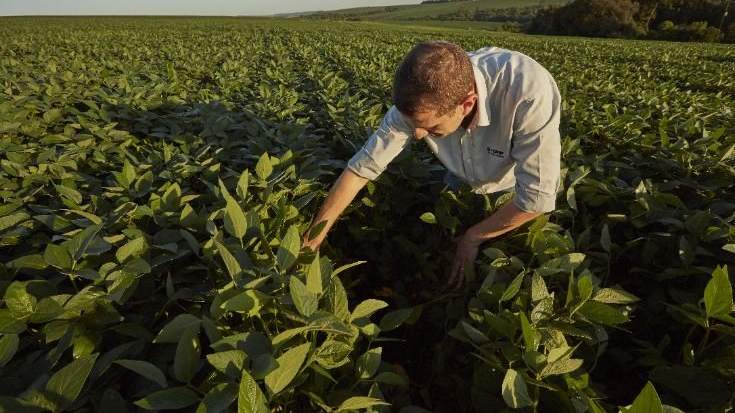




Second, the industry is consolidating. As I write this column from our FCI Trade Summit in Buenos Aires, I continue to hear stories about how operational costs are forcing smaller companies to close their doors. Especially in China, facility requirements, origination licenses and other governmental and commercial influencers are finally starting to weed out low-cost producers. This will be a positive influence on the entire industry, as producers will begin to price their products more closely to their production costs. The downward pricing of crop protection products, especially herbicides, has been a blight on the industry as trade volumes have increased but profitability has declined. Consolidation will allow stronger companies to be more competitive in the global market as well as within their own regions, and pricing will return to more realistic levels.
Third, savvy companies are diversifying their portfolios to insulate themselves from an unexpected price shift in any one sector. Specifically, fungicides have rivaled the global value of insecticides for several years, and their growing adoption can be attributed to growing middle classes that demand higher-quality vegetables. With azoxystrobin falling off patent in the coming years in most markets and the basic R&D companies investing heavily in fungicides, the sector is expected to continue to the benefit of crop protection companies, distributors, retailers, farmers and ultimately consumers.
Global headlines are precarious these days, but there is untold opportunity for well managed companies. And those willing to invest in local partnerships will be poised for market access and long term profitability.
Get The Newsletter Today!