Africa: Regenerative Agriculture Yields Big Wins for Farmers and Climate in Eastern Kenya
A new report by the NGO Farm Africa outlines how smallholder farmers across eastern Kenya are witnessing dramatic transformations in their yields, incomes and resilience to climate change, thanks to Farm Africa’s Strengthening Regenerative Agriculture in Kenya (STRAK) project.
Funded by the IKEA Foundation through AGRA, the STRAK initiative is redefining sustainable farming in Embu and Tharaka Nithi counties. Over 50,000 farmers have been directly supported to adopt regenerative agricultural practices that restore soil health, conserve water and boost profits, all while safeguarding the environment.
“Our farmers are proving that sustainability and profitability are not mutually exclusive,” said Mary Nyale, country director, Farm Africa, Kenya. “They’re growing more food, earning better incomes, and protecting the ecosystems they depend on.”
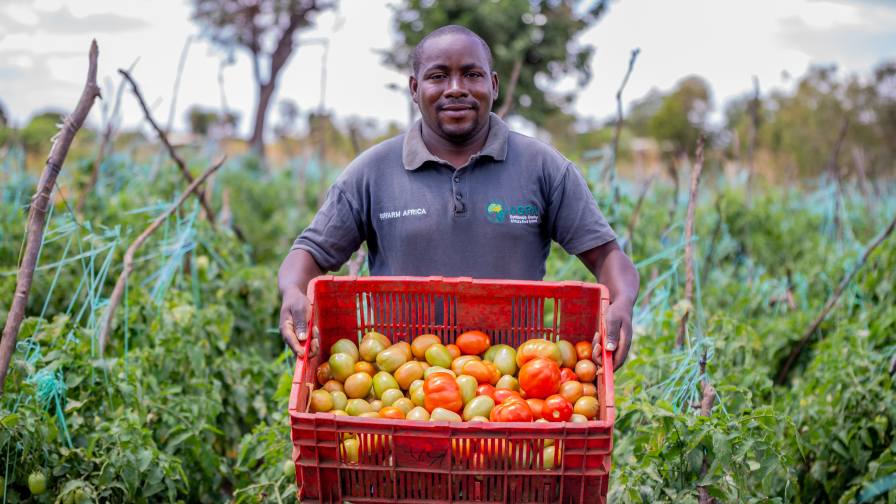
Godfrey Kirimi displays tomatoes from his farm in Tharaka Nithi. Photo credit: Farm Africa / Bertha Lutome
Regenerative techniques such as mulching, manure application and fertilizer microdosing have delivered striking results. In Tharaka Nithi County, farmers practicing regenerative maize farming have achieved a Benefit-Cost Ratio of 5.0, meaning every shilling invested returns five shillings in value. In Embu, similar methods have generated net benefits exceeding Ksh 211,509 per hectare in maize cultivation.


Beyond cereals, diversification into enterprises like beekeeping, indigenous poultry keeping and agroforestry is transforming livelihoods. Mati Mwasia, a beekeeper from Tharaka Nithi, has grown his honey production from 20kg to 50kg per harvest and now mentors over 300 local farmers. Meanwhile, Godfrey Kirimi, a 27-year-old farmer, has doubled his tomato yields and expanded his farm into a thriving six-acre business employing more than 30 people.
Driving Systemic Change
STRAK is not just focused on farm-level impacts. By working hand-in-hand with county governments and local institutions, the project is embedding regenerative agriculture into county development plans and policies paving the way for lasting change.
Already, 76% of farmers in STRAK’s target areas have adopted regenerative practices, driven by local champions known as Village-Based Advisors (VBAs), who provide practical guidance and connect farmers to new markets and resources. As climate change continues to challenge traditional farming, STRAK demonstrates that regenerative agriculture can deliver tangible solutions for both people and the planet.
Farm Africa’s STRAK initiative offers a blueprint for sustainable rural development that could be replicated across other arid and semi-arid regions in Africa and beyond.
Get The Newsletter Today!