


Coronatine: A Next-Generation Plant Growth Regulator for Stress Resilience
Global agriculture is under increasing pressure from climate change. Drought, salinity, and temperature extremes are threatening yield stability across key cropping systems. Farmers are looking for tools that not only boost productivity under ideal conditions, but also help crops withstand stresses when conditions are far from perfect.
Against this backdrop, coronatine has emerged as a promising innovation. Derived from microbial metabolism, coronatine is a functional natural metabolite that acts as a novel plant growth regulator (PGR). It shows strong potential to enhance plant resilience under abiotic stress conditions, making it a valuable complement to existing biostimulants and crop protection tools.
Scientific Basis
Coronatine as a Jasmonate Mimic
Coronatine (COR) is composed of two distinct structural moieties: coronamic acid (CMA), which contains an α-amino acid, and coronafacic acid (CFA), a polyketide-derived component. These two subunits are linked via an amide bond. Recent studies have revealed that the chemical structure of COR resembles that of jasmonates (JA) and can mimic various functions of JA. The biological activity of pure COR is 100 to 10,000 times stronger than that of JA or methyl jasmonate (Me-JA) (Greulich et al., 1995). The effect of COR on plants exhibits a dose-dependent response: it promotes plant growth at low concentrations while inhibiting growth at higher concentrations.
Mechanism of Action of Coronatine
The molecular mechanism involves COR entering plant tissues and inducing the F-box protein CORONATINE INSENSITIVE 1 (COI1) to approach the JAZ complex, leading to ubiquitination of JAZ proteins and subsequent degradation by the 26S proteasome. JAZ is a critical transcriptional repressor that inhibits the expression of downstream JA-responsive genes. When JAZ is degraded, JA-responsive genes are activated (Baker, 2010). Beyond activating JA signal transduction, coronatine also regulates crosstalk among multiple plant signaling pathways, including ethylene and abscisic acid.
Drought and Water Use Efficiency
Low doses of COR improve drought tolerance by boosting antioxidant enzyme activity, increasing proline accumulation, and maintaining photosynthesis (Ceylan, 2023; Zhou et al., 2018). COR also alters root architecture and directly activates maize aquaporin ZmPIP2;5, enhancing water uptake and water-use efficiency under deficit irrigation (He et al., 2023).
Heat and Chilling Tolerance
COR pretreatment stabilizes chloroplast proteins, preserves chlorophyll fluorescence (Fv/Fm), and sustains photosynthesis under heat stress (Zhou et al., 2015). In tomato and cotton, COR enhances chilling tolerance by priming cold-responsive genes and metabolites(Liu et al., 2022; Li et al., 2024).
Salt Stress
COR alleviates salt stress by improving antioxidant activity, osmotic balance, and ion homeostasis. In cotton, treated plants showed higher biomass and lower oxidative damage under NaCl stress (Xie et al., 2015).
Growth Regulation and Crop Architecture
By activating JA signaling, COR reduces excessive shoot elongation and reallocates resources to root growth. This “growth control” effect helps reduce lodging risk and improve water productivity in cereals when applied at low doses and correct timing (Ren et al., 2013).
Field Validation
Field trials in Brazil on major crops such as soybean and maize have shown encouraging outcomes.
Soybeans: Compared to the Blank and local conventional treatments, the Coronatine (COR)-only treatment group exhibited healthier plant growth and significantly enhanced tolerance to both drought and high-temperature stress. The combination of COR and other commercial products increased yield by an average of 4.1 bags/ha (Figure 1). Under water-deficient irrigation conditions, the COR-treated group demonstrated significantly increased canopy cover and plant height compared to both Blank and Competitor, demonstrating its ability to enhance drought tolerance in soybeans under stress conditions.
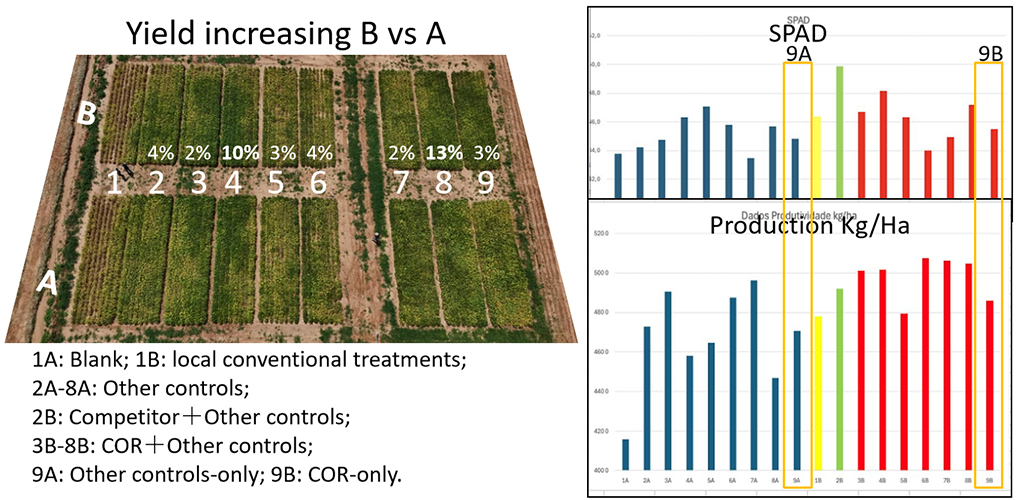
Figure 1 Soybean overall growth pattern, SPAD and yield data Ps:Planting date: 16/12/2024;Local: Juliagro Research Station in Uberlândia – MG
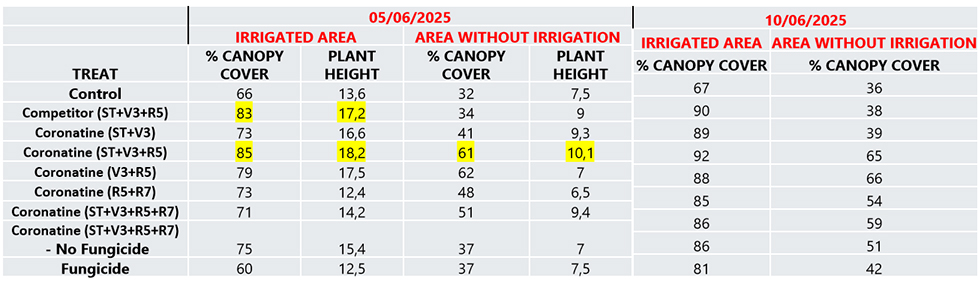
Figure 2 Soybean growth trend under normal irrigation versus water-deficient irrigation Ps: Planting date: 30/04/2025;Local: Juliagro research station in Uberlândia – MG
Maize: Coronatine promoted germination and seedling growth by approximately 1 growth stage compared to control groups, while significantly enhancing abiotic stress tolerance including early-stage flooding resistance and mid-to-late stage drought resilience (Figure 3).
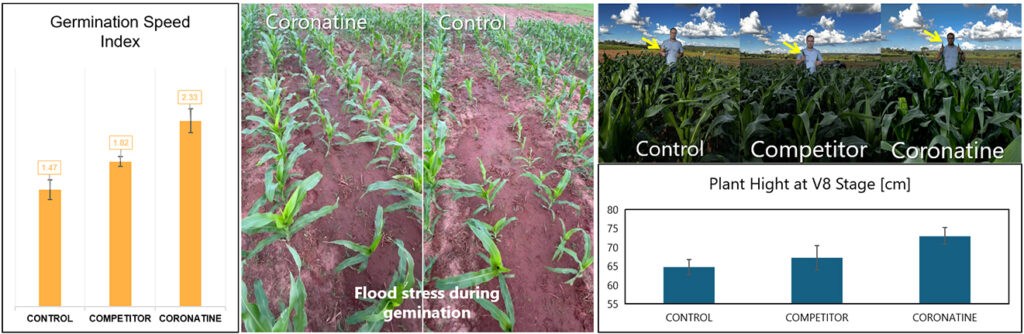
Figure 3 Maize growth trend and plant growth performance after flood stress Ps:Planting date: 05/04/2025;Local: Juliagro Research Station in Uberlândia – MG
While results may vary depending on environment and management, the consistent trend is that crops treated with coronatine are better able to cope with abiotic stresses, ultimately translating into more stable yields.
Differentiation from Existing Tools
Traditional biostimulants such as seaweed extracts or amino acids primarily provide broad nutritional and/or metabolic support. Chemical PGRs, while effective, may come with environmental costs or crop safety concerns.
Coronatine offers a differentiated value proposition:
– Natural origin, precise activity—derived from microbial metabolism but targeted to key plant abiotic stress signaling.
– Mechanistic clarity—with well-documented molecular interactions.
– Sustainability—reduces reliance on chemical inputs and supports low-carbon agriculture.
This places coronatine in a unique position to complement, rather than replace, existing biostimulants and PGR solutions.
Market Relevance
The global market for biologicals continues to grow at double-digit rates, driven by demand for safer and more sustainable inputs. Within this market, abiotic stress management is becoming a strategic frontier. Farmers need tools that protect yield stability under unpredictable climate conditions.
Coronatine addresses this need directly. By helping crops stay resilient, it adds economic value at the farm level while aligning with global sustainability goals.
Outlook and Collaboration
The journey of coronatine is still at an early stage, but the trajectory is clear: it has the potential to become a new standard in plant growth regulation for stress management.
Realizing this vision will require continued collaboration:
– Research: Expanding trials across crops, geographies, and stress scenarios.
– Regulatory frameworks: Working with authorities to establish clear pathways for novel plant-based solutions.
– Industry partnerships: Building alliances to accelerate adoption and ensure farmers have access to proven solutions.
Conclusion
Coronatine represents more than a new molecule—it represents a new paradigm for resilient agriculture. By leveraging functional natural metabolites, we can equip crops to thrive even under adversity.
As agriculture adapts to climate change, coronatine offers growers a science-backed, sustainable tool to safeguard productivity and support the global transition to greener farming systems.
References
Baker C M, Chitrakar R, Obulareddy N, et al. Molecular battles between plant and pathogenic bacteria in the phyllosphere[J]. Brazilian Journal of Medical and Biological Research, 2010, 43: 698-704.
Ceylan H A. CORONATINE: A POTENTIAL PHYTOTOXIN FOR INCREASING THE TOLERANCE OF PLANTS TO DROUGHT STRESS[J]. Eskişehir Teknik Üniversitesi Bilim ve Teknoloji Dergisi-C Yaşam Bilimleri Ve Biyoteknoloji, 2023, 12(2): 85-93.
Greulichi F, Yoshihara T, Ichihara A. Coronatine, a bacterial phytotoxin, acts as a stereospecific analog of jasmonate type signals in tomato cells and potato tissues[J]. Journal of plant physiology, 1995, 147(3-4): 359-366.
He R, Su H, Wang X, et al. Coronatine promotes maize water uptake by directly binding to the aquaporin ZmPIP2; 5 and enhancing its activity[J]. Journal of integrative plant biology, 2023, 65(3): 703-720.
Li J, Lou S, Gong J, et al. Coronatine-treated seedlings increase the tolerance of cotton to low-temperature stress[J]. Plant Physiology and Biochemistry, 2024, 213: 108832.
Liu Z, Li Z, Wu S, et al. Coronatine enhances chilling tolerance of tomato plants by inducing chilling-related epigenetic adaptations and transcriptional reprogramming[J]. International Journal of Molecular Sciences, 2022, 23(17): 10049.
Ren Z, Liu Y, Li L, et al. Deciphering transcriptional mechanisms of maize internodal elongation by regulatory network analysis[J]. Journal of Experimental Botany, 2023, 74(15): 4503-4519.
Xie Z X, Duan L S, Li Z H, et al. Dose-dependent effects of coronatine on cotton seedling growth under salt stress[J]. Journal of plant growth regulation, 2015, 34(3): 651-664.
Zhou Y, Liu Y, Peng C, et al. Coronatine enhances drought tolerance in winter wheat by maintaining high photosynthetic performance[J]. Journal of Plant Physiology, 2018, 228: 59-65.
Zhou Y, Zhang M, Li J, et al. Phytotoxin coronatine enhances heat tolerance via maintaining photosynthetic performance in wheat based on Electrophoresis and TOF-MS analysis[J]. Scientific Reports, 2015, 5(1): 13870.