Building Better Microbials: Jord BioScience CEO on Innovation, Partnerships, and Performance
 23 October 2025
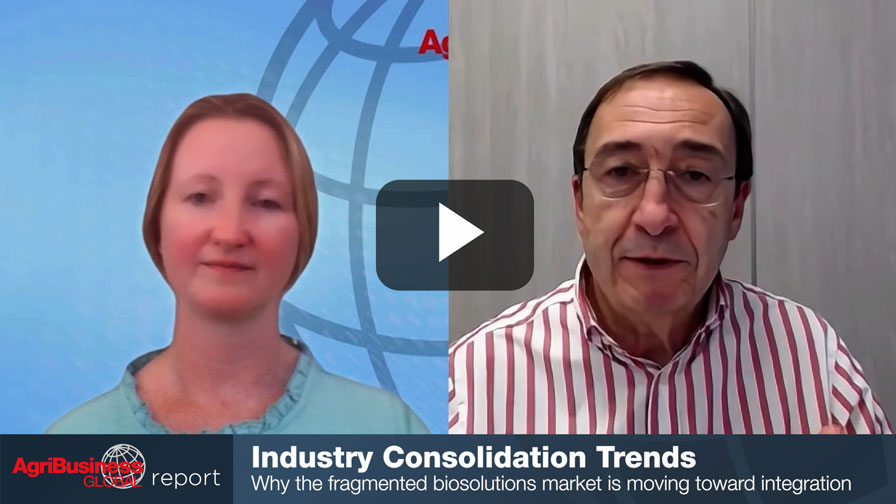
 At an AgriBusiness Global LIVE! event during the 2025 Trade Summit in Orlando, FL, industry leaders gathered to discuss “Global Trends in Plant Health.” The session explored developments in fertilizers, biostimulants, and other plant health products across major agricultural regions. Among the panelists was Dr. Keri Carstens, CEO of Jord BioScience, who shared her perspective on how microbes are transforming the future of crop production and the challenges still ahead for the biologicals industry.
Carstens, who joined Jord BioScience in 2022 after 14 years with Corteva Agriscience, brings a deep scientific background to the field. “My background is in environmental toxicology — I have a master’s and PhD in that field — and I originally joined Corteva to work in pesticide risk assessment,” she explained. “Over time, I had the opportunity to work in the Seed Applied Technologies and Biologicals business, and I fell in love with it.”
Her passion for improving farming practices is both professional and personal. “I grew up on a farm, so this work is deeply personal for me. Bringing better products to farmers is why I wake up every day,” she said.
Building on Decades of Research
Jord BioScience was founded to advance microbial performance in agriculture. The company’s technology is based on more than 30 years of research by Dr. Linda Kinkel at the University of Minnesota, whose work focuses on how microbes interact in soil for the benefit of plants. From this foundation, Jord leverages a proprietary collection of more than 6,500 microbes to create improved microbial products and enhance biological performance across the industry.
“We’re founded on a deep understanding of how microbes communicate and work together for plant benefit,” Carstens said. “We use that knowledge to develop microbial combinations that deliver consistent, reliable performance in the field.”



Beyond a Trend
While the growth of microbial and biological products is accelerating, Carstens stressed that the use of microbes in agriculture is far from a passing fad. “Humans have used microbes as inoculants for centuries, but what’s different today is the precision,” she said. “Scientific advances over the last two decades allow us to use microbes more effectively to solve specific challenges — from crop nutrition to disease and insect control.”
Still, the industry faces hurdles. “Historically, we’ve used a chemistry-based playbook to develop microbial products — identifying a single microbe, formulating around it, and treating it like a synthetic chemical,” she said. “That can work, but it’s not optimized. Microbes are living things, and we need to design formulations that help them survive and thrive.”
Rethinking Storage, Shelf Life, and Stability
Unlike synthetic products, which degrade after application, microbes can actually multiply and extend their benefits throughout the growing season. “We need to flip our thinking,” Carstens said. “With microbes, the right formulation allows them to establish and grow, so instead of degradation, we’re thinking in terms of growth.”
This mindset shift extends to how microbial products are stored and tested. “Some microbes require cold storage; others are more robust,” she noted. “The key is designing with the end in mind — whether the product will be used in a hot Brazilian season or a cool Canadian one. Product design and formulation are still evolving, but many great companies are working to improve that.”
The Power of Partnerships
For companies entering the biologicals space, Carstens emphasized the importance of collaboration.
“It’s rare for one organization to excel at everything — discovery, development, sales, distribution,” she said. “Partnerships are key. Leveraging each other’s strengths is how we’ll succeed as an industry.”
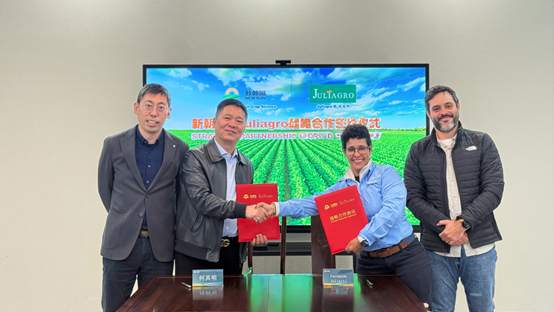
Jord BioScience embraces this philosophy through a partnership-based business model. “If a company has a product nearing the end of its lifecycle, we can help identify how to strengthen or differentiate it,” Carstens said. “We use our microbial collection to find the right microbe or combination to complement their product strategy and then co-develop from early discovery through launch.”
Opportunities and Outlook
Carstens sees continued growth potential in several plant health segments. “We’ve seen great progress in biostimulants, but there’s still room to improve in biocontrol — especially bioinsecticides and biofungicides,” she said. “There’s also a huge opportunity in biofertilizers, particularly given the uncertainty around synthetic fertilizer supplies.”
One of the biggest challenges — and opportunities — lies in improving consistency. “Farmers need products that perform regardless of weather variability,” Carstens explained. “By leveraging better formulation and microbe-to-microbe partnerships, we can achieve more stable, predictable performance across environments.”
Finally, she noted that the future of crop protection will not be a battle between chemistry and biology, but a collaboration. “Farmers need the best tools available, and it’s not a matter of ‘synthetic versus biological,’” Carstens said. “The future is hybrid — using both.”
Get The Newsletter Today!