Navigating Ag Chem Distribution in the U.S.: Independent Retailer Offers Perspective
 23 October 2025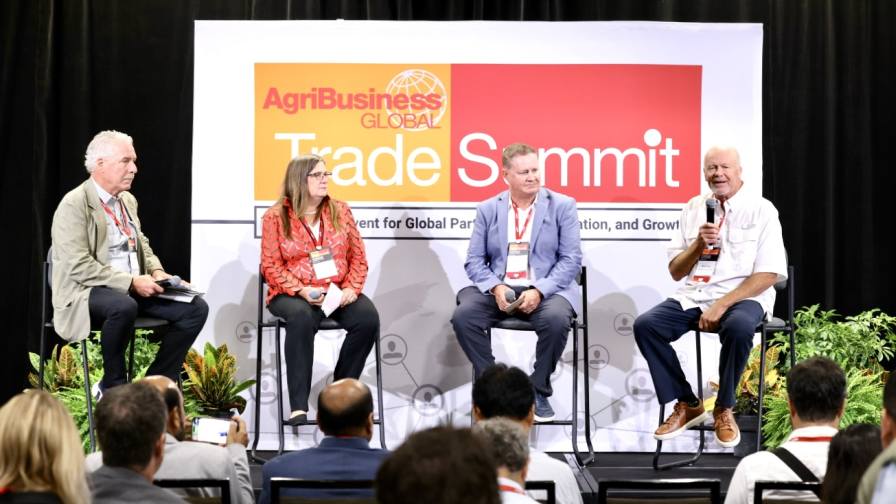
The session “Navigating Ag Chem Distribution in the U.S.” at the 2025 AgriBusiness Global Trade Summit featured panelists (from left) Jeff Pritchard, CEO of Westlink Ag Group; Amy Asmus, Owner and Vice President of Asmus Farm Supply; Casey McDaniel, Vice President at Loveland Products; and moderator Mike Snyder, President of Red Rocket Consulting.
Entering the U.S. ag chemical market requires more than an innovative product — it demands a smart, strategic distribution plan. That was the message behind “Navigating Ag Chem Distribution in the U.S.”, a panel discussion at the 2025 AgriBusiness Global Trade Summit.
The session broke down the first three tiers of U.S. ag chemical distribution and offered practical insights for companies looking to enter or expand within this complex market. Panelists included Jeff Pritchard, CEO of Westlink Ag Group; Casey McDaniel, Vice President at Loveland Products; and Amy Asmus, Owner and Vice President of Asmus Farm Supply, Inc. The session was moderated by Mike Snyder, President of Red Rocket Consulting.
Representing the independent retailer perspective, Amy Asmus shared how her company — a second-generation, family-owned business based in northern Iowa and southern Minnesota — navigates supply relationships, product selection, and risk management in a competitive and ever-changing industry.
“We’re Truly Independent”
Asmus began by describing what makes independents distinct — and sometimes misunderstood — in the U.S. ag retail landscape.


“One thing about independent retailers — we’re truly independent,” she said. “I can tell you what I know and what I think others might do, but really, we’re all individuals. If you’re going to work with this group, you need a segmentation strategy to identify which retailers you’ll be successful with and which ones may not be the right fit.”
Asmus Farm Supply ranks number 50 on the CropLife 100 list — “right in the middle,” she joked, “so I can think of myself as middle of the pack or number one on the bottom half. I choose to be number one.”
The company is now training its third generation of leadership, and while that next generation is “a little scared to death,” Asmus sees that as a good thing: “It keeps them humble and learning.”
The Role of the Wholesaler
In describing her company’s position, Asmus said Asmus Farm Supply operates within the “three-step” distribution system — manufacturer, wholesaler, retailer. While some question the sustainability of that structure, she says it continues to work well for her business.
“Our wholesale partners are an extension of what we do in-house,” Asmus explained. “I run very lean in my business. I don’t have time to vet every product or supplier myself, so I rely heavily on my supply chain partners to evaluate products and select what’s best for our cropping systems and region.”
That reliance makes trust essential. “It takes a lot of time and confidence to review a product, assess the data, and make sure it performs well in tank mixes for our growers. That’s a big lift for small independent retailers like us.”
Quality, Agronomy, and Risk
For Asmus, every decision comes back to agronomy and trust. “We have a great relationship with our growers and we lead with agronomy. All our salespeople are agronomists — we do agronomy sales, not ‘agronomy and sales.’ Each agronomist looks out for the grower’s best interest.”
She doesn’t mince words about risk: “You can do a lot of things to me and I’ll forgive you — but kill one of my growers’ fields, and that’s not one of them.”
That’s why product quality, formulation stability, and real-world performance matter so much. “Most of our growers apply products themselves, not through custom applicators,” she said. “We need products that mix well and stay stable in the tank.”
Practical Considerations: Packaging, Programs, and Branding
While innovation drives the ag chem market, practical details often decide which products make it onto retail shelves. “Packaging matters,” Asmus said. “If one pallet holds 180 gallons but a bulk tank holds 250, I’m going to optimize for space and efficiency.”
She also pointed to the importance of return programs, inventory protection, and credit terms that align with cash flow realities. “Weather, market conditions, and crop plans can change quickly. Having flexibility and a strong relationship with suppliers makes a big difference.”
On branding, Asmus was clear: “We don’t do private labels. They may differentiate you on paper, but it’s usually the same product under a different name. We rely on manufacturer branding and marketing support to help us educate growers.”
Lean but Decisive
Operating lean doesn’t mean operating small. “Lean doesn’t mean weak,” she emphasized. “It means we don’t have the staff to vet hundreds of products ourselves. We depend on our trusted partners — our wholesalers — who act as an extension of our business.”
Being independent also allows for quick decision-making. “My husband, son, and I — along with a few key people — can decide quickly what we’re going to buy and how we’ll support our growers. We don’t have to wait on corporate approvals or board meetings.”
For suppliers seeking to enter the U.S. market, Asmus’s message was simple but strategic: understand the retailer’s structure, respect their time, and build trust that lasts beyond a single sale.
Get The Newsletter Today!