Global Crop Protection at a Crossroads: Stability Returns As Industry Eyes New Growth Drivers
 18 November 2025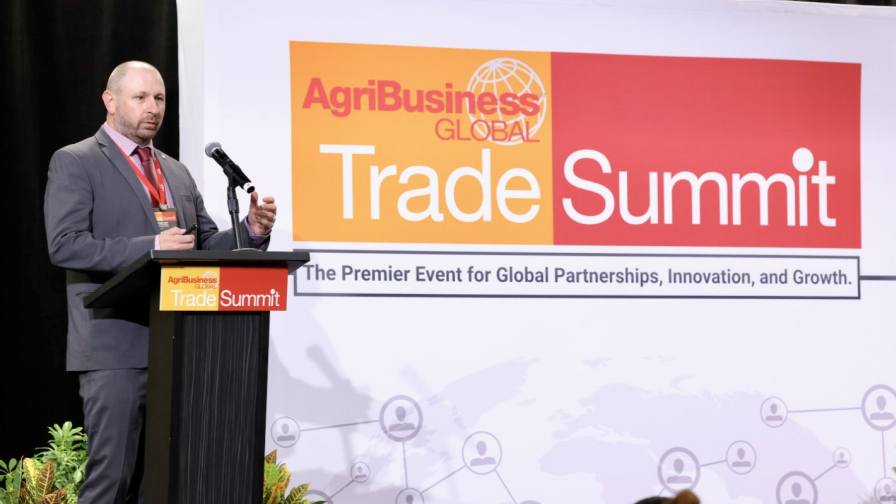
Derek Oliphant, Partner at AgbioInvestor, presented the session “Global Crop Protection: What’s Happening and What’s Next?” at the 2025 AgriBusiness Global Trade Summit in Orlando, Florida, United States.
The global crop protection market stands at a crossroads — pressed by regulatory shifts, evolving technologies, climate uncertainty, and rising demand for sustainable solutions. In the session “Global Crop Protection: What’s Happening and What’s Next?” at the 2025 AgriBusiness Global Trade Summit, Derek Oliphant, Partner at AgbioInvestor, offered a deep analysis of how the market is evolving and where the next phase of growth will emerge.
“The last few years have been some of the most difficult we’ve seen for crop protection,” Oliphant said. “But while the challenges are real — low commodity prices, poor weather, and pricing pressure — we’re now seeing the first signs of recovery.”
From Decline to Stabilization
The global crop protection industry endured steep declines through 2023 and 2024, hit hard by falling commodity prices and a buildup of inventories across multiple regions. “Farmers were earning less from their crops, which naturally meant less to spend on inputs,” Oliphant explained. “At the same time, unfavorable weather conditions in key countries limited product use, and manufacturers struggled to move stock through the channel.”
Now, as 2025 draws to a close, the market appears to be stabilizing. AgbioInvestor estimates a global value decline of only 1.8% in nominal terms for 2025 — far less severe than the nearly 7% drop recorded the previous year. “If we strip out currency effects, the market actually shows slight growth,” Oliphant said. “Recovery is happening — it’s just being masked by exchange rate movements.”



Commodity Prices Steer the Market
Few factors influence crop protection demand more directly than commodity prices. “There’s a very strong correlation between commodity pricing and market performance,” Oliphant noted. “When farmers earn more, they reinvest in their crops — and that lifts the entire industry.”
After peaking in 2022-2023, global commodity prices fell sharply but have since stabilized. Futures suggest steady levels through 2026. “The situation for farmers is now much more stable,” he said. “We’re not expecting the big declines we saw recently, which provides a healthier environment for crop input spending.”
Price Pressures and Regional Differences
Agrochemical prices, another key variable, have seen a dramatic swing. Following pandemic-era supply constraints and high demand, prices peaked in 2022 before dropping below pre-pandemic levels by 2024. “We’ve had lower demand due to weather and high inventories, plus new capacity coming online in China,” Oliphant said. “That combination drove prices down sharply.”
In China, prices are now flat but remain historically low. In contrast, Europe and the United States are stabilizing at higher levels. “In the EU, energy costs following the Russian invasion of Ukraine pushed up production costs,” he said. “Those have now leveled off, but they’re still well above where they were a few years ago.”
Regulation and Innovation: Twin Forces
One of the biggest forces shaping the future of crop protection is regulation — especially in the European Union, where many active ingredients have already been withdrawn and more are expected to follow. “The EU remains a very strict market,” Oliphant explained. “We’ve lost several key pre-emergent herbicides, and more will leave soon. The question is: what replaces them?”
Newer chemistries and alternative technologies are stepping in. Oliphant highlighted Sumitomo Chemical’s oxyfluorfen-based herbicides and several novel compounds under EU review as potential replacements. “Some of these have traditionally been used in fruits and vegetables but could transition into cereals,” he said.
Regulation, however, isn’t just a European story. Emerging markets are tightening oversight as well. “We’re now seeing countries like Brazil and China move toward more EU-style standards,” Oliphant added. “That’s driving a shift toward safer, more advanced technologies globally.”
Resistance and the Rise of Biologicals
Resistance management remains a critical issue — and a major opportunity for innovation. “As older chemistries lose effectiveness, we’re seeing new modes of action and biological solutions fill the gap,” Oliphant said.
Biologicals, while still small in market value (under $2 billion at the manufacturer level), are growing rapidly.
“We expect biopesticides and biostimulants to expand at rates far above the chemical segment,” he predicted. “A lot of this growth is coming from resistance management, improved toxicological profiles, and better efficacy in the field.”
Brazil is emerging as a hotspot for field-crop biologicals, supported by grower demand and technology improvements. “Products now have better shelf life and can perform under open-field conditions,” Oliphant said. “That’s a game-changer for adoption.”
Innovation at a High Price
The cost of bringing a new active ingredient to market has soared — now exceeding $300 million on average. “That level of investment means companies are being far more selective,” Oliphant said. “We’ve seen a slowdown in truly novel molecules entering the market.”
Even so, innovation isn’t standing still. Smaller biotech startups, often spun out from universities or pharma, are increasingly active in crop protection R&D. “They’re using AI and advanced screening technologies to cut development times and costs,” he noted.
Collaboration between startups and major players is accelerating this shift. “We’ve seen Corteva working with AI-driven discovery firm AI Planet, Syngenta teaming up with Enko, and Nufarm partnering with multiple innovation hubs,” Oliphant said. “These partnerships are helping the industry bring new molecules to market faster.”
Looking Toward 2030
So where is the market heading next? Oliphant forecasts slow but steady growth in conventional crop protection — around 2% annually through 2030 — while biologicals will surge ahead.
“The chemical market is mature and faces many headwinds — regulation, reduced application rates, and precision application technologies that lower overall volumes,” he said. “But there’s still potential for growth through innovation and replacement of older products.”
Key drivers for the years ahead include:
- Stable commodity and input prices
- Improved weather and production conditions
- Growth in biologicals and biostimulants
- Technological innovation in formulations and delivery systems
“The global crop protection market is evolving — not disappearing,” Oliphant concluded. “The companies that succeed will be those that adapt to new regulations, embrace innovation, and anticipate where the next wave of demand will come from.”
Get The Newsletter Today!