


Top Three Tips: How CROs and R&D Labs Can Stay Relevant in the Age of Ag Tech
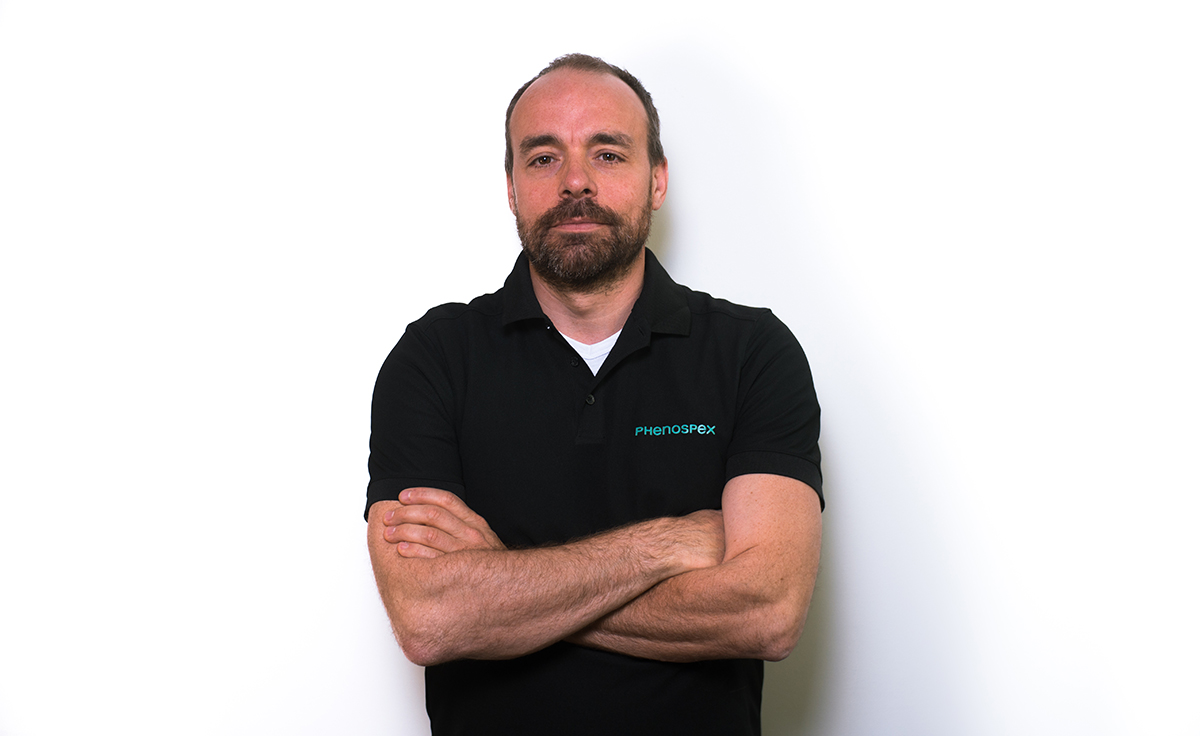
Grégoire Hummel, CEO of Phenospex
Contract Research Organizations and R&D labs face a critical operational challenge with the global shortage of skilled agricultural labor. It is becoming increasingly difficult and expensive to staff interns previously used for manual phenotyping.
AgriBusiness Global talked with Grégoire Hummel, CEO of Phenospex, about the use of ag tech for these research companies to remain competitive and deliver value to clients. Labs must evolve from being simple data collectors into sophisticated data strategists. Here are Hummel’s three tips on how to successfully integrate ag tech for keeping lab services relevant and at the forefront of research.
1. Move from “artisanal” to “industrial” through phenotyping automation
For decades, plant research relied on the “golden eye” of the breeder—a subjective, manual process that is hard to scale and impossible to standardize. That human factor introduces three problems:
- Limited throughput: You can only assess as many plants as your team can physically touch.
- High variability: Two technicians rarely score a plant the exact same way, especially under time pressure.
- Slow feedback: Data often arrives hours or days after measurements, delaying decisions.
To stay relevant, labs must increase throughput by automating their phenotyping operations.
Automation does more than just speed up the process; it decouples your data quality from the variability of the human workforce. Reducing the human factor is not about replacing people. It is about freeing your scientists from repetitive scoring so they can focus on designing smarter trials, interpreting complex data, and engaging with sponsors.
Labs that continue relying on fully manual phenotyping will increasingly struggle to match the speed and consistency of those that automate. Whether it is Monday morning or Friday afternoon, an automated sensor captures data with the exact same precision.
This standardization is critical for multinational operations, allowing you to compare trial results across different facilities and timeframes with total confidence. By removing the human error variable, you transform phenotyping from an artisanal craft into a reproducible industrial process.
2. Base your decisions on objective, reproducible data—not gut feeling
In the race to market, the most expensive mistake a company can make is funding a product that is destined to be unsuccessful, simply because early trial data was ambiguous.
R&D leaders must prioritize objective, digital data as their foundation to de-risk their pipeline.
In practice, this means treating data quality as a strategic asset, not a technical detail. Unlike subjective visual scores, which are prone to bias and uncertainty, sensor-based data provides mathematical certainty. This allows labs to make confident “No-Go” decisions earlier. If a candidate does not perform, objective data gives you the evidence to stop the project immediately and reallocate resources to better candidates.
Conversely, digital sensors can detect invisible success indicators (like spectral changes), ensuring you don’t accidentally discard a winning formulation. High-quality data enables you to back the winners and filter out the rest with speed and confidence. CROs and labs that can say to their clients that go/no-go decisions are based on objective, reproducible evidence, not opinion, will be the ones that win long-term partnerships.
3. Eliminate work gaps with continuous monitoring
Biology does not adhere to a 9-to-5 work schedule. Plants are dynamic organisms, and their responses to treatments—especially biostimulants or stress-relief formulations—are often transient.
Most research programs still rely on a series of snapshot measurements: maybe once a week, or on key days defined in the protocol. Technicians walk through the trial, record scores, and move on. It’s a practical compromise—but it comes with a hidden cost.
You only see what happens at the exact moments you measure. If a key effect appears on a Saturday, or in a narrow window between two manual assessments, you might never see it. The trial will be recorded as “no effect” or “unclear,” and a potentially valuable product could be misjudged.
To stay relevant, labs must adopt continuous monitoring technologies. By scanning plants 24/7, you capture the full experience of plant growth rather than just a few static snapshots. You can quantify when the effect starts, how quickly it grows, and whether it is stable, transient, or delayed. This ensures you capture the peak efficacy of your treatments and provide a richer dataset that proves the true value of the product to your clients.
For additional insights or tips, contact Phenospex at [email protected].