ABIM Offers Diverse Event for Doing Business in EU
 10 October 2025
 AgriBusiness Global recently talked with Jennifer Lewis, Executive Director for the International Biocontrol Manufacturers Association (IBMA) about the regulatory changes happening in the European Union (EU) and what EU farmers are needing for success.
Lewis also discusses the upcoming IBMA and the Research Institute of Organic Agriculture (FIBL)’s Annual Biocontrol Industry Meeting (ABIM) at the Congress Center in Basel, Switzerland on 20-22 October 2025. Online registration is still available until 15 October, after that date, attendees will need to register at the entrance.
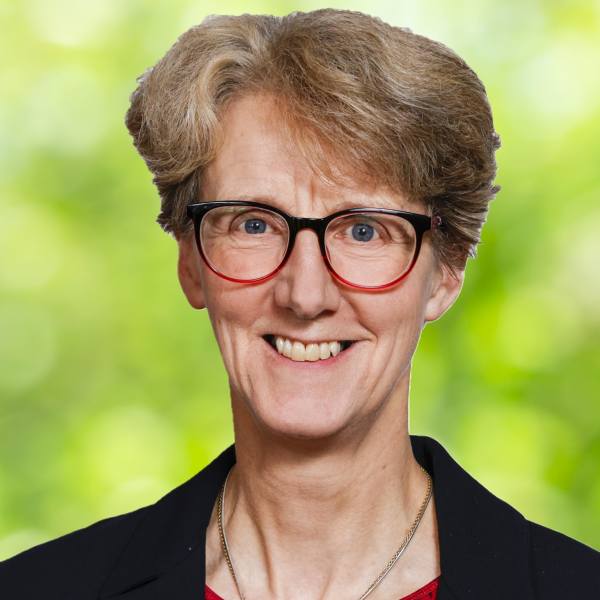
Jennifer Lewis
ABG: What regulatory changes is IBMA advocating for 2025-26?
Jennifer Lewis: It’s a very exciting moment in the EU. The Vision for Agriculture was launched by the EU Commission in February 2025. This commits to a legislative proposal in 2025 to accelerate the access to biopesticides. This is wonderful because IBMA have been asking for this for 30 years and now we have political commitment in Europe.



According to the commission’s timelines and written timelines, we are expecting a simplification procedure, which is an omnibus legislation that will amend different pieces of legislation around a theme. The current theme is food and feed safety.
One of those pieces of legislation that will have targeted amendments in the omnibus is EU Regulation 1107/2009, which is the authorization regulation for biocontrol and all pesticides. EU Commission is expected to include a definition of biocontrol and propose a provisional authorization procedure for biocontrol.
IBMA is also asking for redefined requirements for re-registration. Currently, there is an automatic 10-year procedure where companies have to resubmit their dossier for evaluation. This is taking a large number of resources from industry and competent authorities, often with no change in the safety evaluation. From a safety standpoint, there is a clause in 1107/2009 to ensure competent authorities can demand reviews at any time if they wish.
And finally, IBMA is asking that label extension should be facilitated for biocontrol.
Those are the three fundamental areas: provisional authorization, reregistration shouldn’t be systematically needed for biocontrol, and facilitating label extension to make it more appropriate, reflecting the mode of action for biocontrol. These measures are very important for scaling up of biocontrol in Europe.
One other area is mutual recognition. Currently, mutual recognition is within the regulation, but it’s not implemented properly as different member states interpret it in different ways.
If we had a proper single market approach to mutual recognition, then we could automatically have a product in 27 member states as soon as it was approved in one member state. That would move products forward much more quickly.
ABG: Will regulations be a focus at the ABIM Conference this year?
JL: We have an exciting program. The focus is farmers and innovation. We have sessions on regulations as well and interesting discussion on how peptides should be regulated. The focus is on showing how things work and the progress we are making.
We are asking companies to talk about their innovative products so that we can cover startups’ ideas. We will have the Bernard Blum Award, which is an award for the most commercially interesting biocontrol innovation of the year that’s been submitted to us.
We will hear from a panel of international farmers actually, from four continents, talking about their experiences of with biocontrol. And for companies, how to get investors interested in them.
I’d say it’s quite diverse.
ABG: Are you seeing biological companies working with synthetic crop protection for IPM programs?
JL: Combination approaches within the field are increasingly important. What we’re seeing in Europe are the farmers asking for biocontrol products and wanting to integrate them with conventional pesticides. Farmers are running out of solutions, so they need options or as they say, “tools in their toolbox.”
IBMA and COPA-COGECA, which is the biggest farmers union in Europe representing 22 million farmers, launched their joint roadmap at Actions to Accelerate Biocontrol – Copa Cogeca and IBMA Renew Five-Year Roadmap – IBMA-GLOBAL an event during the last week of September. We had a panel of farmers. One of the panelists used both biocontrol and chemistry for pest and disease control and explained that he starts with biocontrol at the beginning of his program and then has the conventional pesticide in his back pocket for that emergency moment.
Furthermore, he recognized that this approach keeps the crop ecosystem intact, and additional synthetic chemical applications may not be necessary because the secondary pests might be managed by the ecosystem. But he still has his chemistry in his back pocket, so it serves as an insurance.
ABG: What are some of the challenges biologicals companies are facing right now in the EU?
JL: It’s the time it takes to get to market. That’s the biggest issue.
Companies end up going to another market because of this issue. That means there are a lack of biocontrol products in Europe. That is why we need the Omnibus regulation to be approved by the European Institutions as soon as possible.
Another area is knowledge transfer. When companies introduce a new biocontrol product it is more knowledge intensive than conventional chemistry, because of its mode of action.
This means companies need to be sure that they are training the trainer. If an advisor knows the farm well, then that advisor needs to understand how the product works and try it on his farm.
Farmers are risk averse, and in the EU have one crop per season, so everything rests on the one harvest. Farmers like to see what other growers are using. Demonstrating biocontrol in real farm situations with farmers involved is most effective and it often takes a couple of seasons to understand how it fits into a grower’s cropping system and for them to feel confident.
ABG: What is your advice for Indian and Chinese companies wanting to enter the EU market?
JL: I would say first come to the ABIM Conference, so that you can meet people. One of the key things about ABIM is it is a huge networking opportunity to get to know a company that distributes in Europe.
I would say partnering with someone who’s got people and expertise on the ground in Europe is often the best way of entering the market. The European partner can help develop a product for Europe because they’re more familiar with the regulations, and the distribution structure and may be able to distribute it into the market as well.
Get The Newsletter Today!