Futureco Bioscience Strengthens Quality Credentials with Expanded Accreditation for Agri-Input Analysis
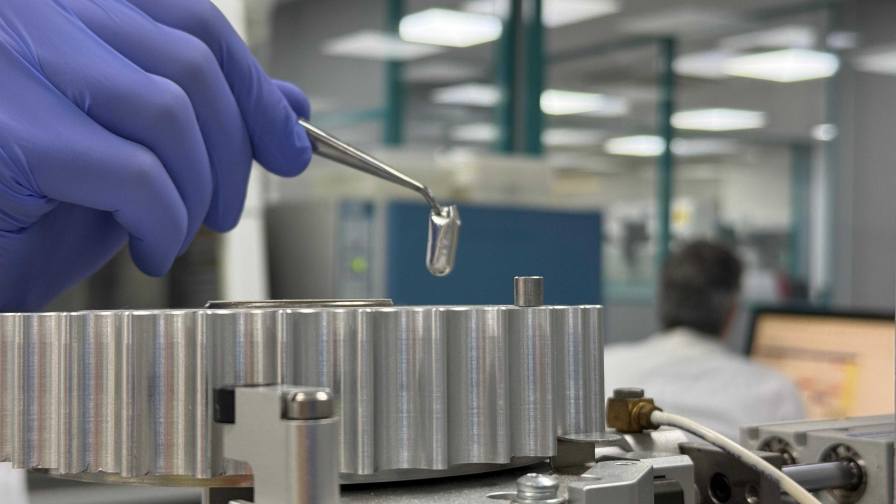
Sample loading for organic carbon analysis in the Futureco Bioscience laboratories. This method, now ENAC-accredited, involves a preliminary digestion step followed by infrared detection to quantify organic carbon content in fertilizers.
On July 15, the Spanish National Accreditation Body (ENAC) officially announced the extension of ISO/IEC 17025 accreditation granted to the Analytical Services Department (ASD) of Futureco Bioscience. This expansion includes two key analytical methods for the agri-input sector: the quantification of viable spores in fungal biopesticides and the determination of organic carbon in fertilizers.
The decision followed an on-site audit conducted in May 2025 by a team of auditors and technical experts, who assessed the implementation of the methods, the staff’s training, and the quality management system of the ASD after a thorough review of all submitted technical documentation.
This new accreditation represents formal recognition of the laboratory’s technical competence and further strengthens Futureco Bioscience’s position as a benchmark in quality control and analytical reliability for high-value agricultural inputs. The process took more than two years of continuous effort, particularly in the development and validation of the microbiological method, which sets an important precedent in the current accreditation landscape due to its innovative nature and the limited prior experience with this type of analysis in the sector.
Development, Validation and Official Recognition of Advanced Methods
The request for accreditation extension was submitted in November 2024, following the completion of development and validation of both analytical methods.




In the case of organic carbon analysis—a parameter required for the registration of certain types of fertilizers—the method development was relatively swift, thanks to the ASD’s prior experience with physico-chemical analysis accreditation. The method, implemented by the Chemical Analysis Laboratory, involves a digestion step to eliminate inorganic carbon, followed by quantification of organic carbon using infrared detection.
The viable spore quantification method, essential for the quality control of biopesticides based on fungal and yeast spores, presented a more complex and lengthy development process. Initiated in November 2022, the method posed a significant technical challenge due to its novelty. Over more than two years, the Microbiological Analysis Laboratory—together with the Molecular Biology Unit and the Microbiology Unit from the R&D Department—worked intensively to develop a robust, reproducible protocol fully aligned with ISO 17025 requirements.
“Accrediting these new methods—particularly the microbiological one—posed a major technical challenge due to the novelty of the procedure and the need to establish solid validation criteria. Achieving this milestone reflects the high level of specialization within our team and enables us to deliver analytical results of added value, both for the development and registration of biological agri-inputs and for the quality control of commercial batches entering the market,” said Belén Lopez García, Director of the Analytical Services Department.
A Firm Commitment to Quality and Traceability
This accreditation expansion reinforces Futureco Bioscience’s strong commitment to quality, traceability, and regulatory compliance—critical pillars in an increasingly demanding regulatory environment, and in a market where analytical reliability is a key differentiator for the commercialization of agricultural inputs.
“This accreditation not only certifies our methods, but also our capacity to innovate and respond with technical rigor to the evolving needs of the agrobiological market,” stated Rafael Juncosa, President and CEO of Futureco Bioscience. “We remain committed to delivering reliable solutions backed by science and top-tier analytical control.”
Get The Newsletter Today!