2026 in Focus: LATAM Association Leaders Reveal Their Top Priorities for the Year
 4 March 2026
 AgriBusiness Global reached out to 27 association leaders from around the world and asked them to share their aims for 2026. This is part four of a series of articles that delves into how these associations and organizations are striving to move the needle in the plant health and crop protection products.
For this article, we look at eight LATAM associations and their plans for 2026.
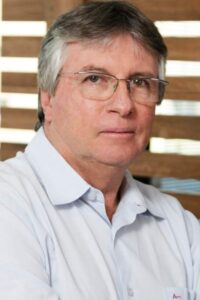 Luis Carlos Ribeiro
Executive Director
National Association of Phytosanitary Products Companies (AENDA)
Our goals are to continue being an entity that actively participates in decisions related to legislation, to be part of working groups with specialists in different subjects, and to continue being recognized as an active entity that aims to collaborate more and more with government agencies, affiliated companies, and producers.
We plan to promote technical events aimed at increasing the knowledge of affiliated companies and producers, while always being guided by ethics and professionalism. We also want to be supportive of government agencies, whether federal or state, and to be available to collaborate when requested.
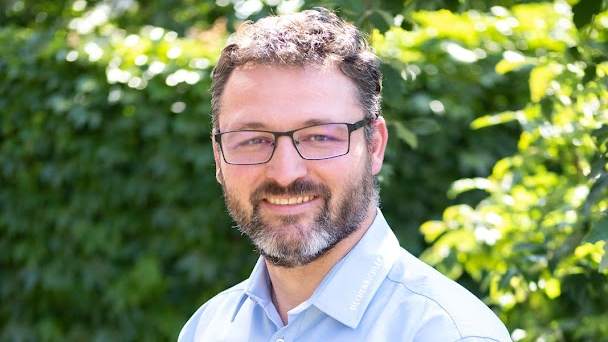

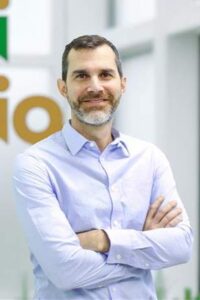 Thiago Delgado
President
National Association for the Promotion and Innovation of the Biological Industry (ANPII Bio)
The first goal of ANPII Bio is to influence and lead the discussions surrounding the new regulation in order to represent the interests of its member companies, promoting best practices in Brazilian agriculture.
The second goal is to provide technical support to the biologicals value chain so that companies can establish themselves in this fast-growing market — expanding at over double-digit rates — and achieve success, enabling Brazil to consistently position itself as the global leader in biologicals.
 Carolina Vargas
Executive Director
Colombian Association of Bioinputs (ASOBIOCOL)
One goal is to continue contributing to the strengthening of the regulatory framework supporting bioinputs in Colombia. We will work closely with interinstitutional tables — bringing together public and private sector actors — to build a more effective and supportive regulatory environment.
Alongside this, we aim to expand our membership, fostering a stronger, more unified, and impactful voice for the sector. We are excited about the opportunities that lie ahead.
Another goal is to strengthen awareness and knowledge of bioproducts within the integrated crop management framework, in collaboration with allied entities. This will allow us to bring more knowledge and support to farmers and agricultural technicians, contributing to the accelerated adoption of bioproducts in the field.
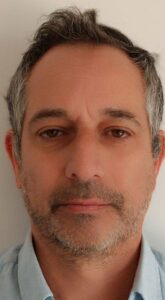 Mauricio D`Acunti
President
National Chamber of Fertilizers and Agrochemicals of Uruguay (CANAFFI)
Our main goals for the coming year will be keeping a very close eye to changes in tax regulations proposed by the government. If approved, there will be some rates to pay by importers and formulators to some classified agrochemicals (1.a, 1.b by OMS classification).
This means something really new, and we don’t know how it will impact the cost structure of some crops, especially when there is no substitute for that molecule. The idea is still under evaluation with all government departments and included into the fiscal budget for the next upcoming five years.
Our association scheduled several meetings with members of the Congress, authorities of CropLife Latin America, ministry of environment, health, and, of course, agriculture. All farmers’ associations are quite nervous because of the increased cost of each hectare of production. This will affect not only agriculture, but also cattle, forestry, and all primary sectors.
Another goal that CANAFFI has for 2026 is to keep a close eye on the geopolitical situation between China (main producer of active ingredients) in agri inputs and the U.S.. Our main commercial partner in goods still is China, so all the tariff wars that happened during 2025, will probably continue affecting the price of the commodities that are the key sector for Mercosur export countries.
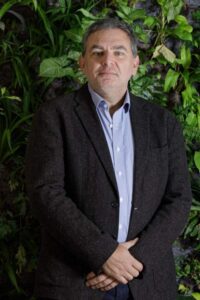 Federico Landgraf
Executive Director
Chamber of Agricultural Health and Fertilizers (CASAFE)
For 2026, our main objectives are to strengthen sustainability as a strategic pillar of the Argentine agricultural sector and to promote our production systems in international forums, demonstrating that we produce in a responsible manner.
We are working to reinforce the adoption of good agricultural practices and to encourage the incorporation of technological tools that enhance traceability, transparency, and efficiency in the management of crop protection products.
In addition, we will support the government in the proper implementation of the new regulatory framework, promoting public-private dialogue and fostering a more competitive and responsible agriculture aligned with global environmental challenges.
Along this path, CASAFE will continue driving ongoing training, applied innovation projects, and institutional partnerships that integrate science, technology, and sustainability. Our commitment is to remain the technical benchmark that promotes safe, efficient, and environmentally responsible agricultural production.
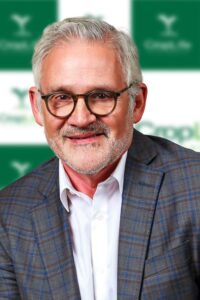 Jose Perdomo
President
CropLife Latin America
Our sustainability goals for 2026 are to train 1 million people in good agricultural practices and to increase the amount of plastic recovered and recycled to 88,000 tons through our CuidAgro and CampoLimpio programs.
We aim to strengthen farmers’ implementation of integrated pest management (IPM) strategies, which are essential for sustainable production, and the expansion of our SPMF or Strategic Pesticide Management Process beyond Guatemala, Chile, and Colombia in our associations network or “Agricultura Sostenible en Acción” as it is called in the region.
We will continue to promote, as is our mandate, the transparency of science-based regulatory frameworks that ensure the license to operate and facilitate the introduction of new technologies. Additionally, we will advocate for free international trade and monitor the evolution of the Basel and Rotterdam Conventions.
With these goals, we support the growth of agriculture in Latin America, so it continues to strengthen its position as a net exporter of food to the world.
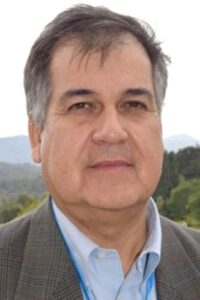 Gabriel Ormeno Hofer
President
Trade Association of Importers and Producers of Phytosanitary Products, Fertilizers and Biostimulants for Agriculture (IMPPA A.G.)
Our first goal is to reach a consensus with the agricultural and livestock regulatory authority (SAG) on streamlining the phytosanitary registration process.
Our second goal is to implement a system for recognizing products registered in the U.S. for Chile.
 Martin Fueyo Mac Donald
President
Mexican Union of Agrochemical Manufacturers and Formulators (UMFFAAC)
At UMFFAAC, we have a very clear roadmap. Our first objective is to promote fair trade measures that guarantee a competitive and safe industry. We will seek to influence policies, including smart tariff schemes, that protect plant and public health. We want an orderly market where competitiveness does not sacrifice quality or the environment, ensuring that the benefits of this formality reach the farmer’s pocket directly.
The second objective is to actively cooperate in the strategy for the responsible use and gradual phase-out of pesticides, under a technical and scientific approach. We understand public concern and share the commitment to health. Therefore, our goal is to lead a responsible technological transition. We will work to ensure that this gradual substitution is carried out with viable alternatives that do not jeopardize Mexico’s food security, ensuring that the producer always has effective tools to protect their crops.
Explore how association leaders in other regions are shaping their priorities for 2026 in the rest of this global series.
Get The Newsletter Today!