Global Crop Protection Powerhouses Face Diverging Risks in 2026 and Beyond
 5 February 2026
 As global agriculture navigates economic uncertainty, geopolitical instability, and shifting supply-demand dynamics, three countries continue to play outsized roles in the crop protection market: Brazil, Russia, and China. Each remains critical to global agricultural production and input supply, yet each faces distinct challenges that could shape the industry’s trajectory in the coming years.
Those challenges were front and center during a recent episode of the AgriBusiness Global Report, featuring Bob Trogele, CEO of ProAgInvest. Drawing on decades of experience in agricultural finance and investment, Trogele offered a candid assessment of what lies ahead for these global powerhouses — and what it means for suppliers, investors, and agribusiness leaders worldwide.
Brazil: Credit Stress Meets Political Uncertainty
Brazil’s status as an agricultural powerhouse is undisputed, but Trogele cautioned that financial stress is testing the resilience of the entire value chain. “The key question was how long the vendor industry — chemical suppliers, nutritional suppliers, seed suppliers, equipment suppliers, and finance — could continue to support Brazilian agriculture,” he said.
For years, vendors extended generous credit terms to keep product flowing, in some cases pushing working capital days beyond 300. According to Trogele, that model has reached its limits. “The product didn’t hit the ground or the service didn’t hit the ground, and it came back. It caused major financial disruptions for some of the companies that were vendors for Brazil,” he explained.
High inflation and soaring interest rates have compounded the problem, triggering farm, retail, and distribution bankruptcies. “Money right now in Brazil is very expensive, and they have a credit issue,” Trogele said. While the Brazilian government has taken steps to create financial mechanisms that reduce dependence on private suppliers, the path forward remains uncertain.
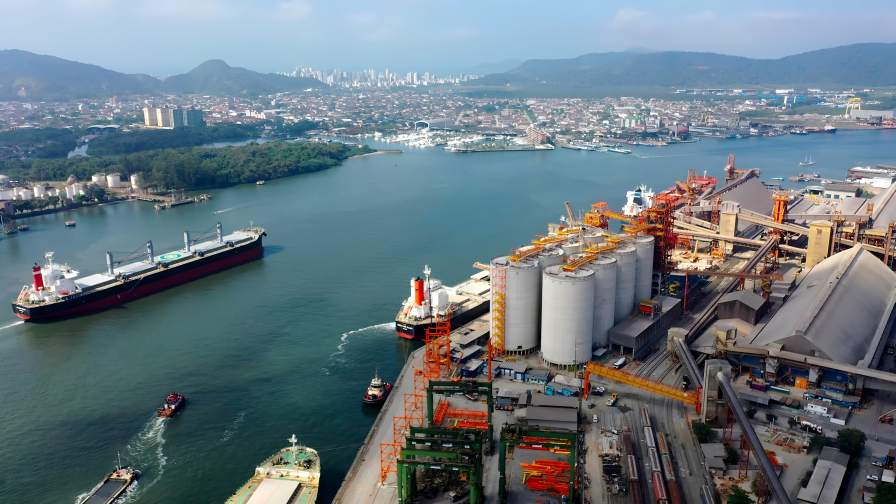
Political instability further complicates the outlook. With roughly 30% of Brazil’s GDP tied to agriculture, Trogele emphasized that “both political unrest and this credit risk in Brazil should be top of mind for any investor going into Brazil,” including agribusinesses operating on the ground. For now, Brazil’s challenges are immediate — and unavoidable.
Russia: War, Attrition, and an Open Question
Russia’s agricultural future is deeply intertwined with the ongoing war in Ukraine. Trogele noted that the country’s economy has shifted toward military manufacturing, while its traditional revenue streams face pressure. “They’ve had issues with their main income source, which is oil, and the Europeans are moving away from them,” he said.
War, he added, brings inevitable destruction. “Any war causes a lot of attrition — both on the human side and on the capital side. You’re destroying lives, destroying families, destroying equipment and buildings.” While Russia has historically endured such attrition, the long-term toll on agriculture and investment remains unclear.
When the conflict began, many agricultural investors and suppliers exited the market. The key question now, Trogele said, is whether they will return. “From an agricultural industry and a supplier industry perspective, will companies go back? That’s not an easy one to answer,” he noted. Much depends on how the conflict evolves and whether economic stability can be restored.
China: Overcapacity Behind the Curtain
China remains a cornerstone of the global crop protection industry, both as a supplier and a customer. Trogele acknowledged the country’s success in areas such as energy independence, calling its progress “a tremendous job,” but he was quick to point out the trade-offs. “It’s been at a price,” he said, citing pollution from coal plants and massive overinvestment in industrial capacity.
In agrochemicals, that overinvestment has led to global repercussions. “There’s more supply than there is demand on a global basis,” Trogele said. “Prices have really come down and margins have been crushed globally in the chemical sector.”
China’s broader economy also raises concerns. “They’re still running on an investment economy — putting shovels in the ground — versus a consumer economy,” he said. High unemployment, a struggling construction sector, and geopolitical tensions add to the uncertainty.
Despite record exports, Trogele warned that the surface-level success masks deeper problems. “They need a strong domestic economy, and they don’t have it. If you look behind the curtain, things are not good in China,” he said. Given global agriculture’s dependence on China, stability there is not optional — it’s essential.
A Global Balancing Act
Taken together, the outlook for Brazil, Russia, and China underscores the complexity facing the global crop protection industry. Credit risk, political instability, war, and structural economic imbalances are forcing companies to rethink strategy and exposure.
As Trogele made clear during his appearance on the AgriBusiness Global Report, these markets remain indispensable — but navigating them will require caution, adaptability, and a clear-eyed view of risk.
To hear Bob Trogele’s full analysis and insights, watch the complete episode of the AgriBusiness Global Report featuring his interview.
Get The Newsletter Today!