PMFAI’s 57th Annual Meeting Highlights Industry Transformation, Export Opportunities, and Legal Wins Supporting India’s Agrochemical Sector
The 57th Annual General Meeting (AGM) and the Industry Meet of Pesticides Manufacturers & Formulators Association of India (PMFAI) was held on Friday, 5th December 2025 in Mumbai.
PMFAI’s Industry Meet was well attended by Senior Executives from Agrochemicals, Biological and allied products Industries.
The Industry Meet began with the Welcome Address delivered by PMFAI President Mr. Pradip Dave. During his address, Mr. Dave provided specifically highlighted the significant role PMFAI has played over its 57 years’ history in contributing to the development and progress of Indian Agriculture, the Indian Agrochemical industry, and the Indian Farming community.
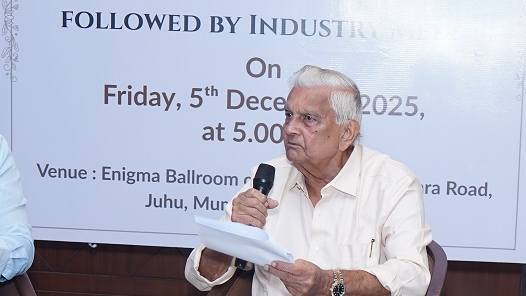
Mr. Pradip Dave, President, PMFAI welcoming the audience to the Industry Meet at the of AGM.
Mr. Dave highlighted that the Indian agrochemical industry is currently undergoing a significant transformation, driven primarily by shifts in pest dynamics and changing crop practices largely attributable to climate change. Adding to these internal pressures is the decline in India’s exports experienced last year. This downturn was primarily caused by critical external factors: global inventory destocking, weak demand in major markets, and aggressive price competition from China.
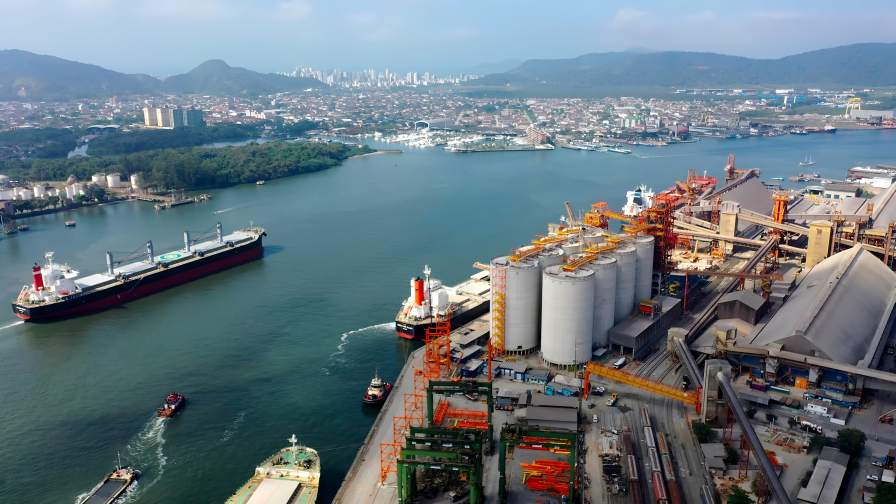
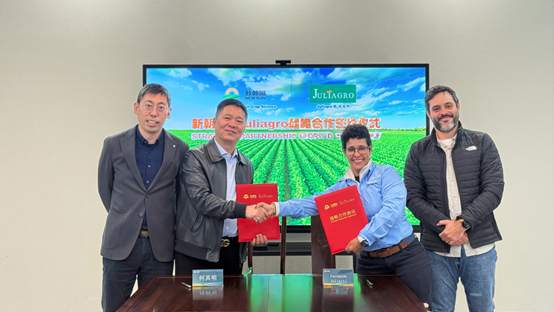



To secure stability and achieve a major transformation, Mr. Dave stressed that the Indian Agrochemical sector must prioritize maximizing indigenous production of Technical Grade Pesticides and crucial Intermediates. He mentioned that many leading Indian manufacturers are already taking this step towards self-reliance by engaging in backward integration – locally producing these key Agrochemical Technicals and Intermediates, thereby trying to reduce dependence on imports.
The industry’s primary goal is to make India a major global sourcing hub. To realize this, the strategy centers on expanding India’s exports, particularly to high-demand regions like the US, Brazil, Latin America, South East Asia, and Africa, where there is a rising need for affordable crop protection solutions. Mr. Dave expressed confidence in Indian industry’s ability, as a leading manufacturer and exporter of generic solutions, to substantially grow the country’s export market share.
In the Industry Meet, Mr. Ashish Kothari, Advocate, Supreme Court and Ms. Isha Tyagi, Advocate & Legal Consultant made presentation on success of Nacto Pharma in Risdiplam case in Hon’ble Delhi High Court (Roche Ag v/s. Nacto Pharma Limited), which is a case observed as ever-greening of patent with minor change in existing molecule. Natco Pharma’s success stems from a protracted patent infringement dispute with the Swiss multinational Roche AG concerning the drug Risdiplam, which Roche sells under the brand name Evrysdi. Risdiplam is a life-saving oral medication used to treat Spinal Muscular Atrophy (SMA), a rare and debilitating genetic disorder.
The detailed presentation explained how the Hon’ble Court found that Nacto had raised a credible challenge to the validity of Roche’s patent, particularly on the grounds of obviousness (lack of inventive step) and anticipation by Roche’s own earlier, broader patents (known as “genus patent”). The presentation also explained in detail how outcome and impact of the case paves the way for the generic version to become available. In short, the Natco ruling serves as a massive boost to Indian generic companies in both the pharma and agrochemical sectors, providing a proven legal defense against multinational corporations seeking to extend their patent monopolies through minor, non-inventive chemical changes.
Another presentation made by Dr. Bill Crabtree, General Manager, 4Farmers Australia PTY Ltd. on Australia Agriculture overview, Agrochemical market, APVMA (regulator) and India v/s. China. In the presentation, Dr. Bill Crabtree presented overview of Australia Agriculture, how Australia’s cropping system has adopted new technologies, the Australian no-tillage cropping revolution, the Australian Agrochemical market, Australian Regulator (APVMA) with how long registrations take, increasing Indian competition in Agrochemicals. In his presentation, Dr. Crabtree explained in detail Australian agricultural output from the use of crop protection products, most importantly Herbicides, followed by Fungicides and Insecticides. He also explained increasing appetite for Indian suppliers for reasons including reliable quality, reliable supply, price competitiveness, a closer connection Indian culture and strong English language use.
In the presentation followed on “PMFAI Impact”, Dr. Sandeep Singh, Advisor, PMFAI given brief on impact PMFAI:
- PMFAI continue its efforts in defending Section 9(4) “me too” registrations, which helped the Indian pesticide manufacturing industry grow and reach as 4th largest producer of agrochemicals in the world and second largest exporters of agrochemicals to global markets. The same 9(4) registrations has led growth of many Indian MSMEs to large-scale industries today.
- Gujarat High Court case of PMFAI (2007 to 2018) leading to registration guidelines facilitating Technical Indigenous Manufacturing (TIM) v/s. Formulation Import (FI). The case also led to the decision by Government for mandatory registration of Technical Grade Pesticides in India prior to granting registrations for Formulation import without registering Technicals in the country.
- Defending proposal for banning 27 pesticides, PMFAI held dialogue with senior Govt. officials and submitted several representations, which finally led to the ban restricted to four products viz. Dinocap, Dicofol, Methomyl and Monocrotophos 36 SL formulation.
- PMFAI presentation before Parliamentary Standing Committee during interaction with major stakeholders on PMB 2020 and representation to key Ministries led to – Government not accepting provision for “Regulatory Data Protection for Agrochemicals” and mandatory registration of Technicals in India prior to granting registrations for Formulation Import.
- PMFAI representation before Global Forum – Basel, Rotterdam & Stockholm Conventions, defending Generic Pesticides. Obtaining Specific exemption for Chlorpyrifos use; and defending products like – Fipronil, Profenofos, Phenthoate, Quinalphos, Ethion, Cypermethrin 10% EC, Cypermethrin 35% EC and Emamectin Benzoate 5% SG, which are critical for Indian agriculture, marginal farmers and the “Make in India” initiative of Govt of India.
- PMFAI efforts during COVID-19 with the office of Hon’ble Prime Minister; Home Minister; Ministry of C&F and Ministry of Agriculture, which led to inclusion of Agrochemicals under Essential Commodities and obtaining permissions to start manufacturing, transportation and distribution of agrochemicals during the COVID period.
- Working with CPCB and Ministry of Environment, Forest & Climate Change on revision of Environmental Standards for Pesticides and Effluent discharge standards for the Pesticide industry in line with Pharma industries considering the similarity in processing, operations and equipment used for manufacturing.
- PMFAI Help Desk – extending regulatory compliance support to its members.
In proceedings of 57th Annual General Meeting held before Industry Meet, Dr. Samir Dave, Secretary, PMFAI presented to members in detail, PMFAI activities during the year 2024-25.
Get The Newsletter Today!