Microbial Breakthroughs and Market Growth: Inside BioConsortia’s Global Plant Health Strategy
 17 November 2025
 At an AgriBusiness Global LIVE! session during the Trade Summit in Orlando, Florida, industry leaders came together to discuss Global Trends in Plant Health — a topic that continues to transform modern agriculture through innovation, sustainability, and collaboration. Among the experts on stage was Sarah Reiter, Senior Vice President of Business Development at BioConsortia Inc., a company pioneering microbial discovery for the next generation of biofertilizers, biostimulants, and biocontrol products.
With three decades of experience in agriculture, Reiter brings a unique perspective to how biologicals are reshaping the crop input landscape. “This is my 30th year in agriculture,” she reflected. “I started my career with one of the companies that became Syngenta, and in 2006 I jumped over to the biological side. I fell in love with the idea that microbes can add a lot of tools to the grower’s toolkit.”
Microbes at the Core of Sustainability and Usability
At BioConsortia, Reiter and her team are focused on microbial solutions that work at the intersection of science and practical application. “We discover microbes that fit into biocontrol, biofertilizer, and biostimulant markets,” she explained. “But we very much limit those that make it past our discovery screen to technologies that can be stable for a long time.”
Stability, she emphasized, is not just a technical requirement — it’s a commercial necessity. BioConsortia works exclusively with spore-forming microbes that have two to three years of shelf life and another two to three years on seed.
“We only work in technologies that can be tank-mixed or used in programs with other inputs,” said Reiter. “Sustainability is a huge part of what we do, but so is usability.”



Brazil Leads, the U.S. Catches Up
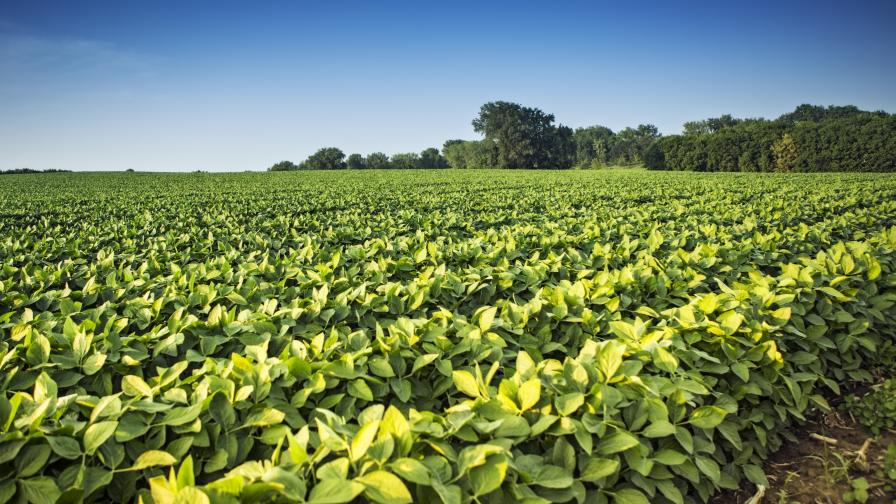
Globally, plant health innovation is accelerating in both established and emerging markets. Reiter highlighted Brazil’s long-standing leadership in the adoption of inoculation technology. “Historically, Brazil has been a leader in the use of inoculants, particularly in soybeans,” she said. “Almost 90% of all soybeans in Brazil receive an inoculum treatment.”
In contrast, she noted that U.S. adoption has been slower, though momentum is building rapidly — especially in corn.
“We’ve seen the U.S. corn market really adopt some innovative technologies around nitrogen fixation,” she said. “Maybe as much as 15% of all corn is getting a seed treatment or at-planting nitrogen-fixing inoculant.”
This trend signals a growing recognition among American growers of the role microbial products can play in reducing reliance on synthetic nitrogen and improving soil health.
From New Zealand to the World
BioConsortia is also expanding its global footprint. The company recently launched a nitrogen-fixing seed treatment in New Zealand, developed to meet the demanding standards of industrial seed production. “Our product is stable and can make it through the industrial corn seed supply chain,” Reiter explained. “That seed might be produced two to three years before it gets used, so you have to have a microbe that’s really stable for a long time to penetrate that market.”
The New Zealand launch includes cereals, corn, and pasture crops, with early results showing strong potential. “We’re really excited about the growth we’ve seen there,” she added. “They’re treating seed right now for their next season.”
A Global Push Toward Sustainable Agriculture
According to Reiter, the adoption of biologicals is being driven by multiple forces — from growers seeking more sustainable practices to government regulations and consumer demand. “We see it everywhere,” she said. “Growers want to increase the sustainability of their production, whether that means profitability or integrating new approaches to field management. Governments are changing rules about how much nitrogen or pesticide can be applied. Sometimes it’s driven by consumers or commodity buyers who want crops produced in a different manner.”
For BioConsortia, success comes from flexibility and integration. “We’re all about meeting the grower and the consumer where they are,” she explained. “If they want to produce an organic crop, we have solutions for that. If they want a higher-yielding corn crop, we have products that support that. We’re really about integrating the best synthetic chemistry with the best biological chemistry.”
Gene Editing and the Next Frontier of Microbial Discovery
Over the last decade, advances in genomics and gene editing have opened new possibilities for microbial research. “As our ability to see into and control the genome has advanced, we’re seeing whole new avenues of exploration and productization,” said Reiter.
For markets that prohibit gene editing or GMOs, BioConsortia identifies the best naturally occurring “wild type” microbes. But in regions where gene editing is permitted, such as the U.S. and Brazil, the company is applying cutting-edge tools to enhance microbial performance. “We think we have perhaps the best editors of spore-forming microbes in the industry,” Reiter said. “We’re introducing nitrogen-fixing biofertilizers now, but also have technologies in our pipeline for microbes that can address other macro and micronutrient challenges in the soil.”
Regulatory Clarity and Collaboration
While innovation is thriving, regulatory frameworks remain uneven around the world. Reiter emphasized the importance of clear, transparent guidelines for gene-edited and biological products. “All we ask for as an innovation company is clarity,” she said. “The sooner a country can tell us how to comply, we’re thrilled to comply.”
When regulations shift or evolve, BioConsortia focuses on maintaining close relationships with regulators. “We’ve learned strategic patience,” Reiter noted. “It’s about collaboration — providing the data regulators need to build trustful relationships.”
Her advice for other companies entering new markets is straightforward: find local expertise. “One of our real sweet spots is finding partners who know their markets incredibly well,” she said. “Let them guide you on what compliance looks like and work together to meet it.”
Building the Future Together
As the plant health sector continues to evolve, collaboration remains a defining theme. “We always welcome new partners,” Reiter concluded. “If you’re interested in biocontrol, biostimulant, or biofertilizer technologies, let’s talk about your unmet needs. There might be an opportunity for us to collaborate.”
From microbial discovery to regulatory navigation, BioConsortia’s work reflects the broader transformation of agriculture—one that blends biology and technology to create a more resilient, productive, and sustainable food system.
Get The Newsletter Today!