Ask The Expert
As you face challenges in the crop protection, biologicals, and plant health markets, AgriBusiness Global DIRECT gets your questions answered from industry leaders.
Scroll Down to Read
Here experts answer a few questions from the AgriBusiness Global community.
 Dr. Darryl Ramoutar
Global Technical Director, Agriculture
gChem
ABG: Are you seeing a trend in using non-toxic surfactants with biologicals in integrated management systems?
Darryl Ramoutar: Non-toxic tank mix compounds/formulations suitable for application with biopesticides include surfactants and adjuvants. The global natural surfactant market was valued at $20.3 billion in 2023 and is projected to grow to $32.4 billion by 2032, reflecting increasing demand for eco-friendly and biodegradable ingredients across industries.
Similarly, the agricultural adjuvants market stood at $3.2 billion in 2023 and is expected to reach $5.8 billion by 2032, driven by the rising adoption of precision agriculture and sustainable crop protection solutions.
Two groups of important bio-based surfactants include microbially derived wetting/spreading agents such as glycolipids, and alkyl polyglucosides, which are derived from plant (e.g., coconut, corn, sugar) oils. Bio-based tank-mix adjuvants may improve application coverage, penetration, and retention, and key groups include modified seed oils, citrus peel oils, and lecithin blends.
This growth of biological solutions is driven by a combination of favorable regulatory frameworks, increasing resistance to conventional chemical modes of action, and a global shift toward more sustainable farming practices.
Biopesticides include biochemicals (pheromones, plant derived oils, growth regulators,) microbials (bacteria, fungi, viruses and metabolites) and bio-protectors (plant genetic modifications). Biopesticides play a vital role in integrated pest management (IPM), a holistic approach that combines cultural, physical, biological, and chemical control strategies to manage pests effectively while minimizing environmental impact. In the practice of IPM, biopesticides help suppress pest populations before they reach economic thresholds, mitigate resistance to conventional modes-of-action, and strengthen rotational programs.
The commercialization of biological crop protection products faces several challenges, and one of the most critical is formulation development, which must ensure product stability, shelf life, and efficacy under diverse field conditions. Formulations are generally categorized as either dry or liquid, depending on their physical state and intended application.
Notable examples include microbial biopesticides, which are often developed in dry formulations to preserve viability and ease handling; and plant-derived oils, typically formulated as liquids to facilitate uniform dispersion and effective coverage. Liquid formulation types for plant derived oils include nanoemulsions and microemulsions. Nanoemulsions may consist of plant oils, surfactants, and water, where droplets are dispersed in water (two immiscible liquid) and surfactants prevent particle aggregation.
Microemulsions consist of three main components, a plant oil dissolved in an organic solvent, water, and surfactants/co-surfactants. Microbial liquid formulation types include carriers such as water, oil (e.g., vegetable, mineral), and/or polymers (e.g., polysaccharides, polyalcohol derivatives) combined with fermented biological materials and co-formulant additives (e.g., surfactants, stabilizers, solvents etc.).
Dry microbial formulation types may include wettable powder, dry flowables, granules, water-dispersible granules and encapsulated beads. In this case fermented biological material is combined with an inert carrier (e.g., peat, vermiculite, clay, alginate, polyacrylamide beads); and granules may also contain binders, dispersants and wetting agents.
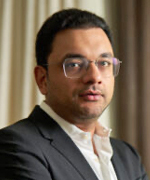 Harsh Vardhan Bhagchandka
President
IPL Biologicals
ABG: Which innovations do you believe will be the biggest game-changers for farmers?
Harsh Vardhan Bhagchandka: I believe the biggest game-changers for farmers will come from innovations in formulation. For example, we’ve developed products with shelf lives of up to three years, which is a major advantage for both logistics and consistent use.
We’re also working with consortiums to combine two strains in a single product, expanding the spectrum of pests and diseases that can be targeted. The goal is to deliver a more concentrated product with higher colony-forming units (CFUs), requiring lower dosages while maintaining effectiveness.
Another innovation is 100% water-soluble formulations, which are still rare in the market. These can be applied through drip irrigation systems and standard farm machinery, making them highly practical for farmers.
We’re seeing a shift from traditional formulations to highly engineered delivery systems that enhance microbial survivability, precision, and efficacy in the field.

Michael Strano
Professor of Chemical Engineering
MIT
ABG: What role will real-time, non-invasive plant monitoring play in the future of precision agriculture?
Michael Strano: Well, the dream that everyone has is to use real-time feedback directly from the plant. For example, is the plant actively growing? To determine that, you might monitor a hormone called auxin. Plants express auxin in gradients, and those gradients literally tell the plant which direction to grow. If we can tap into that, we can instantly understand whether a plant is healthy and wants to grow.
The ultimate vision is to place living crops in a controlled environment and then “tune the knobs”—things like the amount, color, and intensity of light, water, carbon dioxide, and soil nutrients. These are all variables we can optimize. And the idea is to use sensors to inform how to adjust those inputs in what’s known as a control loop.
There are a lot of advantages to this approach. Not only can you optimize growth, but you can do it across any seed or crop type. Imagine a farm with a very rapid harvest cycle, yielding multiple harvests per year.
You could drop in seeds from anywhere in the world—even different types of crops, like strawberries or leafy greens—and the environment would automatically adjust in real time to optimize growth and respond to disease or stress.
But to make that dream a reality, we need one critical thing: data fast enough—fast enough for at least a farmer to intervene, and eventually, for a computer or AI system to manage autonomously. •
hansenn – stock.adobe.com
Dr. Darryl Ramoutar: gChem
Harsh Vardhan Bhagchandka: IPL Biologicals
Michael Strano: MIT
