Indian Soil Health and the Next Big Opportunity for Biological Crop Nutrition
Indian Soil Health and the Next Big Opportunity for Biological Crop Nutrition
Scroll Down to Read
 By Vikram Narayan
India, the world’s most populous nation, has made remarkable strides since the Green Revolution of the 1970s ushered in food security for millions. Malnourishment and starvation, once a grim reality, have largely receded. Yet, as life expectancy and health improve, one crucial question remains: What about the health of India’s soil?
The Hidden Crisis Beneath Our Feet

While India’s agricultural output surged, it came at a significant cost to soil health. Over the past four decades, the intensive use of agrochemicals has depleted Soil Organic Carbon (SOC) drastically—from around 3% in the 1980s to a mere 0.3% today. This sharp decline has caused a near-collapse of soil microbial life, a vital component for maintaining soil fertility and sustaining crop yields.
Compounding this issue is the government policy subsidizing urea at approximately U.S. 10 cents per kilogram. This makes nitrogen fertilizer excessively cheap, prompting farmers to overuse urea, further skewing crop nutrition and accelerating soil degradation. While many farmers recognize the long-term harm of chemical dependence, the absence of affordable and effective biological alternatives keeps them tethered to conventional fertilizers to meet short-term production goals.
The scale of this problem is monumental: India’s 140 million farmers collectively cultivate roughly 140 million hectares of arable land, presenting an enormous opportunity for interventions that restore soil vitality.
What Would a Game-Changing Biological Solution Look Like?
For biological crop nutrition products to revolutionize Indian agriculture, they must meet rigorous criteria, including:
-
Compatibility with existing chemical fertilizers
-
Effectiveness across multiple crop types and diverse soil conditions, particularly in low SOC soils
-
Visible plant growth responses soon after application
-
Long-shelf life, ideally two years
-
Ability to withstand high ambient temperatures above 35°C without requiring special storage
Leveraging Prebiotics and Probiotics in Agriculture
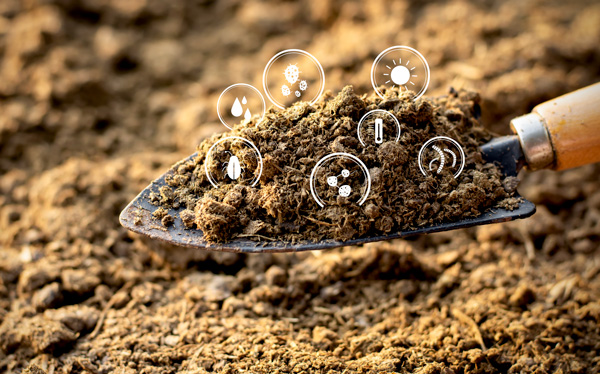
Prebiotics and vitamins are essentially food for soil bacteria. Vitamins, minerals, and stimulants foster an environment conducive to rapid microbial growth. Given India’s harsh and often toxic soil conditions, these complex organic compounds—boost microbial vigor, jumpstarting biological activity crucial for soil regeneration.
Many biological products incorporate supplements like seaweed extracts, humates, and amino acids to further stimulate microbial growth. Notably, Indian biological firms often use seaweed from the Sargassum genus, known for its extraordinarily high potassium content. The abundant local availability of Sargassum along India’s southern coast has created a reliable supply chain to meet both national and international demand for these biostimulant components.
Probiotics are the key active ingredients in biofertilizers. These are beneficial microbial consortia—groups of microbes working synergistically. Considering India’s vast agroclimatic variations, relying on a single microbial strain would be ineffective. Instead, a consortium-based approach is adopted to deliver multiple nutrients efficiently across varying soil types.
Among these microbes, species of Bacillus are predominant. Their resilience stems from their unique ability to form spores, which greatly extends product shelf life, and their compatibility with high-temperature environments makes them ideal for producing stable, soluble powder formulations. Being aerobic and naturally soil-dwelling organisms, Bacilli efficiently colonize fields with support from prebiotics and perform well alongside standard chemical inputs like urea and DAP.
Mycorrhizae: The Real Game Changers

The most transformative biological inputs commercialized in recent times are mycorrhizae—symbiotic fungi intimately associated with plant roots. Derived primarily from Glomus or Rhizophagus species, these arbuscular mycorrhizal fungi extend their filamentous hyphae up to ten times beyond the root zone, vastly expanding the plant’s nutrient absorption capacity.
Mycorrhizae production is highly specialized, requiring nearly four months to cultivate under controlled conditions, which explains their premium price. Their presence leads to marked increases in root biomass and soil nutrient use efficiency (NUE). One visible indicator of their effectiveness is the development of white roots during early leaf stages, signifying vigorous root growth and improved nutrient uptake.
Formulation Innovations for Practical Use

Biological solutions come in various formulations. Soluble powders are favored for ease of application via drip irrigation systems, critical for modern precision agriculture.
Alternatively, biofertilizers can be carried on bentonite granules for broadcast application. Although liquid formulations exist, they are less common in India due to challenges related to storage and transportation under variable climatic conditions.
Towards a Sustainable Future for Indian Soil

The devastating decline in soil organic carbon coupled with excessive chemical fertilization creates a pressing need for alternatives that marry immediate agronomic benefits with long-term environmental sustainability. Biofertilizers, supported by targeted prebiotic formulations and microbial consortia, stand poised to fill this void.
Field trials led by major agrochemical companies have demonstrated that biofertilizers can significantly reduce the reliance on synthetic inputs—sometimes by 20-30%—while maintaining or even enhancing yields, particularly in high-value cash crops.
For India’s 140 million farmers, biofertilizers represent more than just a product. It symbolizes a pathway to regenerative agriculture, economic empowerment, and a healthier environment.
Cultivating Resilience Through Biology

India’s soil health crisis is a complex, multi-dimensional challenge but also an unprecedented opportunity. Chemical inputs alone cannot sustain the vitality of soils that support such a large population. The biological approach—integrating microbes, fungi, and natural stimulants—is an essential pillar for restoring nutrient cycling, improving soil structure, and safeguarding productivity.
By embracing biological crop nutrition alongside balanced fertilization, India can chart a sustainable agricultural future—one where soil and farmer prosper together, feeding generations to come with resilience and stewardship. •
Vikram Narayan is the Sales Director for Agrilife Pte Ltd. based in Singapore.