线虫:害虫还是保护者?了解它们在作物健康中的双重作用

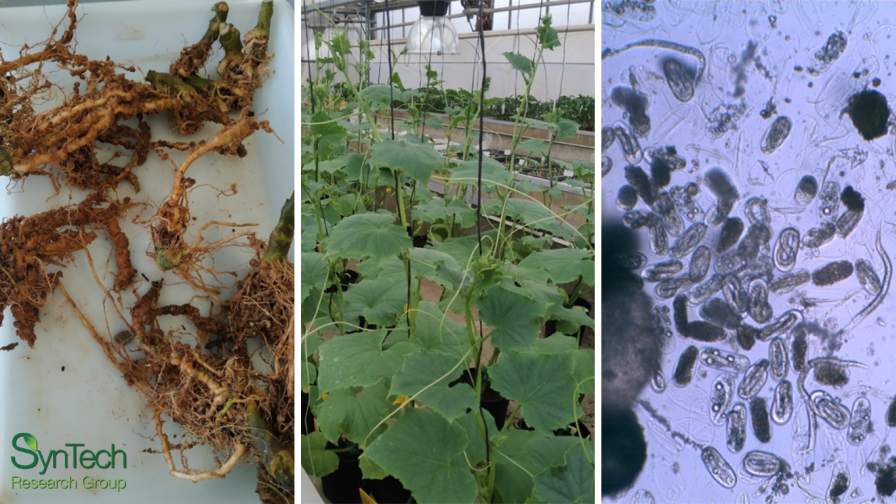
Nematodes shape crop health as hidden pests and powerful allies. Their dual role makes them critical to understand for anyone committed to sustainable crop production.

Nematodes shape crop health as hidden pests and powerful allies. Their dual role makes them critical to understand for anyone committed to sustainable crop production. Photo credit: SynTech Research Group

Nematodes are among the most influential organisms in agriculture: both as destructive pests and as valuable allies. Their dual role makes them critical to understand for anyone committed to sustainable crop production.

The Two Faces of Nematodes

Nematodes are microscopic roundworms found in nearly every soil ecosystem. Some species, known as plant-parasitic nematodes, attack roots, reducing nutrient uptake and causing significant yield losses. These pests are a silent threat, often going unnoticed until damage is severe.

On the other hand, entomopathogenic nematodes act as biological control agents, targeting insect pests without harming plants. They are a cornerstone of sustainable pest management, offering a sustainable alternative to chemical pesticides.

Why understanding nematodes matters

For growers and agricultural technology providers, distinguishing between harmful and beneficial nematodes is critical. Mismanagement can lead to crop losses or missed opportunities for natural pest control. This is where expertise in nematode screening and soil sampling becomes essential.

热门文章
印度:Astec LifeSciences 因其卓越的可持续发展和 ESG 表现荣获 EcoVadis 金奖

Crops on which we operate

蔬菜

  • Potatoes – susceptible to 球囊属 spp. (potato cyst nematodes).
  • Tomatoes – root-knot nematodes (根结线虫 spp.) are common.
  • Broadacre
  • Soybeans – soybean cyst nematode (Heterodera glycines).
  • Corn (maize) – root-lesion nematodes (短尾线虫 种)。
  • Sugar beet – beet cyst nematode (Heterodera schachtii).
  • Onion and garlic- Ditylenchus dipsaci

Fruits

  • Pome and stone fruits – 短尾线虫 vulnus
  • Citrus – citrus nematode (Tylenchulus semipenetrans).

At SynTech Research Group, we specialize in:

  • Nematode pest screening to identify plant-parasitic species early.
  • Soil sampling and analysis to assess nematode populations and soil health.
  • Integrated Pest Management (IPM) studies that incorporate nematodes alongside chemical and microbial solutions.

Nematodes in IPM: Challenges and Opportunities

Integrating nematodes into IPM programs is not without challenges. Compatibility with other control methods, environmental conditions, and crop-specific factors all influence success. SynTech’s research teams develop customized pest management programs and conduct compatibility studies to ensure nematodes complement existing strategies.

By combining biological, chemical, and cultural controls, IPM programs reduce reliance on synthetic pesticides while maintaining crop productivity. Nematodes, both as pests and protectors, are central to this approach.

Our global network and standardized protocols allow us to deliver reliable data across diverse agro-climates. Whether it’s screening for nematode pests or validating biocontrol efficacy, SynTech provides actionable insights that help clients make informed decisions.