The Chemical Briefing: Six Decades On, Chlorpyrifos Still Cheats the Reaper
 24 December 2025
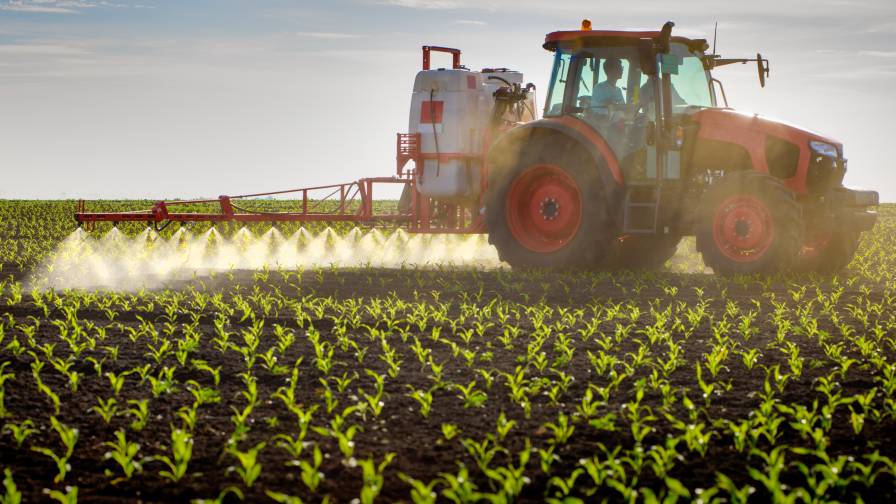
 A 60-year-old molecule once born in Midland, MI, is spending its retirement not in quiet obscurity but in the center of one of agriculture’s most consequential regulatory reversals. For growers, distributors, and manufacturers from Fargo to Mumbai, the story of chlorpyrifos is no longer just about chemistry or economics — it is about how science, process, and policy collide.
Chlorpyrifos, launched by Dow Chemical in 1965 and off patent since 2001, has been challenged, restricted, defended, and resurrected more often than almost any pesticide of its generation. Its most recent chapter began when the U.S. Environmental Protection Agency issued new data requirements as part of the molecule’s ongoing re-registration.
According to Ram Seethapathia, President and CEO of Gharda Chemicals America, EPA “considered all the newer data generated by the chlorpyrifos task force under the data call-in. Based on a very conservative 10X safety factor, though we believed a lower factor was justified, EPA issued a Proposed Interim Decision(PID) in December 2020.”
The PID found 11 crop uses safe, with geographic restrictions, all under the conservative safety factor.
The industry expected a final approval confirming these uses.



Instead came the shock.
“In 2021, EPA issued a tolerance cancellation order,” Seethapathia says. “And once tolerances are canceled, the product simply cannot be used. This was contrary to EPA’s established practice of science-based decision-making.”
Unlike a normal cancellation, where companies are given up to 18 months to sell through inventory, tolerances were immediately revoked.
“That left manufacturers and distributors stuck with inventories that could only be incinerated,” Seethapathia explains. “And growers, especially in sugar beet, soybean, and other key crops, lost an important tool overnight.”
Faced with the fallout, Gharda joined 19 grower groups in challenging the decision. In November 2023, the Eighth Circuit Court reversed EPA’s action. Tolerances were restored. Labels were updated to match the original PID. And growers regained access to all 11 uses — again under the 10X safety factor.
“With tolerances reinstated, growers and distributors finally had clarity,” Seethapathia says. “We now have updated labels, and growers are relieved to restart using a cost-effective, broad-spectrum product.”
That decision set the stage for chlorpyrifos’ unlikely reemergence.
The Patent Funeral That Wasn’t
When Corteva Agriscience shuttered its last U.S. chlorpyrifos plant on Feb. 6, 2020, obituaries seemed inevitable. A decade of regulatory pressure appeared to have caught up with the world’s original organophosphate workhorse.
Except it hadn’t.
U.S. import data tells a different story.
“Corteva shut down…but import volumes have held up,” says Jim DeLisi, Chief of Fanwood Chemical. “For the first half of 2024, it already hit 1,500 tons. The full year should finish near 2,000 tons, right back at the 2021 level.”
The molecule kept flowing, and the court decision ensuring tolerance remained valid only reinforced demand.
Generic Inflection Point — The Indian Chapter
The seeds of chlorpyrifos’ durability were sown long before today’s regulatory battles.
When the molecule slipped off patent in 2001, India’s IICT developed a safer, more cost-effective manufacturing route using acetic acid instead of Dow’s pyridine-based process. Aimco was first to commercialize it, halving India’s import price and transforming India into a 30,000 MT/year export hub.
Gharda, another pioneer, adopted its own acetic-acid-based route early.
“Chlorpyrifos came off patent nearly four decades ago, and Gharda was among the first to manufacture it using a novel alternative process,” says Seethapathia. “Safer, cleaner, more cost-effective — that allowed us to compete with the big basics.”
Cost reductions drove global uptake. Prices fell from $25/kg to under $10, democratizing access for smallholders across Asia, Africa, and Latin America.
The recent regulatory whiplash only highlights how important that global supply chain still is.
The Lawsuit That Raised the Dead
If India’s chemistry kept chlorpyrifos alive, a U.S. appellate court brought it back from regulatory death.
After the 2021 tolerance cancellation, grower groups, not multinationals, led the charge. Corteva withdrew early, suggesting alternative products, but growers refused to concede.
“Growers fought, spent two years in court, and won,” DeLisi says.
The Eighth Circuit ruling restored tolerances — and exposed a deeper issue: whether EPA must base decisions on the scientific record, especially when new data existed and had already been evaluated.
That ruling echoed Seethapathia’s point.
“It’s one of the most studied products in agriculture,” Seethapathia says. “Science-based decisions matter — not just for manufacturers but for growers who rely on proven tools.”
The Global Chessboard
While U.S. regulators revise labels, Southeast Asian and Latin American authorities weigh their own calculus: pest pressure, resistance management, and affordability.
“There is no single drop-in replacement for chlorpyrifos,” says Dr. Piyatida Pukclai, Asia-Pacific Director at Knoell, in an interview with AgriBusiness Global.
Newer synthetics — spinosad, pyrethroids, neonics — fill some gaps. Biologicals like Bt, beauveria, metarhizium, and azadirachtin fill others.
But none replicate chlorpyrifos’ broad spectrum.
“Farmers will need combinations of reduced-risk chemistries and biological tools,” Pukclai says, an IPM mosaic rather than a replacement.
And, as regulators push for newer modes of action, the irony is clear: Diamide resistance is already emerging, giving chlorpyrifos an unexpected second life as the “known devil.”
Generic-Brand Playbook — How Indian Producers Stayed in the Game
While multinationals pivoted to new actives, Indian producers doubled down on branded generics. Pyriban and Anaconda formulations still dominate spray tanks. A technical registration in Brazil, inked in the late 1990s, undercuts European pricing.
“Our model was simple,” says Samir Davie, Director at Aimco. “Same molecule, half the price, farmer-trusted brands.”
Seethapathia echoes this philosophy.
“Our vision at Gharda is to use knowledge to generate value for society,” he says. “We priced chlorpyrifos fairly — enough to sustain the company while helping farmers — and we invested in high-purity technical, reaching 98%–99.3% actives to meet global standards.”
Science-based manufacturing, Seethapathia argues, is also what built the trust necessary for grower groups to fight for the molecule in court.
“When a product is supported by solid data, you defend it,” he says. “That’s what growers did.”
Market Math
What does all this mean for global supply?
About 40,000 tons of annual demand valued at roughly $500 million, says David Li, Vice President at SPM Biosciences. China and India supply 80% of the technical material.
Li attributes chlorpyrifos’ staying power to four traits:
- broad spectrum;
- multiple modes of action;
- low residue; and
- low cost.
However, he also notes that generics accelerated regulatory scrutiny — a pattern seen worldwide.
Global sales fell 13.9% in 2023 to $401 million, says Derek Oliphant, Co-Founder of AgbioInvestor, continuing a multiyear decline. The EU has banned it; Asia is tightening maximum residue limits; and the U.S. now has a tightly defined use pattern pinned to the court’s ruling.
The Acre Always Wins
Strip away regulatory drama, and the final arbiter remains the farm gate.
“Farmers buy an effect in dollars per acre,” DeLisi says. “Until something better comes along, they’ll stick to what works.”
Biologicals are improving — Bt corn in the Philippines, metarhizium beads in Thailand — but most still require a chemical partner.
And, in many cases, resistance to newer chemistries has brought chlorpyrifos back into rotation as a critical component of IPM.
A Ghost at the IPM Table
To fully replace chlorpyrifos, agronomists say, the market will need a diversified tool kit: biologicals, RNAi sprays, precise formulations, and multiactive programs.
“No single pipeline insecticide replicates its spectrum,” Oliphant sayss. “Growers will need two or more actives, maybe a diamide plus sulfoxaflor or flupyradifurone, to cover the same ground.”
That complexity is one reason why reinstating the 11 uses — based on the PID and the latest safety data — matters so much to growers.
The Generics Lesson
As Seethapathia sees it, chlorpyrifos’ journey is ultimately a case study in the value of defending well-studied molecules with sound science.
“New molecule development is slowing,” Seethapathia says. “Proven products supported by robust data remain essential, especially in developing markets. When the science is strong, the industry must stand behind it.”
Dave of Aimco frames the outcome more bluntly: “Generics democratize technology. They extend molecule life cycles. They turn sunset products into sunrise businesses.
And chlorpyrifos — despite bans, shutdowns, court battles, and regulatory detours — proves the point.
Until an IPM mosaic can outperform a $10-a-kilo molecule that federal judges and growers alike consider irreplaceable on at least eleven crops, chlorpyrifos will keep slipping past obituaries — kept alive by chemistry, courts, and the unyielding economics of farming.”
Get The Newsletter Today!