8 fuerzas que definen a la próxima generación de ganadores en la protección de cultivos.
 6 de agosto de 2026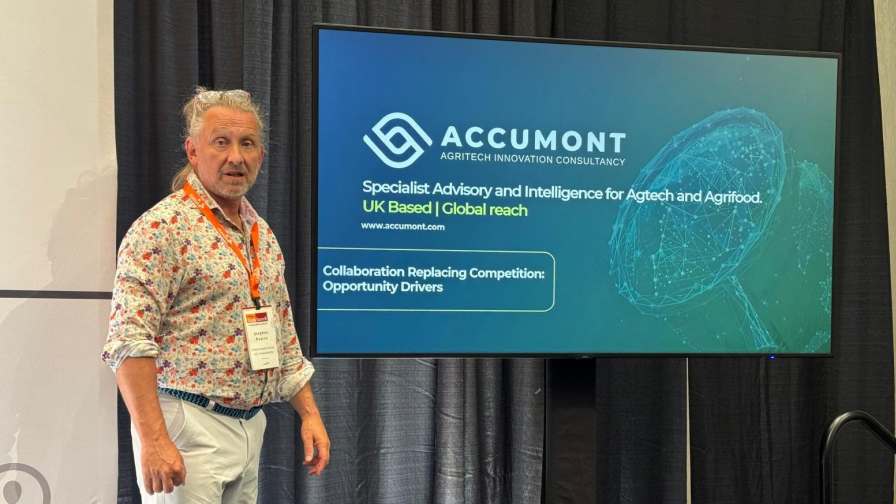
Stephen Pearce, cofundador y socio gerente de Chemovateq Swiss Ag Investments y presidente de Accumont, realizó una presentación en la Cumbre Comercial Global de Agrinegocios™ el 5 de agosto de 2026 en Las Vegas, Nevada.
A medida que aumente el uso de la inteligencia artificial, el panorama mundial para los formuladores y fabricantes de productos fitosanitarios se irá igualando.
Stephen Pearce, Cofundador y Socio Gerente de Chemovateq Swiss Ag Investments y Presidente de Acumont, presentado en el Cumbre Comercial Global de Agronegocios™ El 5 de agosto de 2026 en Las Vegas, Nevada, se expusieron los cambios en la industria que podrían generar nuevas oportunidades para las empresas de protección de cultivos.
Uno de los puntos principales que destacó Pearce es que la industria, en lo que respecta a nuevos descubrimientos, está cambiando rápidamente, lo que significa que las empresas con "los mayores presupuestos de I+D o con las carteras más amplias" no serán necesariamente las que tengan garantizado ser las primeras en lanzar al mercado moléculas nuevas e innovadoras.
“Serán aquellos que construyan los ecosistemas de socios y colaboradores más eficaces”, afirma Pearce. “A medida que la innovación se vuelve más rápida y multidisciplinaria, y los modelos de entrega requieren mayor inversión de capital, la colaboración, y no la competencia, definirá cada vez más la ventaja competitiva”.”
Estas fueron sus ocho principales conclusiones sobre el cambio que está creando nuevas oportunidades para las empresas:
- La reestructuración seguirá transformando el panorama competitivo mediante la racionalización de carteras, la expiración de patentes y las desinversiones estratégicas. Esta convergencia integra la química, los productos biológicos, la agricultura digital, la IA y la agricultura de precisión en soluciones integradas para cultivos, y seguirá acelerándose.
- La colaboración en la cadena de valor desplazará cada vez más a los modelos de negocio integrados verticalmente, sustituyéndolos por redes de socios especializados.
- Los nuevos modelos de negocio, que incluyen licencias, desarrollo conjunto, alianzas de fabricación y colaboraciones en materia de datos, crearán oportunidades que habrían sido improbables hace una década.
- La implicación estratégica será que la ventaja competitiva provendrá cada vez más de la creación de alianzas en todo el ecosistema de protección de cultivos, en lugar de depender únicamente de productos patentados.
- China se convertirá en una importante fuente de nuevos compuestos químicos, y no solo de medicamentos genéricos. China cuenta con una mayor fuerza laboral de investigación, invierte más en química aplicada, tiene ciclos de desarrollo más rápidos y se beneficia de menores costos de investigación.
- Es improbable que China reemplace a Japón como principal fuente mundial de descubrimientos verdaderamente innovadores (y ciertamente no para 2035). La química japonesa sigue siendo excepcional y destaca por su selectividad, bajas tasas de uso, perfil ambiental, compatibilidad de formulaciones y calidad de la propiedad intelectual.
- China podría rivalizar e incluso superar a Japón en la cantidad de nuevos ingredientes activos comercializados que ingresan al mercado. "Ya estamos viendo los primeros indicios de esta tendencia y se acelerará", afirmó Pearce. Esto se basa en su fuerte inversión en descubrimiento molecular impulsado por IA, química computacional, cribado de alto rendimiento, estructuras CRDMO, colaboraciones más estructuradas entre universidades e industria, el regreso de científicos y expertos formados en el extranjero y el capital de riesgo nacional que apoya la tecnología agrícola.
- Esta equiparación de las condiciones de juego, basada en el acceso a compuestos patentados, podría crear importantes oportunidades de acceso al mercado para las empresas que involucren a varios socios interesados del ecosistema.
¡Obtenga el boletín hoy!