


Semioquímicos na vanguarda do MIP moderno
O agronegócio encontra-se em um ponto de inflexão estratégico. Durante décadas, as estratégias de proteção de cultivos basearam-se fortemente em produtos químicos de amplo espectro que suprimem as pragas por padrão. Hoje, regulamentações mais rigorosas, o aumento da resistência e o escrutínio implacável sobre resíduos e impacto ambiental estão forçando uma reavaliação fundamental. O antigo paradigma da pulverização rotineira, baseada em um calendário, não é mais defensável do ponto de vista científico, regulatório, econômico ou comercial.
Nesse contexto, entram em cena os semioquímicos: moléculas sinalizadoras naturais, reaproveitadas para o manejo preciso de pragas. E, com sua crescente adoção, observamos não apenas um avanço técnico, mas também uma mudança na forma como a indústria de insumos agrícolas define valor e eficácia.
Para empresas como Ciência dos Insetos®, Essa mudança não é teórica. Ela é a base de como os produtos modernos para o manejo integrado de pragas são desenvolvidos, validados e implementados. Ao trabalhar com semioquímicos como portadores de informação biológica, em vez de agentes de controle genéricos, a Insect Science se concentra em viabilizar intervenções específicas para cada espécie, guiadas por decisões e alinhadas aos princípios contemporâneos do MIP (Manejo Integrado de Pragas).
A Insect Science formalizou essa abordagem sob o que a empresa define como Manejo Responsável de Pragas.® (RPM): uma estrutura que prioriza a tomada de decisões baseada em dados, a especificidade biológica e a intervenção proporcional. Em vez de optar pelo controle pelo controle em si, o RPM questiona se a intervenção é necessária, quando ela é justificada e como pode ser realizada com o menor custo ecológico e regulatório. Os semioquímicos são fundamentais para essa filosofia, não como alternativas ao MIP, mas como ferramentas que tornam o MIP mensurável, defensável e operacional em sistemas do mundo real.
Repensando o controle: da supressão ao comportamento
Os semioquímicos (feromônios e compostos voláteis de plantas) são a linguagem através da qual os insetos negociam acasalamento, alimentação e habitat. Quando utilizados estrategicamente, eles fazem mais do que atrair ou repelir; proporcionam um controle comportamental sobre as populações de pragas. Essa mudança de perspectiva, da supressão por meio de pulverização química para a modulação comportamental, é sutil, mas suas implicações são profundas.
Num mundo onde compradores, reguladores e mercados exigem cada vez mais rastreabilidade e sustentabilidade, a precisão é fundamental. Os semioquímicos permitem precisamente isso. Eles fornecem aos produtores ferramentas não apenas para agir, mas também para decidir, com base em dados em tempo real e conhecimento específico de cada espécie.
A abordagem da Insect Science aos semioquímicos centra-se nessa compreensão comportamental. Ao fornecer iscas e misturas rigorosamente caracterizadas, concebidas para pragas, culturas e ambientes específicos, a empresa permite que os utilizadores ultrapassem o controlo reativo e tomem decisões de gestão informadas e baseadas em evidências.
Precisão na prática: aplicações estratégicas
Os semioquímicos não são curiosidades abstratas. Seu valor tático já está incorporado em múltiplas camadas do Manejo Integrado de Pragas (MIP) moderno.
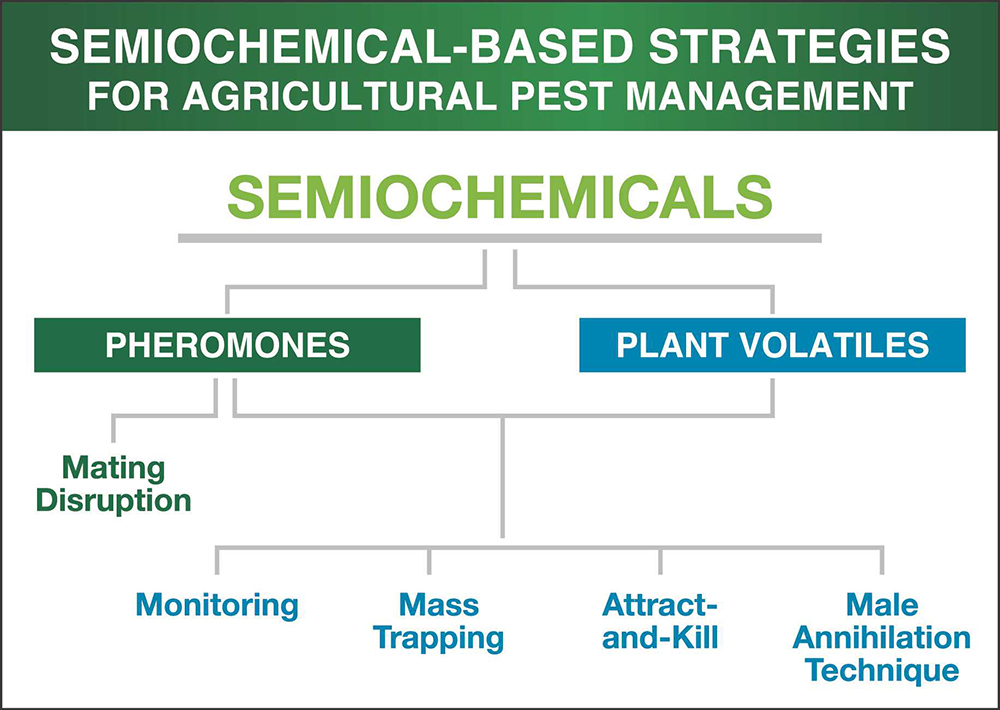
Monitoramento que informa
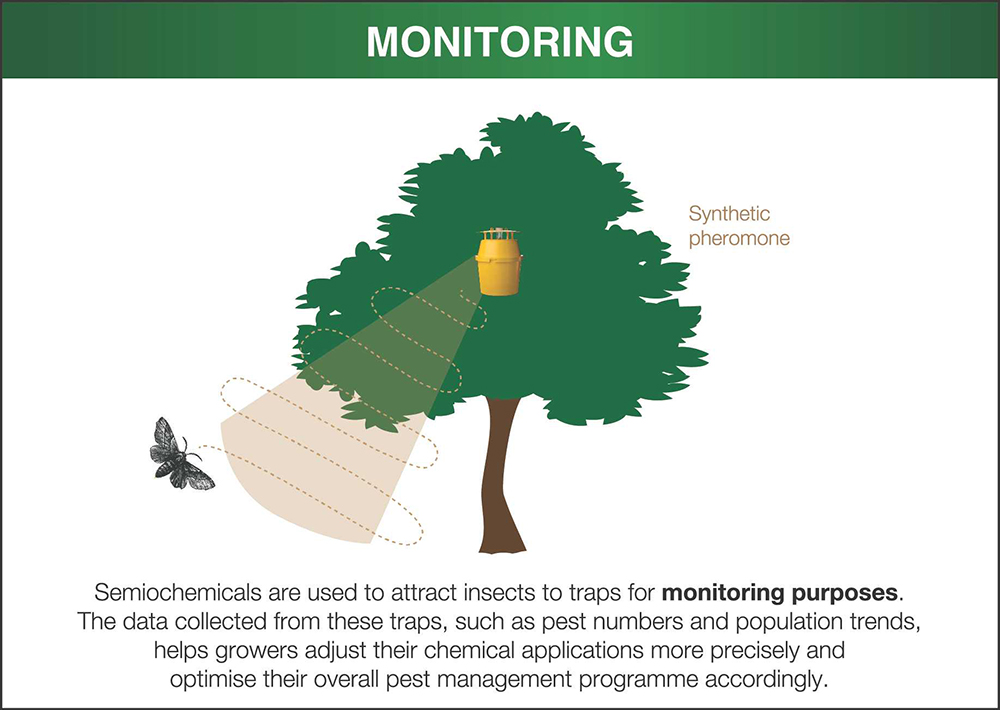
O monitoramento tradicional continua sendo um pilar fundamental do manejo de pragas. É essencial, embora trabalhoso e de alcance limitado, fornecendo apenas um retrato momentâneo da presença de pragas em um único dia. As armadilhas com isca semioquímica, por outro lado, fornecem dados reais sobre a abundância de pragas, atividade de voo e início da infestação. Para os líderes do agronegócio que avaliam portfólios de produtos ou estratégias de implementação, esses dados trazem clareza: quando intervir e se a intervenção é justificada. Transformam o controle de pragas de uma questão de tentativa e erro em uma ciência da tomada de decisões.
Essa filosofia fundamenta os sistemas de monitoramento da Insect Science, onde iscas semioquímicas são combinadas com armadilhas de design otimizado para gerar dados de campo confiáveis. A ênfase não está apenas na captura de insetos, mas na produção de informações práticas que permitam intervenções baseadas em limiares e reduzam o uso desnecessário de insumos.
Captura em massa e influência populacional
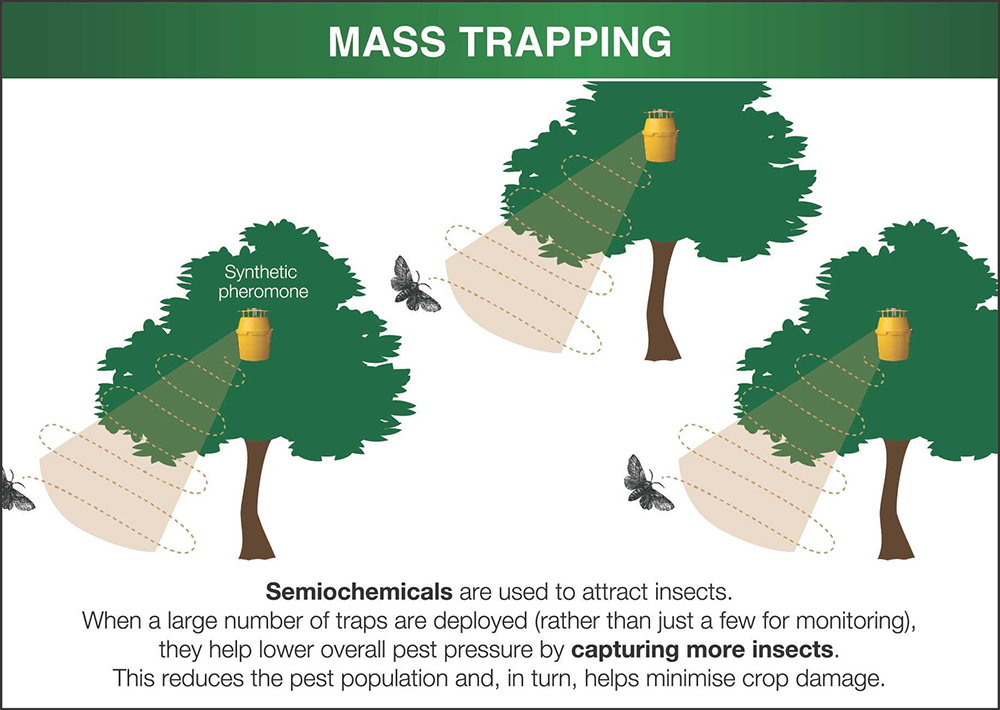
Quando implantadas em larga escala, as armadilhas com isca atrativa fazem mais do que informar; elas reduzem os grupos reprodutivos e diminuem a pressão da infestação. Em sistemas de alto valor ou voltados para a exportação, onde os resíduos representam um risco, isso permite a supressão tática sem danos colaterais.
Ferramentas híbridas: Atrair e Matar e MAT
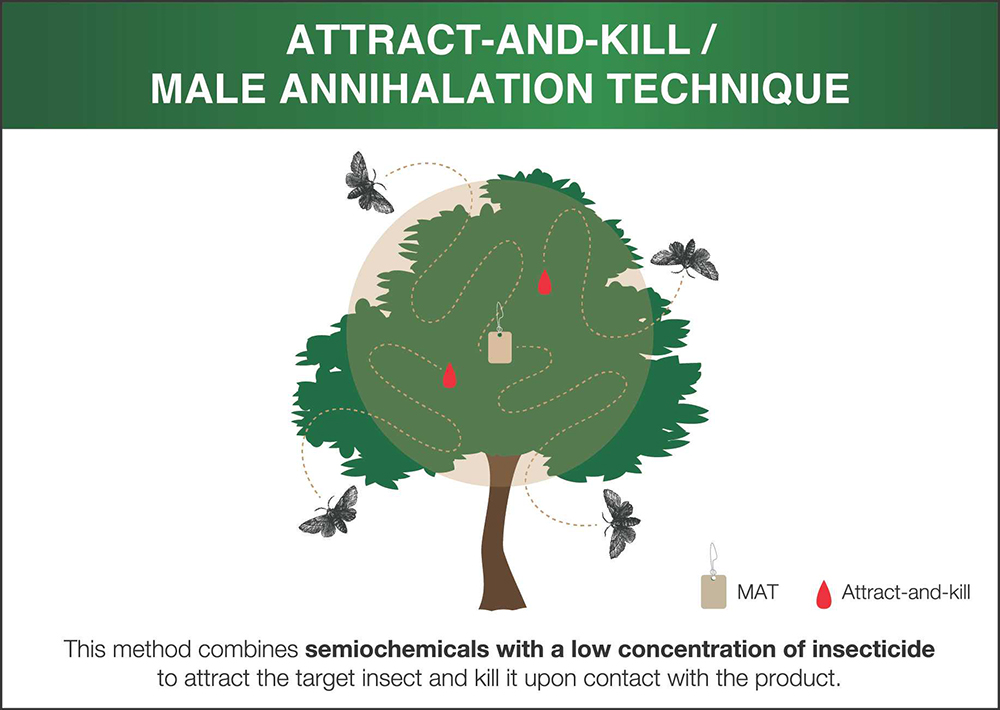
A combinação de estímulos comportamentais com doses mínimas de inseticida, como nas técnicas de atração e eliminação e de aniquilação de machos (MAT), oferece uma solução prática onde a regulamentação e a resistência limitam as opções convencionais. Essas abordagens direcionadas estão alinhadas aos princípios do Manejo Integrado de Pragas (MIP), reduzindo a carga total de inseticida e, ao mesmo tempo, mantendo a supressão eficaz de pragas.
Ao contrário das aplicações por pulverização em larga escala, os sistemas de atração e eliminação aplicam o ingrediente ativo em pontos altamente localizados, onde a praga é atraída para interagir com a formulação. Como o tratamento não é distribuído por toda a copa da cultura, o volume total de inseticida introduzido no sistema de produção é significativamente menor do que nas aplicações convencionais por aspersão.
Este modelo de aplicação localizada oferece diversas vantagens, incluindo uma carga total de inseticida reduzida por hectare, deposição mínima em áreas não-alvo e deriva de resíduos, menor exposição potencial dos trabalhadores em comparação com aplicações de pulverização em toda a área afetada e menor pressão de seleção em toda a população de pragas.
Ao concentrar o ingrediente ativo precisamente no ponto de contato com a praga, esses sistemas dão suporte a cadeias de suprimentos sensíveis a resíduos e estão bem alinhados com as modernas estruturas de MIP (Manejo Integrado de Pragas) e sustentabilidade. Em vez de substituir os produtos químicos, eles otimizam a forma como esses produtos são utilizados, aplicando pequenas quantidades de maneira direcionada ao comportamento da praga para maximizar o impacto e minimizar a pegada ambiental.
Interrupção do acasalamento e dinâmica populacional
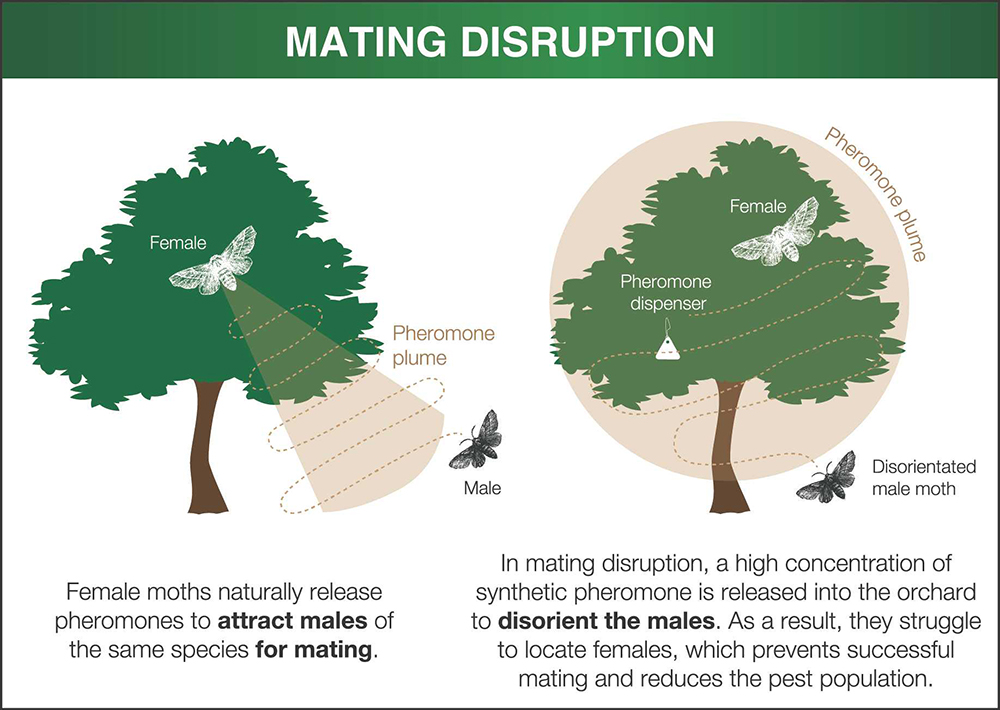
A interrupção do acasalamento é uma abordagem comprovada e escalável para diversas espécies de pragas. Em vez de matar os insetos diretamente, interfere no acasalamento, reduzindo a reprodução ao longo do tempo. Os avanços na tecnologia de dispensadores e em misturas específicas para cada espécie tornaram essa abordagem mais prática e eficaz.
Valor estratégico além do campo
Para os executivos do agronegócio, a importância dos semioquímicos não se limita à agronomia. Ela se cruza com a regulamentação, o acesso ao mercado, a gestão de riscos e o posicionamento de portfólio a longo prazo.
alinhamento regulatórioÀ medida que as autoridades reforçam os limites e reavaliam os produtos químicos convencionais, os semioquímicos oferecem uma via de menor risco para superar os obstáculos de conformidade e de re-registo. O seu perfil não tóxico e sem resíduos enquadra-se nos novos quadros que visam reduzir o impacto ambiental e proteger os organismos não-alvo.
Métricas de sustentabilidadeOs imperativos ambientais, sociais e de governança (ESG) e os indicadores de desempenho dos varejistas influenciam cada vez mais as decisões de compra. Os semioquímicos contribuem para a redução da intensidade de insumos e para práticas favoráveis à biodiversidade, não apenas como um requisito de conformidade, mas como um diferencial em licitações e negociações de contratos.
Diferenciação de produto orientada por dadosOs dados gerados pelos sistemas de monitoramento semioquímico alimentam análises, recomendações de precisão e plataformas digitais. Para gerentes de produto e líderes de P&D, isso abre caminho para serviços de valor agregado e modelos de assinatura que vão além da simples coleta de dados físicos.
A Insect Science considera essa camada de dados como uma extensão integral do próprio produto, onde os semioquímicos dão suporte tanto às ferramentas físicas de manejo de pragas quanto às estruturas de decisão construídas em torno delas.
Uma tecnologia do presente, não do futuro.
A adoção de semioquímicos não deve ser vista como especulativa ou experimental. As evidências – regulatórias, comerciais e agronômicas – apontam para uma inflexão em que as ferramentas comportamentais apoiam e aprimoram as medidas de controle convencionais, em vez de competir com elas.
Para a Insect Science, isso representa um mandato prático e atual: incorporar semioquímicos em programas de MIP (Manejo Integrado de Pragas) do mundo real que sejam cientificamente confiáveis, comercialmente viáveis e operacionalmente escaláveis.
Para os intervenientes globais do agronegócio, esta é uma oportunidade estratégica convincente: integrar os semioquímicos não como uma reflexão tardia, mas como uma parte essencial de estratégias de MIP (Manejo Integrado de Pragas) com visão de futuro, que atendam às exigências de reguladores, mercados e produtores.
Na evolução do manejo moderno de pragas, os semioquímicos não são apenas parte do conjunto de ferramentas do futuro, eles já estão moldando a realidade de hoje.