Agronegócio Global na Estrada: O que está em alta na ABIM 2026
 22 de outubro de 2026
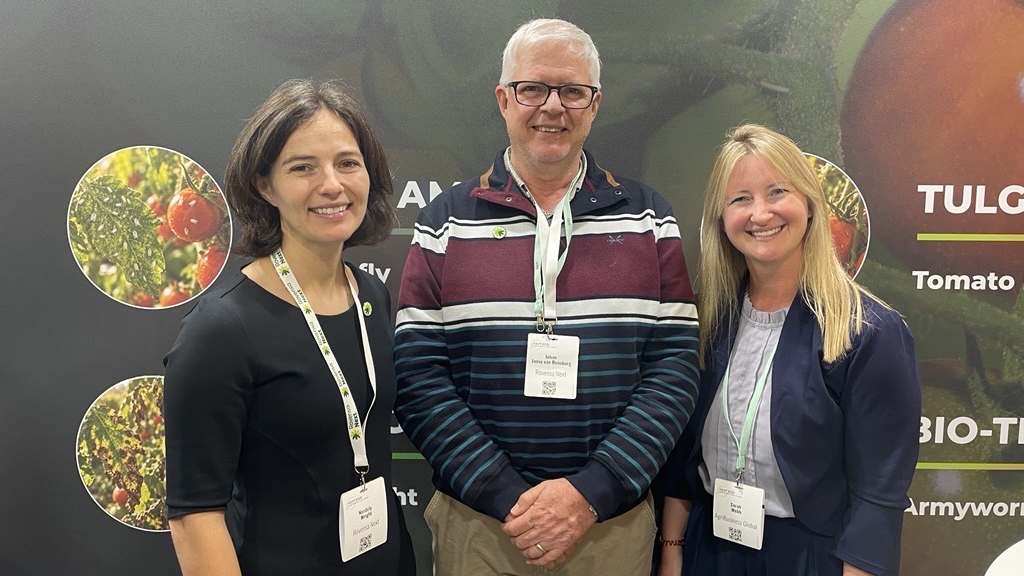
AgriBusiness Global Editor Sarah Webb (on right) catches up with the Rovensa Next’s Norderly Wright and Johan Janse van Rensburg at the Annual Biocontrol Industry Meeting (ABIM) in Basel, Switzerland.
From 20-22 October 2026, more than 2,000 biological innovators from organizations around the world converged in Basel, Switzerland, for the Reunião Anual da Indústria de Biocontrole (ABIM), hosted by ABIM AG, a joint venture between the International Biocontrol Manufacturers Association and FiBL Schweiz (Research Institute of Organic Agriculture).
There, attendees forged connections and explored the trends, technologies, and opportunities shaping the future of biocontrol products.
Here are several trending topics at the show.
1. Future Growth Opportunities
As biological markets mature across much of North America and Europe, and growth in Brazil begins to level off, attention is turning to a new question: Which region will emerge as the next major growth market for biologicals?

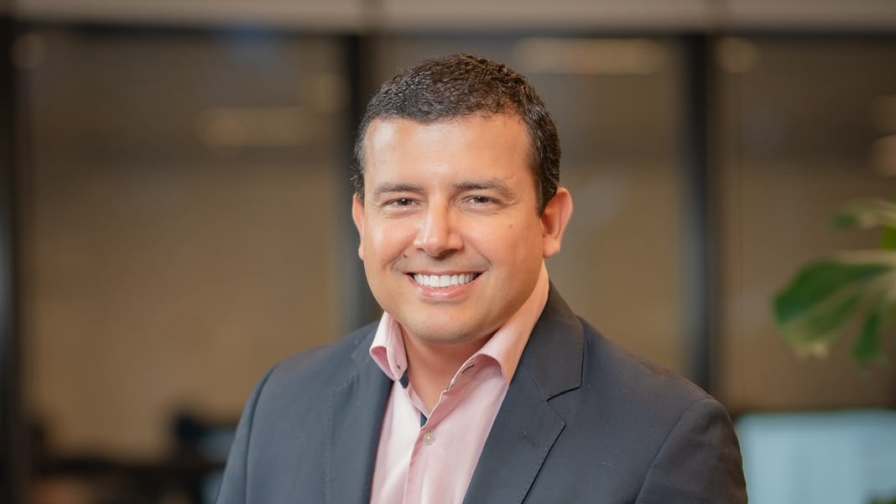
Mark Trimmer, Presidente e Sócio Fundador da Aparador Dunham, pointed to China, India, and Southeast Asia as the main growth markets in the future.
“They’re growing at almost double the rate of the rest of the world,” said Trimmer. “Globally, the market continues to grow faster than the chemical market, but we’re nowhere near where we were three or four years ago. We’ve transitioned from an early-stage fast growth market to late-stage growth or more of a maturing market.”
2. Innovation Remains at the Forefront
As the biological industry matures, the quality of innovation has improved, said Norderly Wright, Global Technology Characterization and Validation Manager at Rovensa Próximo.
“We’re seeing this wave of new solutions and new actives that have now become available to us, and a lot of them are delivering very promising results,” Wright said. “We’re getting more robust solutions on the biological side.”
This comes at a time when companies are focused on helping farmers deal with resistance management concerns.
“We are losing conventional chemistries, so in order to stay sustainable, in terms of managing pests and diseases, we need to bring a new technology to maintain efficacy,” said Johan Janse van Rensburg, Director of Global Portfolio Biocontrol and Adjuvants at Rovensa Next.
3. Partnerships Are Key
As the biologicals market becomes increasingly competitive, parcerias continue to play a central role as companies leverage strategic alliances to access new technologies, expand distribution networks, and strengthen their presence in key markets.
“It’s a difficult market right now for any company that’s pre-revenue, and raising money is extremely challenging, so a lot of companies have to seek out partnerships sooner in their development cycle,” said Trimmer.
He added that these partnerships are not only valuable for startups, but they also benefit multinational companies, which often rely on startups for early-stage biological innovation and to expand their biological offerings without having to build discovery and R&D programs from scratch.
For biological companies looking for a strategic partner, Trimmer said the product has to be an innovative — but also proven — technology.
“You need to have demonstrated performance in actual grower conditions,” Trimmer said. “It also needs to fit in with a grower’s current management system.”
4. Eye on Regulations
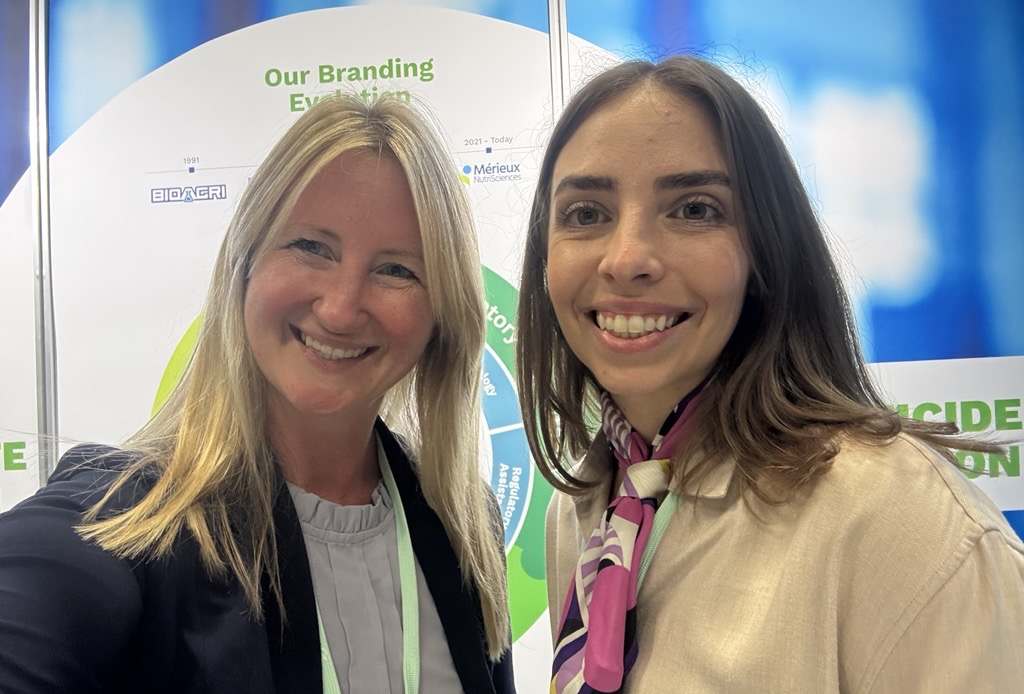
From left: AgriBusiness Global Editor Sarah Webb with Letícia Rossi, Business Development, Mérieux NutriSciences, Brasil.
Several conversations at ABIM centered around regulation of biocontrol products.
“Europe (regulation) is the most challenging,” said Leticia Rossi, Business Development, Merieux Nutrisciences. “Some companies had even registered their products as biostimulants to take a detour.”
The passage of the European Union’s Food and Feed Safety Omnibus Package should help by providing an EU-wide definition of biocontrol active substances and setting up faster approval procedures.
“The Omnibus is supposed to be a good push toward smoother regulation,” said Amalia Martín Efimets, Marketing and Communications Manager, SynTech Research Group.
5. Focus on Integrated Management
Many biological experts at ABIM also pointed to integrated management as the way of the future.
In other words, biologicals can help bridge the gap with chemical products in order to have the least negative effect on the environment.
“The goal is that people can eat and live healthfully,” said Silvana Niedermann, Director of International Business, Andermatt Group. “Biologicals do a great job in doing that, and there are some chemicals also supporting this goal.”
Kan Biosys also supports an integrated management approach, with a vision to have 40% of a farmer’s toolbox consisting of biologicals by 2030, whether that’s biofertilizers, biostimulants, or soil management products, said Rohit Dandekar, Assistant Manager, International Business, Kan Biosys.
6. Grower Trust is Paramount
As input costs continue to rise while crop prices have failed to keep pace, growers have less flexibility to experiment with new products, making trust one of the biologicals industry’s biggest challenges.
That challenge has been compounded by products that fail to consistently deliver results in the field.
“We need to pay attention that there is enough entry barrier not to spoil the market,” said Charles Marchand, incoming CEO of Elefante Verde. “We need to pay attention to efficacy, making sure that products without efficacy can’t be registered in a country.”
Niedermann said that proper labeling should also be a top priority.
“We have to make the life of farmer better, and we also have to make his wallet better,” Niedermann said. “Very often, unregulated products harm the reputation of biological products.”
7. Expanding Training and Technical Support
Biological companies also discussed how they are investing resources into training and education resources.
However, it’s not only the grower that requires training.
For instance, Dandekar said that dealer education is just as important in regions like India where small land holders may not be as able to adopt new products.
“In India, we’ve noticed the final decision maker or the person who can actually influence the farmer is the dealer,” Dandekar said. “If you’re able to convince the dealer about your product, and if the dealer starts believing in your product, then subsequently he will push that to the farmers.”
Receba a Newsletter hoje mesmo!