Atualização do mercado de proteção de cultivos na Ásia para 2026
 17 de novembro de 2026
Asia’s crop protection markets face a mix of weather extremes, shifting pest pressure, regulatory changes, and economic uncertainty heading into 2027. Some countries are facing flooding and rising pest populations, while others contend with dry conditions and tighter farm economics. Here is a quick breakdown of influencing factors for the crop protection markets in China and India — and the regions of Asia Pacific and Central Asia.
China
In China, large parts of the country have been affected by typhoons and heavy rains, which have led to flooding and waterlogging. In addition, the flooding and typhoons and subsequent high field humidity have led to an increase in pest pressure of migratory pests, notably the Asian corn borer and striped stem borer.
Key parts of the rice-growing regions in the south, including Zhejiang, Guangxi, Guangdong, Jiangxi, and Fujian, have experienced extremely high planthopper pressure. In response to this, the country has implemented a network of insect-tracking radars that can be used to detect pest movement, showing origination, number, and trajectory. This provided growers with advance notice and allows for pre-emptive control measures to be put in place.
Índia
For India, the season has been impacted by dry conditions, with cumulative monsoon rainfall at ~13% below normal. These dry conditions have impacted key crops such as cotton, soybeans, and maize. The Indian crop protection has benefited in recent years from increased technification, with growers moving toward chemical weed control and away from manual labor and more of a focus being placed on crop protection use to drive yields.
There has also been a move toward the use of higher-cost differentiated products. However, the current situation of low agrochemical and commodity prices and rising costs has stalled this transition somewhat, with the market expected to have shifted more toward lower-cost generics. For Indian agrochemical manufacturers, the pricing volatility had been a significant issue, as has been increased and severe competition from Chinese manufacturers.




Another factor driving increased technification in the Indian crop protection market has been regulation, with the country phasing out and removing many older chemistries, often ones that have faced regulatory pressures in other markets. In recent months, a ban on the manufacture, import, transport, distribution, sale, and use of the herbicide active ingredient paraquat has been implemented, while a similar ban has been proposed for the insecticide active ingredient carbosulfan due to human and animal health concerns.
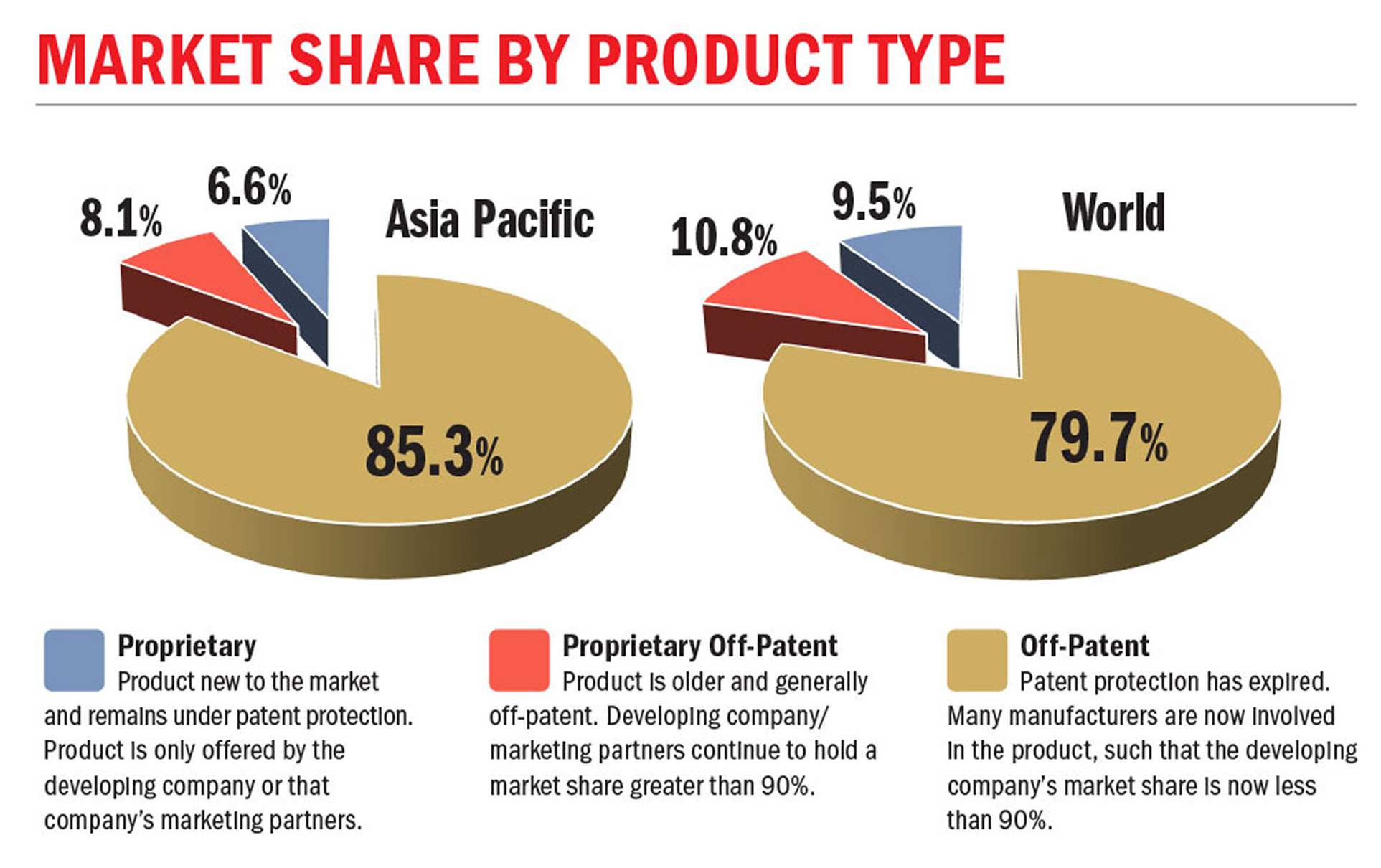
Fonte: AgbioInvestor
Ásia Pacífico
The crop protection market in the Asia Pacific region in 2026 has been impacted by the conflict in the Middle East, with high fertilizer and energy costs reducing grower spending power on pesticides. While sharp price increases were noted at the ex-factory level in China as the conflict progressed, the easing of logistics through the Strait of Hormuz has led to prices coming down from these inflated levels. However, with little prospect for lower fuel prices moving forward, it is not expected that prices will decline further. Variable weather conditions have also been an issue across Asia Pacific. The value of the crop protection market in Asia Pacific in 2026 is estimated to have declined by 2.8% to a value of $18,677 million.
Ásia Central
The 2026/27 El Niño is expected to lead to higher rainfall in Central Asia and southern and eastern China. However, drier-than-average conditions can be expected in India, northern China, Southeast Asia, and Australia. The anticipated severity of El Niño is likely to have significant impacts in these countries, with weaker monsoon rains, hotter temperatures, and high drought risk.
Asia Pacific: Generic Product Penetration
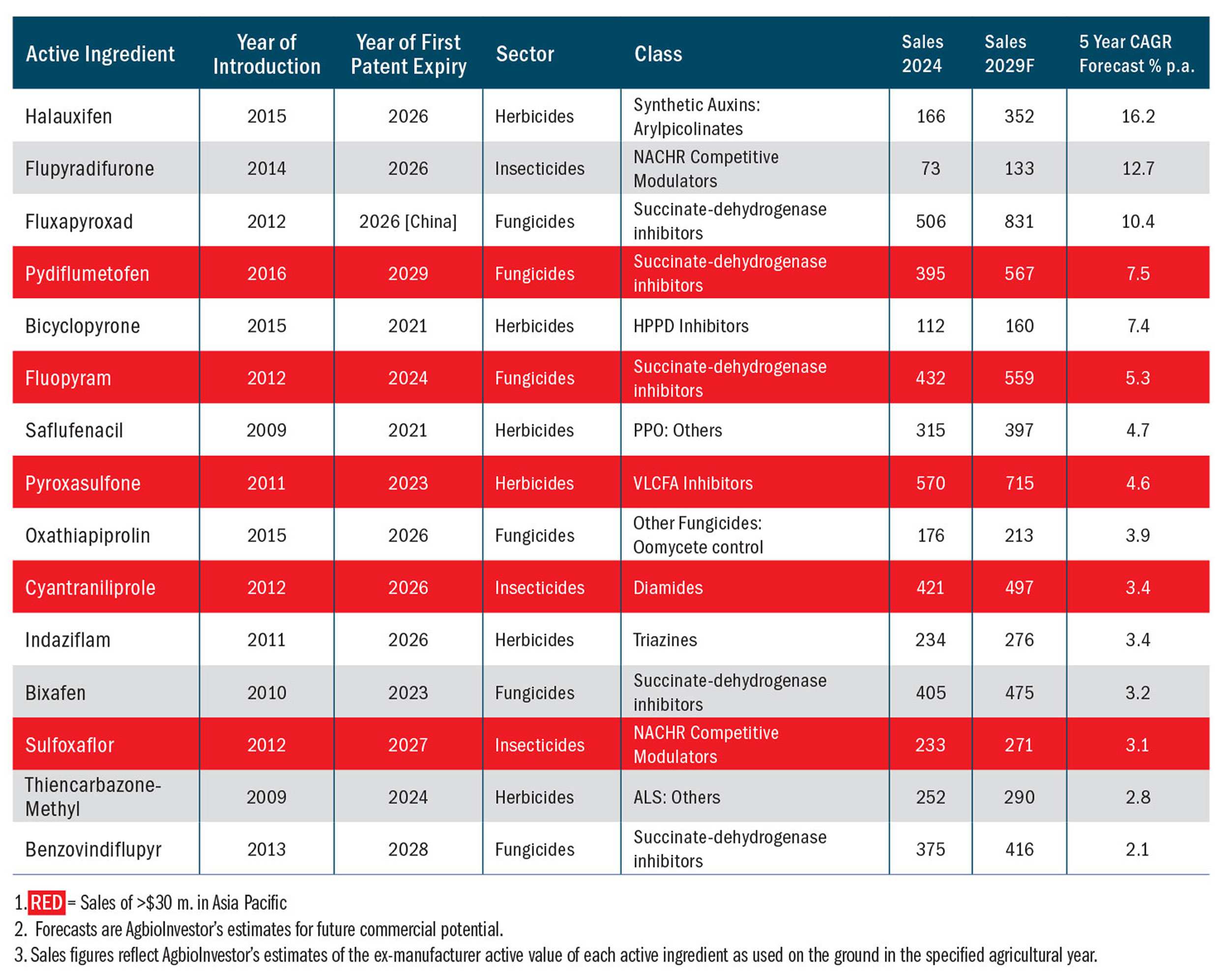
The proportion of the crop protection market in Asia Pacific attributable to off-patent active ingredients is higher than the global total. This increased focus on off-patent products, reflecting a generally lower spend per hectare than other regions and a greater influence of Chinese and Indian producers on usage in the region, means that the Asia Pacific market is very receptive to the introduction of recently off-patent molecules. A recent key example is the widespread and rapid generic penetration of the recently off-patent insecticide chlorantraniliprole. The table below highlights the most commercially significant active ingredients that have been identified by AgbioInvestor as having the greatest growth potential over the next five years, with those with particular interest to the Asia Pacific market being noted.
Asia Pacific Agronomic Factors 2026
- Austrália: The 2026/2027 winter crop forecasts suggest an 11% decline in the wheat area. Australia’s southern cropping regions have recently experienced good winter rainfall, boosting wheat and canola prospects. Western Australia/northern New South Wales/Queensland have been impacted by dry conditions and subsequent moisture stress, hampering yield expectations.
- Índia: The erratic monsoon led to July rains, which aided kharif planting, but August and September rainfall was below normal. Dry spells increased stress on rice, cotton, soybean, and maize and reduced soil moisture ahead of rabi planting.
- China: Typhoons and heavy rain in China led to flooding and waterlogging, affecting parts of eastern and southern agricultural regions. In September, rainfall in China has been persistent in western/central areas, delaying maize and rice maturation and harvest.
- Indonésia: The maize area declined in Indonesia, although harvesting of the current dry-season crop is continuing with good yields.
- Bangladesh: The Aus (smallest season) rice crop harvest is nearing completion, although yields have been impacted by flood-related crop damage.
- Thailand: The wet-season rice crop is being impacted by drought as well as high rice blast pressure.
Receba a Newsletter hoje mesmo!