


Groundbreaking Discovery: Coronatine and the Starting Point of Plant Systemic Immunity
Based on Nature Plants Discovery of Jasmonate’s New Role in Plant Immunity
Introduction: A Long-Underrated Signal Now Being Re-examined
For decades, jasmonate (JA) has been seen as a plant hormone mainly involved in responses to herbivory and mechanical damage, while systemic acquired resistance (SAR) has been attributed to the salicylic acid (SA) pathway. However, recent research challenges this division.
On January 6, 2026, Nature Plants published a study by Professor Murray Grant from the University of Warwick, revealing the critical early role of jasmonate signaling in initiating SAR. This discovery not only expands jasmonate’s biological function but also lays the groundwork for using high-potency jasmonate analogs, like coronatine (COR), in plant immune activation.
As part of Chengdu Newsun Crop Science Co., Ltd.’s core product lineup, coronatine has shown significant potential in immune activation and pathogen defense, supporting its growing application in global agriculture.
Jasmonate’s New Role: The “Starting Gun” of Systemic Immunity
The study used the JISS1:LUC reporter system to track SAR signal generation and propagation after effector-triggered immunity (ETI). Key findings include:
- Rapid Signal Propagation: SAR signals spread within 30 minutes from the infected leaf to neighboring uninfected leaves, about 3 hours after ETI.
- Signal Precedes Phenotype: SAR signals appeared before visible hypersensitive response (HR), indicating early immune activation.
Genetic analysis showed:
- Independent of Classic SAR Pathways: Early SAR signals were unaffected by classic SAR regulators like NPR1, suggesting a separate pathway.
- Dependent on Jasmonate: The signal was absent in jasmonate mutants but restored with exogenous jasmonate or coronatine (COR).
This study redefines jasmonate as a key driver of SAR initiation, challenging the idea of jasmonate as a downstream modulator and highlighting its role in triggering systemic immunity.
From Jasmonate to Coronatine: The Natural Role of a High-Activity Analog
Jasmonate signaling is mediated by the COI1–JAZ co-receptor system, where JA-Ile or its analogs bind to COI1–JAZ, triggering JAZ degradation and activating JA-dependent gene expression. Coronatine (COR), a well-studied jasmonate analog, has been shown to:
- Bind COI1–JAZ with high affinity, competing with JA-Ile for receptor sites;
- Enhance jasmonate signaling at both transcriptomic and physiological levels:
- Exhibit 100–10000 times higher bioactivity than natural jasmonate.
While coronatine was previously explored in pathogen-plant interactions, recent findings in Nature Plants reframe it as a powerful molecule capable of initiating plant systemic immunity, beyond just being a jasmonate analog.
From Theory to Practice: Coronatine’s Role in Field Trials
If the theoretical role of jasmonate signaling in systemic immunity holds, the next crucial question arises: Can this mechanism be validated in real-world agricultural settings?
Field trials evaluating coronatine (COR) have been conducted in various regions, and the results confirm its effectiveness in pathogen defense and immune activation across different crops.
Field Trial Results in China
A study conducted by China Agricultural University demonstrated that coronatine could enhance maize resistance to stalk rot. Using the susceptible maize variety “Zhengdan 958,” different concentrations of coronatine (1, 10, and 50 μg/mL) were applied, followed by artificial inoculation with Fusarium graminearum. The results showed that 10 μg/mL was the optimal concentration, significantly reducing disease symptoms and inhibiting pathogen spread. This resistance was attributed to multiple synergistic actions: coronatine boosted antioxidant and defense enzyme activity, reduced membrane lipid peroxidation, and induced stomatal closure while accumulating H2O2, thereby enhancing the plant’s physiological defense. Furthermore, coronatine activated jasmonate signaling and regulated the expression of several key genes involved in disease resistance pathways.
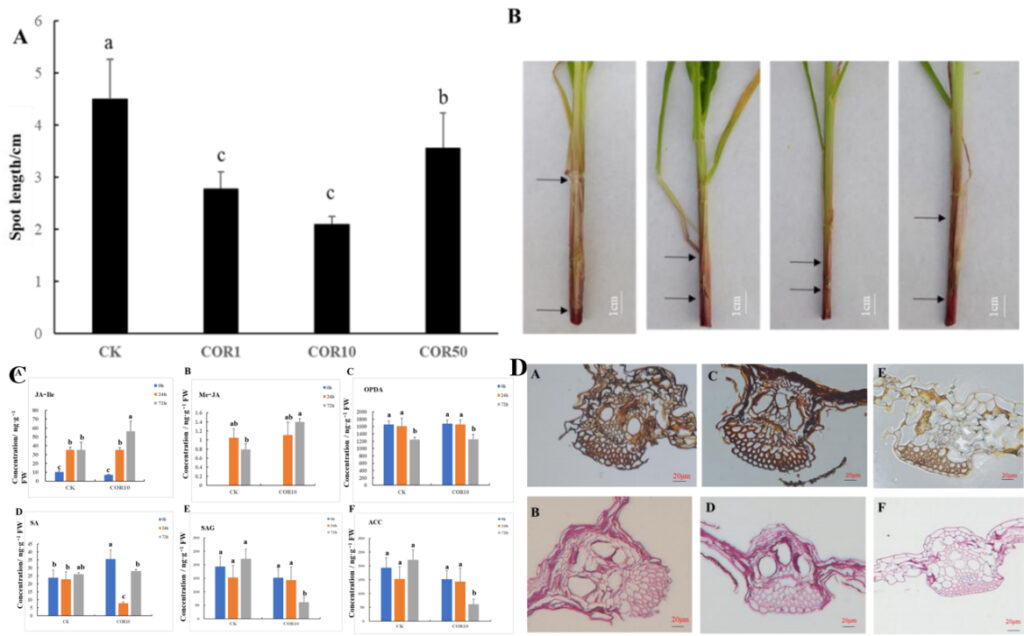
Figure 1. Phenotypic data related to the resistance of coronatine (COR) to maize stalk rot.
- Quantification of the lesion length on the stem of the plant shown in panel B;
- Phenotype of maize stalk rot after inoculating Fusarium graminearum on the maize variety Zhengdan 958 treated with COR and CK (control);
- Concentrations of plant hormones in maize plants;
- GMS and PAS staining results of infected maize stem tissues, from left to right:
Field Trial Results in Brazil (Conducted with New Sun’s Collaboration)
In Brazil’s major soybean-growing regions, field trials have further confirmed the effectiveness of coronatine in enhancing disease control. Conducted in Juliagro Research Station in Uberlândia–MG, the trials assessed the effects of coronatine in combination with conventional fungicides, as well as its standalone impact on soybean disease prevention and resistance to environmental stress.
The results showed that coronatine-treated plants exhibited a 10% reduction in leaf drop caused by target spot disease over the entire growing season, demonstrating significant disease control. Additionally, initial observations indicated that coronatine also had an inhibitory effect on soil nematode populations, suggesting its potential role in integrated pest management. When combined with fungicides, coronatine treatment further increased soybean yield by an average of 4.1 bags per hectare, highlighting its potential to improve yield stability while enhancing disease resistance.
These findings validate that coronatine, based on jasmonate signaling, not only holds promise as a mechanism for immune activation but also has substantial practical applicability in real-world agricultural settings.
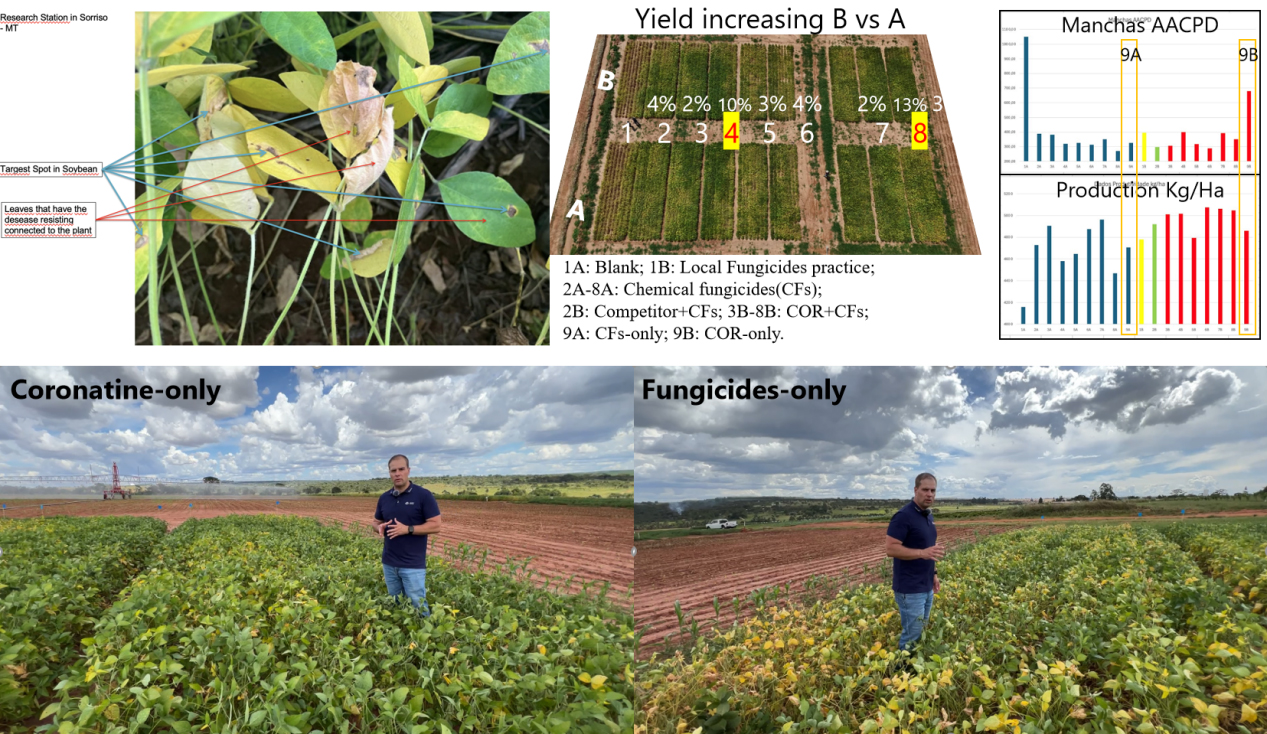
Figure 2. Disease resistance performance of coronatine (COR) on soybeans in Brazil
Coronatine: A New Dawn for Plant Systemic Immunity
The Nature Plants study, by redefining the role of jasmonate in systemic immunity, positions coronatine as a powerful tool in plant defense. As a high-activity analog of jasmonate, coronatine’s ability to activate immune responses presents a significant breakthrough for plant protection technologies.
When systemic immunity is no longer just a “response,” but rather a process that can be proactively triggered and precisely controlled, plant protection is poised to move from a reactive to a more active, systemic, and designable approach. For Chengdu Newsun, Coronatine (COR) stands as a cornerstone product, offering a scientifically backed solution that bridges cutting-edge research with real-world agricultural applications.