Micropep Files First Regulatory Submissions for Novel Peptide Biofungicide with a New Mode of Action
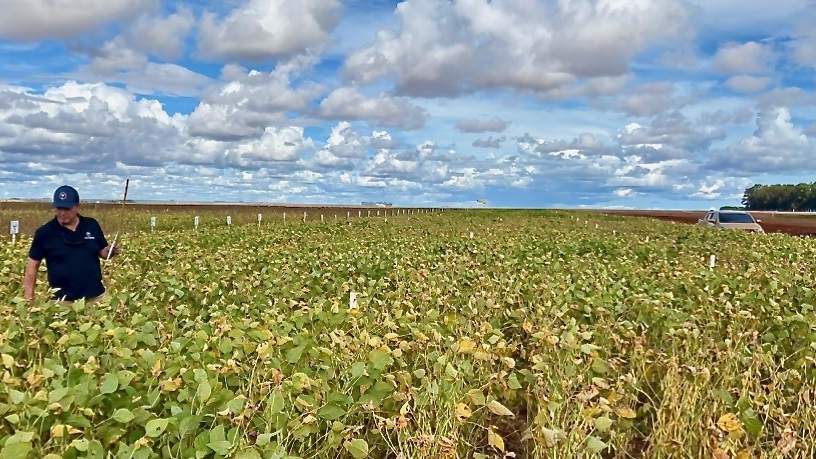
A Micropep field inspector evaluates Promisin soybean field trial results in the Mato Grosso region of Brazil. The peptide-based biofungicide is now under its first regulatory review in Brazil and Paraguay, marking the initial step in a planned global rollout.
Micropep Technologies has announced the submission of regulatory dossiers for Promisin, its lead peptide-based biofungicide, in Brazil and Paraguay. The filings mark a key milestone as the company moves from development to commercialization, with additional submissions planned in the United States and European Union.
Promisin is a broad-spectrum crop protection solution designed to control major fungal diseases while fitting seamlessly into existing farming systems. It introduces a new active ingredient, featuring a novel biological mode of action as an antimicrobial peptide, developed for both performance and scalability. In addition, Promisin has been built for row crop use, with a focus not only on efficacy but also on delivering a cost profile that works for growers.
The submissions are supported by more than three years of development and an extensive global field program, including over 200 trials, conducted under high disease pressure across Europe, North America, and South America. In these trials, Promisin demonstrated consistent efficacy as a standalone solution and enhanced performance when integrated into standard crop protection programs.
“There’s a clear need for new solutions as resistance pressure builds and regulatory expectations evolve,” said Dr. Kevin Leiner, VP of Regulatory Affairs at Micropep. “Promisin delivers a highly favorable efficacy, safety, and sustainability profile that represents the forefront of a coming wave of peptide-based biocontrol products for agriculture. These first submissions are an important step toward making that available to growers at scale.”





A new defense against resistant soybean fungal diseases
Fungal diseases continue to put significant pressure on global agriculture, while many conventional fungicides face declining effectiveness or increasing regulatory constraints. Promisin addresses this challenge with a novel peptide-based approach.
Promisin is designed to deliver:
- Control of key fungal diseases in soybeans, including: Phakopsora pachyrhizi or Asian soybean rust (ASR), Corynespora cassiicola (Target Spot), and Cercospora kikuchii (Leaf Blight).
- Standalone disease control and enhanced performance when integrated into combination spray programs.
- Novel mode of action to support resistance management by disrupting fungal cell membranes and weakening infection pressure.
- Proven performance under high disease pressure.
- Compatibility with existing spray programs and tank mixes.
- Cost profile aligned with row crop economics.
Importantly for growers, Promisin is positioned as a novel, and affordable solution to add to their toolbox, addressing one of the main barriers that has slowed adoption of earlier generations of higher cost biocontrol products.
“Promisin represents what we set out to build from day one: a peptide-based crop protection solution that delivers efficacy at a cost structure that works for row crops.” said Georg Goeres, Chief Executive Officer of Micropep. “Growers need products that perform, fit into their operations, and make economic sense. With Promisin, we’re delivering on all three.”
Promisin is the first product to emerge from Micropep’s Krisalix™ platform, which enables the discovery and design of next-generation peptide solutions for crop protection. The company is advancing a broader pipeline of peptide candidates targeting invasive weeds, plant pathogens, and insect pests, reinforcing its ambition to establish peptides as a new category in global agriculture.
The initial submissions in Brazil and Paraguay represent the first phase of a broader regulatory strategy. As reviews progress, Micropep continues to prepare additional filings and scale its manufacturing capabilities, bringing a new generation of biological crop protection solutions closer to growers worldwide.
Get The Newsletter Today!