Hacer negocios en 2026: Consejos para expandirse en Latinoamérica
 23 de marzo de 2026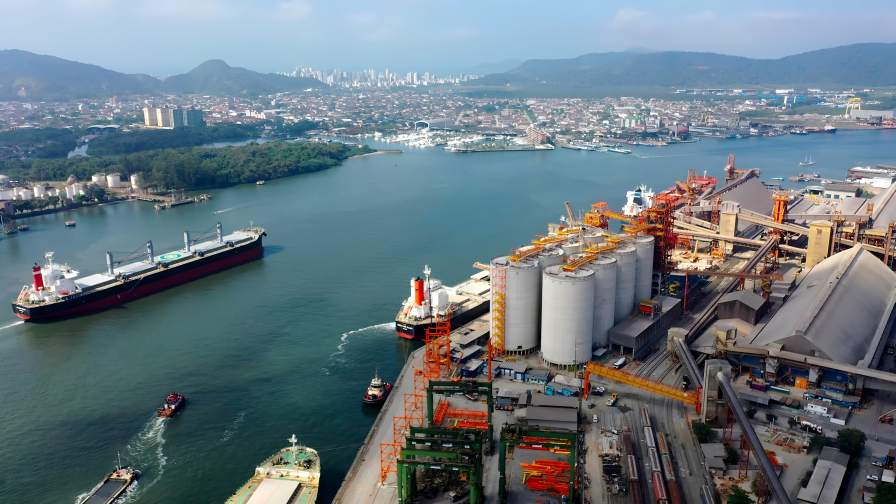
As geopolitical trade wars and new tariffs impact grower margins, major export hubs like the Port of Santos are at the center of a shifting crop protection channel. Photo: Adobe Stock
Whether your interest is the growing biologicals market or revisions in regulation process and laws, 2026 is bringing change to LATAM countries. AgriBusiness Global talked with three experts who shared six insights for successful business dealings in this region.
Debt Indexes
For 2026, it is important to review debt indexes in each country you want to do business in. With the tariffs starting geopolitical trade wars, this is affecting grower margins, creating a struggle within the crop protection channel.
“Very big groups, especially in Brazil and Argentina, have some financial problems,” says Nicolas Potrie, Director of TAFIREL, based in Uruguay. “Some very large resellers are rescheduling their accounts because they cannot afford the payment to suppliers.”
Make sure you are aware of the financial state of who you are doing business with, even if they are a big player.

In-Field Development
Many LATAM countries do not offer a one-size-fits-all market.
“Small farmers, agro-industrial operations, and export-focused producers all work differently and expect different things from their suppliers,” says Javier Chavarro, Agribusiness Consultant.
Chavarro recommends that companies invest in local teams and technical support and develop strong distributor relationships.
“Knowing the crops, the regions, and the day-to-day challenges farmers face helps build credibility and long-term partnerships,” says Chavarro.
Once you have a good understanding of what kind of product support a region needs, target an influential agricultural leader in the area to work with to build the trust of the surrounding agricultural community.
“While the registration process is underway for your product, invest in field development with leading farmers in the market segment you want to go enter,” says Daniel Traverso, Vice President of Anasac Colombia and Mexico. “My advice is to look for a market segment with high value, not extensive crops. Then, choose a good development team and generate demand. This is crucial before you start selling. Expend more in development than in sales.”
Environmental Factors
Paying attention to the local water supply and climate change is an ongoing study for each LATAM country. For example, Traverso says in Chile, growers struggle to get the water they need for crops. Knowing this challenge can help your development team understand what products will help these growers.
In addition to water supply is the climate and its effect on yields. For countries dependent on crop exports, the climate can make or break a season.
“If summer is la niña or el niño, it affects the average yield of each season,” says Potrie. “This is a high-risk, sky-open industry, in which nobody has a guarantee about the harvest.”
Have a team monitor the challenges that climate change is presenting and offer a way to help growers with improving their yields.
Price and Performance
LATAM farmers are looking for a high return on investment.
“Brand names alone no longer drive buying decisions,” says Chavarro. “What matters is performance in the field and a clear economic benefit.”
This is especially true in staple crops, where margins are tight and price sensitivity is high.
“Companies need competitive pricing, practical pack sizes, and a value proposition that farmers can easily understand and trust,” says Chavarro. “This is even more important in a market where local and post-patent players already have a strong presence.”
Flexibility and Integrated Solutions Are Key
LATAM crop management is becoming more integrated, with biologicals, chemical crop protection products, plant health, and ag tech. Integrated approaches are helping growers address weed resistance, lower maximum residue limits on exported crops, and manage costs.
“Companies need to be flexible and ready to position their products as part of broader crop programs, not just as standalone solutions,” says Chavarro. “This also means paying attention to regulatory details, packaging and artwork requirements, and sustainability standards — especially in export crops.”
Building relationships with growers is also essential.
“Don’t offer the portfolio you want to sell,” says Traverso. “Instead, develop and sell the portfolio the farmer needs. Take your time. Then, make a significant investment to obtain registration as quickly as possible, submitting a complete and high-quality dossier. Also, choose the right market access and the distribution strategy to gain effective access to your target market segment.”
Legal Security
Companies bringing new products to LATAM are often focused on registration and regulation, but Potrie advises studying the full internal law of each country before entering the market.
“Companies should study very carefully the tax exemptions for the foreign investor, the regulation between national and foreigners, and the state policies,” says Potrie. “Each country is totally different inside.”
¡Obtenga el boletín hoy!