


La resiliencia se está convirtiendo en la próxima ventaja competitiva de la agricultura.
Durante décadas, la industria agrícola mundial se ha centrado en maximizar el rendimiento. Los avances en genética, protección de cultivos, nutrición, mecanización y prácticas agronómicas han permitido a los agricultores producir más alimentos que nunca. Sin embargo, a medida que el cambio climático se acelera, surge un nuevo desafío en todas las regiones agrícolas del mundo: proteger el rendimiento de los cultivos frente a factores de estrés abiótico cada vez más frecuentes e impredecibles.
La agricultura siempre ha dependido del clima, pero hoy en día los agricultores se enfrentan a una mayor incertidumbre que las generaciones anteriores. Los patrones de lluvia más variables, el aumento de las temperaturas, los períodos de sequía prolongados y los fenómenos meteorológicos extremos más frecuentes están creando condiciones que pueden reducir significativamente la productividad de los cultivos, incluso en sistemas agrícolas muy avanzados.
Entre los numerosos factores de estrés abiótico que afectan la producción agrícola mundial, la sequía sigue siendo uno de los más importantes. La escasez de agua puede alterar procesos fundamentales de las plantas, reduciendo la fotosíntesis, la absorción de nutrientes, la acumulación de biomasa, el desarrollo reproductivo y, en última instancia, el rendimiento. Incluso periodos relativamente cortos de sequía durante etapas críticas de crecimiento pueden tener consecuencias duraderas para el desempeño de los cultivos. A medida que estos eventos se vuelven más frecuentes e impredecibles, la resiliencia se está consolidando rápidamente como una de las características más valiosas de la agricultura moderna.
La producción de soja es particularmente vulnerable a este desafío. Como uno de los cultivos más importantes del mundo para la alimentación humana y animal, y para la producción de biocombustibles, la soja desempeña un papel fundamental en la productividad agrícola mundial. Sin embargo, este cultivo es muy sensible a la disponibilidad de agua durante las etapas reproductivas clave. Una sequía inoportuna puede reducir significativamente la formación de vainas, el llenado del grano y el rendimiento final, generando importantes repercusiones económicas en toda la cadena de valor.
Pocos países ilustran este desafío con tanta claridad como Brasil. Como mayor productor y exportador mundial de soja, Brasil se ha convertido en un pilar fundamental de la seguridad alimentaria global. Al mismo tiempo, sus sistemas de producción están cada vez más expuestos a la variabilidad climática. En los últimos años, los productores de diversas regiones productoras de soja han experimentado episodios recurrentes de lluvias irregulares, sequías prolongadas y estrés térmico que afectan directamente el rendimiento de los cultivos. Si bien los avances en agronomía y genética siguen impulsando el aumento de la productividad, el estrés ambiental se está convirtiendo en uno de los principales factores que limitan la consistencia en el rendimiento y la productividad de los cultivos.
Esta realidad está impulsando un cambio importante en la agricultura. El sector ya no puede centrarse exclusivamente en lograr mayores rendimientos en condiciones ideales. Cada vez más, los agricultores necesitan tecnologías que ayuden a preservar el potencial de rendimiento cuando las condiciones no son óptimas. Más allá del impacto agronómico, la volatilidad de los rendimientos derivada del clima está generando una importante incertidumbre económica para los agricultores. La producción impredecible dificulta la planificación de inversiones, la gestión del flujo de caja y la obtención de rentabilidades consistentes. En el contexto actual, muchos agricultores valoran más los rendimientos estables y fiables año tras año que lograr una cosecha récord seguida de varias temporadas decepcionantes. Por lo tanto, la resiliencia se está convirtiendo en algo más que un objetivo agronómico; es una estrategia empresarial que ayuda a mejorar la rentabilidad, reducir el riesgo y apoyar la sostenibilidad agrícola a largo plazo. Dado que la adaptación al estrés ambiental es una prioridad estratégica, las soluciones biológicas están evolucionando de insumos de apoyo a herramientas fundamentales para la adaptación al cambio climático.
En Agrobiomics, creemos que este cambio representa una de las oportunidades de innovación más importantes en la agricultura actual.
Nuestra misión es impulsar una agricultura resiliente mediante el desarrollo de bioestimulantes precisos y con respaldo científico que ayuden a los cultivos a afrontar mejor el estrés abiótico. Este enfoque busca transformar los productos biológicos, pasando de ser insumos de amplio espectro a tecnologías estratégicas capaces de generar valor tangible donde los agricultores más lo necesitan.
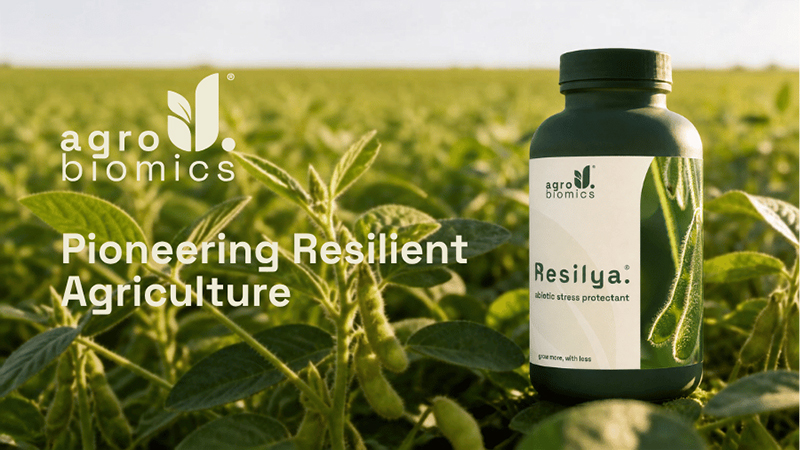
Uno de los ejemplos más avanzados de este trabajo es Resilia®, una solución innovadora para la soja que actualmente se encuentra en desarrollo para su lanzamiento inicial en el mercado brasileño. Diseñada para ayudar a los cultivos a afrontar mejor el estrés abiótico, en particular la sequía, Resilya® Se está desarrollando teniendo en cuenta un principio simple pero poderoso: la resiliencia debe comenzar desde el inicio de la temporada.
Por esta razón, la estrategia comercial inicial de Agrobiomics se centra en el tratamiento de semillas. Al apoyar el cultivo desde las primeras etapas de establecimiento, Resilia® Su objetivo es ayudar a las plantas de soja a desarrollar resiliencia desde el primer día, preparándolas para afrontar mejor los desafíos ambientales a lo largo de su ciclo de crecimiento. Las soluciones aplicadas a las semillas también ofrecen una ventaja práctica, ya que permiten a los agricultores integrar la resiliencia en sus programas de manejo existentes sin añadir complejidad operativa.
Los ensayos de soja realizados con centros de investigación externos durante la temporada 2025-2026 en diez localidades de siete estados brasileños demostraron un rendimiento sólido. Aplicado como tratamiento de semillas, Resilia® Se obtuvo un aumento promedio del rendimiento de más de 6% en comparación con el control sin tratamiento, lo que equivale a una ganancia promedio de 300 kg/ha.
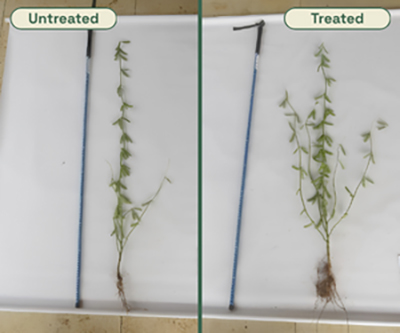
Comparación de plantas de soja sin tratar y tratadas con Resilya®. Ensayo realizado en Leme-SP, Brasil; temporada 2025-2026.
Al mismo tiempo, Agrobiomics también está evaluando enfoques de aplicación adicionales, incluyendo aplicaciones foliares y programas integrados que combinan el tratamiento de semillas con una aplicación foliar posterior. Estas evaluaciones nos ayudan a comprender mejor cómo se puede fomentar la resiliencia a lo largo del ciclo del cultivo y bajo diferentes condiciones ambientales. Si bien se prevé que el tratamiento de semillas sea la primera vía de comercialización, el programa de desarrollo más amplio refleja nuestro compromiso de maximizar la flexibilidad y el valor para futuros socios y agricultores.
La necesidad de tecnologías resilientes no hará más que aumentar en los próximos años. Las proyecciones climáticas indican que los sistemas agrícolas de todo el mundo seguirán experimentando una creciente variabilidad ambiental. En este contexto, el futuro de la productividad de los cultivos estará determinado por la capacidad de estos para mantener su rendimiento cuando las condiciones sean adversas.
En un mundo donde la incertidumbre ambiental se está convirtiendo en la norma, la resiliencia es la próxima ventaja competitiva de la agricultura y un pilar fundamental de la productividad agrícola sostenible. Con un lanzamiento previsto para 2027, los productores de soja brasileños pronto podrían tener acceso a una nueva generación de tecnología de bioestimulantes diseñada específicamente para esta nueva realidad. A través de innovaciones como Resilya®, Agrobiomics trabaja para ayudar a los agricultores a proteger mejor el potencial de rendimiento, reducir los riesgos relacionados con el clima y construir sistemas de producción más resilientes.