


NANOTECNOLOGÍA EN FERTILIZANTES
UNA NUEVA ERA PARA LOS AVANCES AGRÍCOLAS GLOBALES
¿Qué es la nanotecnología?
La nanotecnología es una tecnología facilitadora. Se sitúa en la intersección de las ciencias básicas y la ingeniería, y tiene el potencial de impactar en una amplia gama de disciplinas. La nanotecnología implica el estudio de los nanomateriales.
Según la definición de la ISO, el nanomaterial se define como:
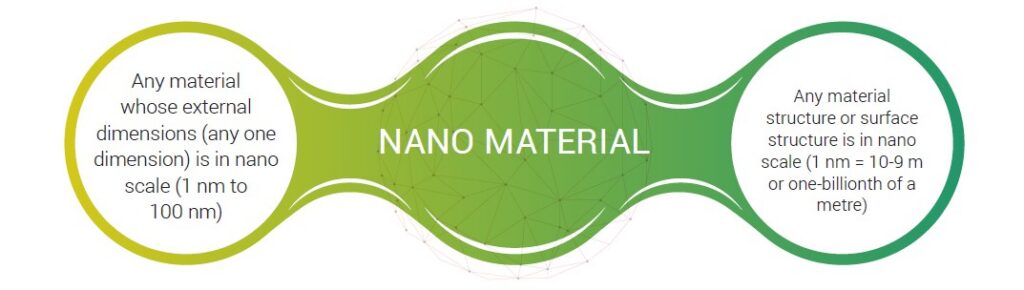
Según ciertos organismos reguladores (FDA de EE. UU., Health Canada, Comisión Europea de Alimentación y Agricultura, Directrices reglamentarias del DBT para el uso de insumos agrícolas y productos alimenticios nanotecnológicos, India, etc.), este tamaño puede extenderse a 1000 nm si el material presenta propiedades o fenómenos característicos de los nanomateriales, especialmente para productos alimenticios.
Según su origen, las nanopartículas pueden ser de dos tipos:
a) Nanopartículas naturales: Son partículas procedentes del humo, la arcilla, las proteínas/lípidos, la niebla marina, etc.
b) Nanopartículas diseñadas: Nanopartículas artificiales que tienen un control más preciso sobre la
propiedades (dirigidas a diferentes aplicaciones).
La industria de los chips de silicio fue la principal influencia en los estudios de nanotecnología, donde, según la famosa ley de Moore, el número de transistores en un microchip semiconductor se duplicaba cada dos años. Para superar las limitaciones físicas, la nanotecnología tuvo que avanzar para producir ordenadores más pequeños y rápidos.
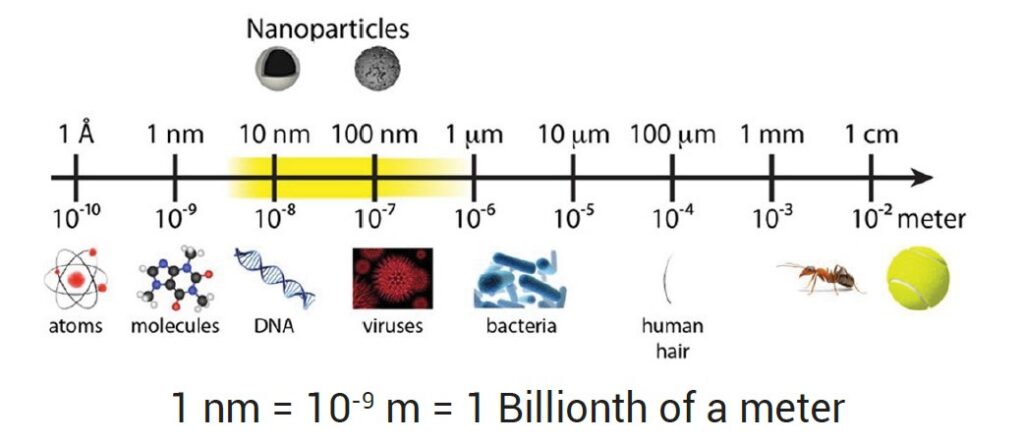
Aplicaciones de la nanotecnología:
Tradicionalmente, el término nano se limitaba a metales, óxidos y semiconductores. Esto se debe a que las nanopartículas de estos materiales presentan propiedades optoelectrónicas y fisicoquímicas totalmente diferentes a las de sus contrapartes macroscópicas.
Por ejemplo, las nanopartículas de oro son de color rojo/azul; las nanopartículas de plata son de color amarillo/naranja; las nanopartículas de seleniuro de cadmio muestran fluorescencia, etc. Todas estas propiedades no son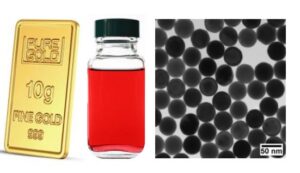 Existen en sus contrapartes macroscópicas. Estas propiedades las hacen adecuadas para diversas aplicaciones, como detección, catálisis, obtención de imágenes, etc. Por lo tanto, las nanopartículas resultan atractivas.
Con el paso de los años, la atención se centró en otros aspectos de la nanotecnología: su tamaño de partícula y área superficial, en lugar de las propiedades optoelectrónicas tradicionales. En este contexto, la nanotecnología tiene una finalidad diferente: su pequeño tamaño de partícula la hace atractiva para penetrar en las células biológicas. Esto impulsó los estudios sobre la penetración de nanopartículas inorgánicas (oro, plata, óxido de hierro, etc.) en células biológicas, sistemas animales y humanos, y recientemente en sistemas vegetales.
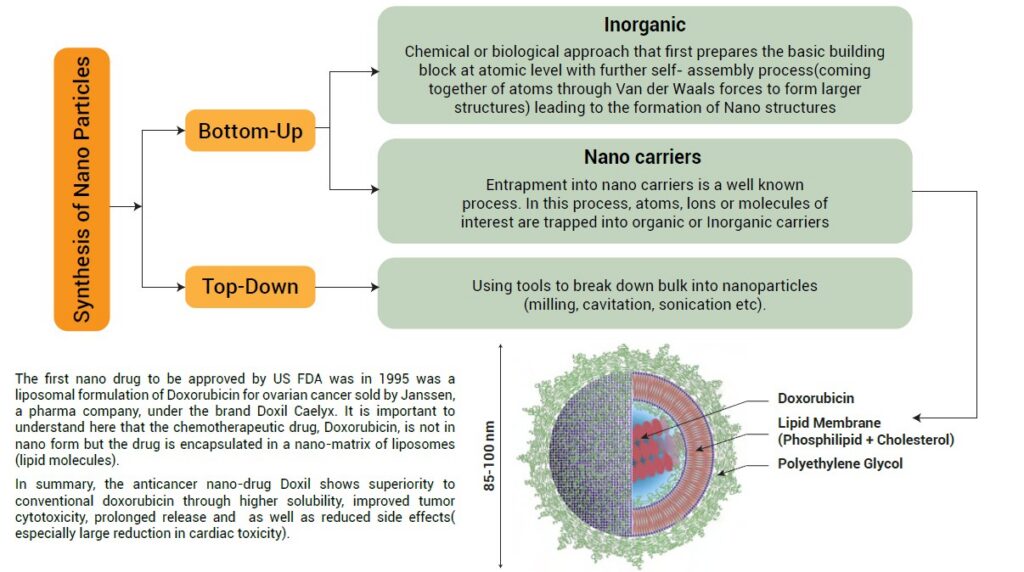
Estos estudios propiciaron el uso de nanomateriales en la industria farmacéutica. Además de los agentes de contraste para diagnóstico por imagen y las terapias fototérmicas, la aplicabilidad de las nanopartículas inorgánicas en la industria farmacéutica era limitada. Por consiguiente, en este sector, la atención se centró en las "nanopartículas blandas".“
Nanopartículas blandas:
Las nanopartículas blandas pueden diseñarse para encapsular fármacos y liberarlos en sitios específicos, reduciendo la toxicidad sistémica y mejorando los perfiles farmacocinéticos. En este caso, las moléculas del fármaco se encuentran en su forma original, no en nanopartículas.
Nanofertilizantes:
Nano-Fertilizer es una de las soluciones más potentes de la agricultura de precisión para la intensificación sostenible de la producción agrícola mundial.
Un descubrimiento importante fue la observación de que las plantas pueden absorber nanopartículas a través de las raíces o los estomas. Esto fomenta el uso de nanopartículas como vehículos de administración de ingredientes activos a los cultivos. Cuando el ingrediente activo es un pesticida, el sistema se clasifica como nanopesticida, mientras que si el ingrediente activo es un nutriente, el producto se incluye en la categoría de nanofertilizante. A nivel mundial, se han realizado diversos estudios que describen diferentes enfoques para la preparación de nanofertilizantes y analizan su utilidad como una opción superior a los fertilizantes convencionales.
En el caso de la nutrición de cultivos, las plantas tienen requisitos muy específicos: el nutriente debe estar en una forma asimilable. Las plantas absorben los nutrientes como iones (catiónicos: NH4+, Zn2+, Fe2+, etc., o aniónicos: NO3-, H2PO4– o HPO4 2–, etc.). Por lo tanto, para suministrar la forma adecuada de nutriente a las plantas, se suelen utilizar nanotransportadores (nanoemulsiones, lípidos, transportadores inorgánicos como sílice, etc.) como portadores de las formas asimilables por las plantas. En particular, en el caso de Gromor Nano DAP y Gromor nano urea de Coromandel, las moléculas de fosfato diamónico o urea se encuentran atrapadas en nanotransportadores (polímeros naturales). Estos pueden ser absorbidos directamente por las raíces o los estomas de las hojas.
¿Necesita nanofertilizantes?
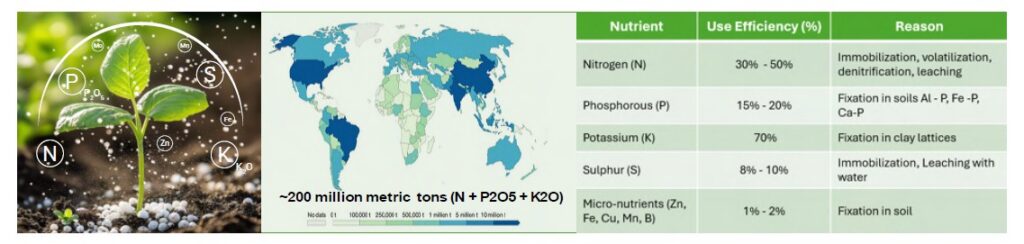
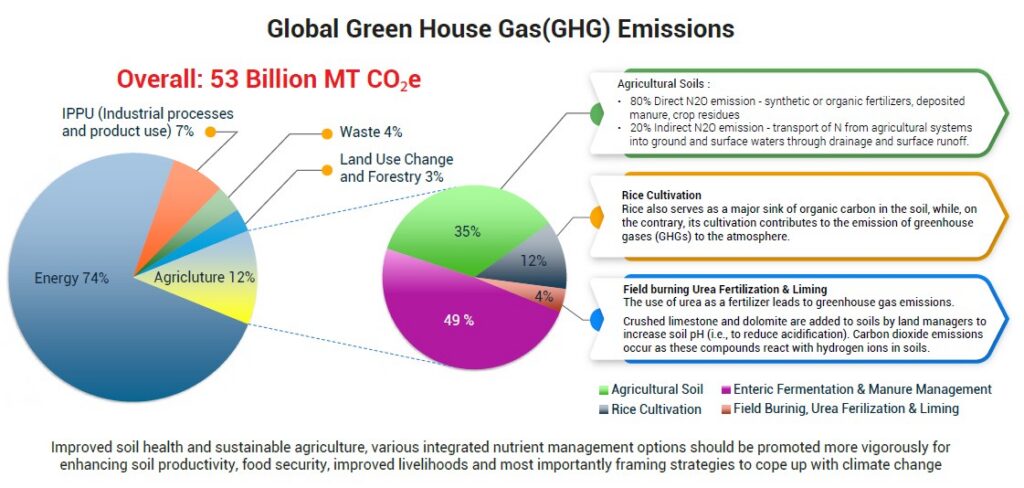
Anualmente se consumen aproximadamente 200 millones de toneladas métricas de fertilizantes químicos convencionales (N + P2O5 + K2O) con una eficiencia de uso significativamente menor, dejando el resto en el medio ambiente, lo que conlleva la contaminación de las aguas subterráneas, los acuíferos y las emisiones de gases de efecto invernadero (GEI).
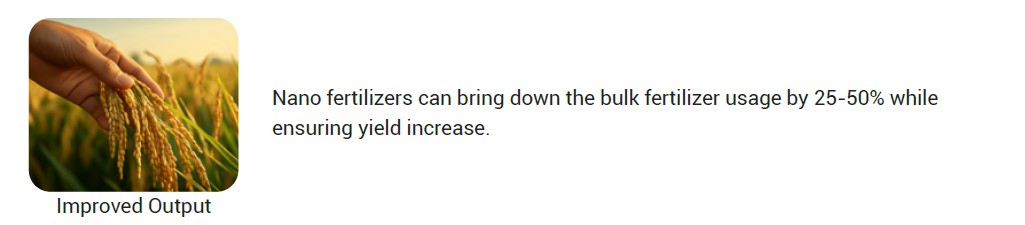
Mecanismos: En la literatura científica se han propuesto algunos mecanismos para los nanofertilizantes, entre los que se incluyen:
1) Absorción y asimilación más rápidas
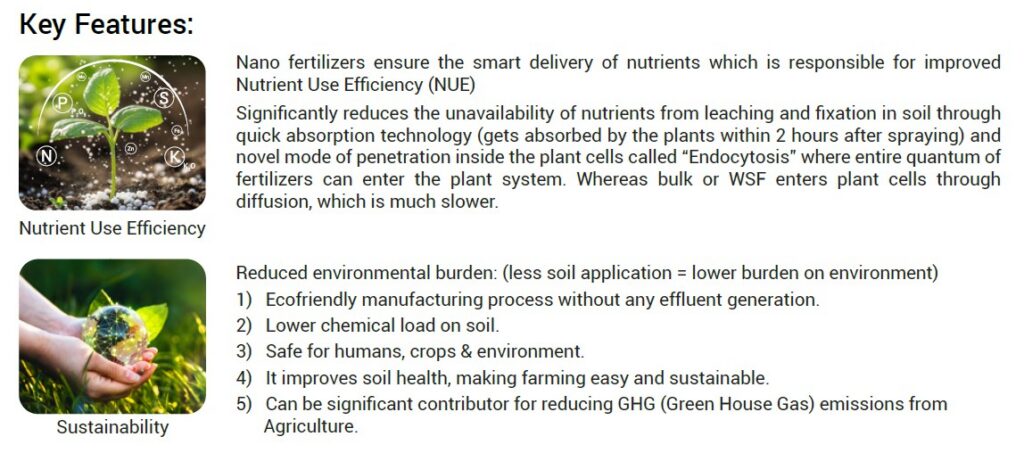
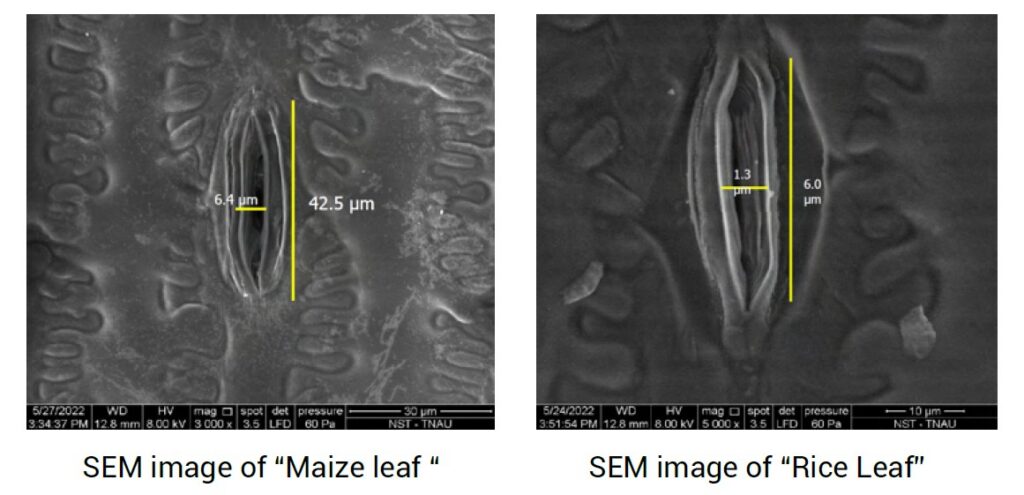
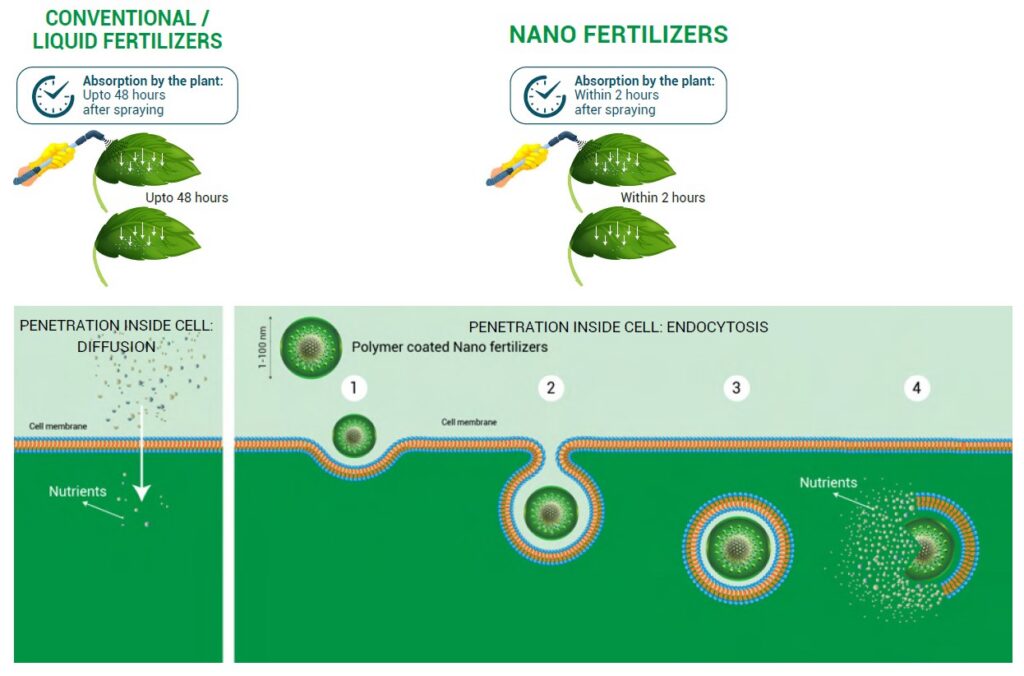
Debido a su pequeño tamaño y gran superficie, los nanofertilizantes se absorben a través de los estomas y los poros de las hojas en un plazo de 2 horas tras su aplicación. En el caso de otros fertilizantes líquidos y solubles en agua, los nutrientes entran en el sistema vegetal entre 10 y 48 horas después de la aplicación. Los estomas se ubican tanto en la superficie adaxial (superficie superior) como en la abaxial (superficie inferior) de las hojas, independientemente del cultivo. La parte central del estoma se denomina poro, cuya dimensión oscila entre 0,17 y 0,93 μm (170 y 930 nm) para la mayoría de los cultivos. La densidad estomática es muy variable, entre 40 y 400 por mm².
2) Modo único de penetración en la célula vegetal: endocitosis.
Los nanofertilizantes penetran en la célula mediante un mecanismo único llamado endocitosis. Tras ingresar al sistema vegetal a través de los estomas, los nanofertilizantes encapsulados en polímero alcanzan la membrana celular. Esta membrana se pliega y los envuelve, transportándolos al interior. Después de la endocitosis, la membrana recupera su forma original. Posteriormente, el nanofertilizante encapsulado se transporta al interior de la célula y se almacena en el compartimento intracelular. Allí, el polímero se degrada y libera los nutrientes, que se transportan a otras células mediante vías simplásticas. Dado que los nanofertilizantes encapsulados en polímero contienen una cantidad significativamente mayor de ingredientes activos, la totalidad del contenido se libera dentro de las células de una sola vez.
En el caso de otros fertilizantes líquidos y solubles en agua, su absorción celular se produce mediante un mecanismo diferente, y la endocitosis no es posible. Entran en las células por difusión, un mecanismo mucho más lento.
3) Entrega dirigida y liberación controlada:
Los nanofertilizantes, dentro del citoplasma celular, se metabolizan lentamente para liberar los nutrientes disponibles para la planta. Esta liberación gradual a lo largo del tiempo satisface las necesidades nutricionales de la planta.
4) Desencadenar la actividad
Los nanofertilizantes también pueden activar o desactivar la expresión génica de las plantas, lo que les permite absorber más nutrientes del suelo. La planta libera más ácidos orgánicos y biomoléculas en el suelo, lo que puede resultar en la liberación de fósforo fijado u otros nutrientes.
Fertilizantes Gromor Nano de Coromandel:
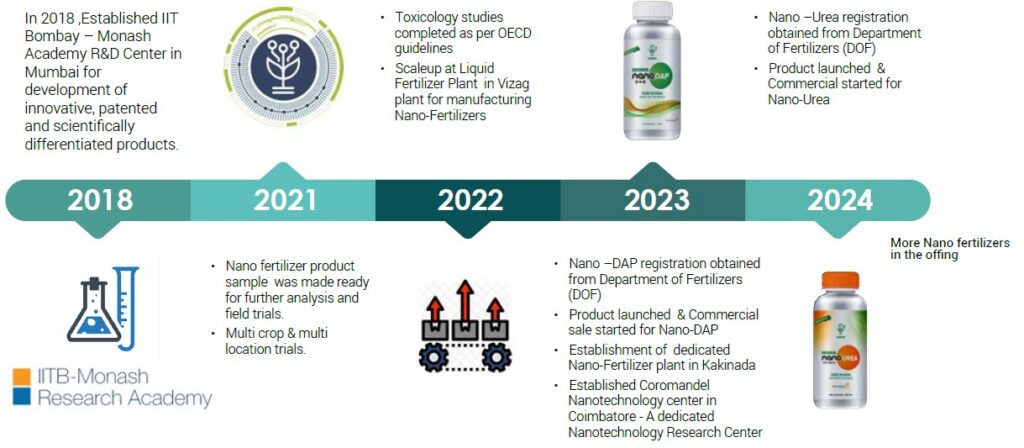
Trayectoria de desarrollo del producto: La trayectoria comenzó en 2018 cuando Coromandel estableció un centro de I+D de vanguardia en la Academia Monash del IIT Bombay en Mumbai. El centro alberga a 7 científicos con amplia experiencia interdisciplinaria. El laboratorio está equipado con infraestructura avanzada e instalaciones analíticas. La necesidad de desarrollar el producto surgió del ámbito empresarial. El proceso detallado incluyó los siguientes pasos sencillos.
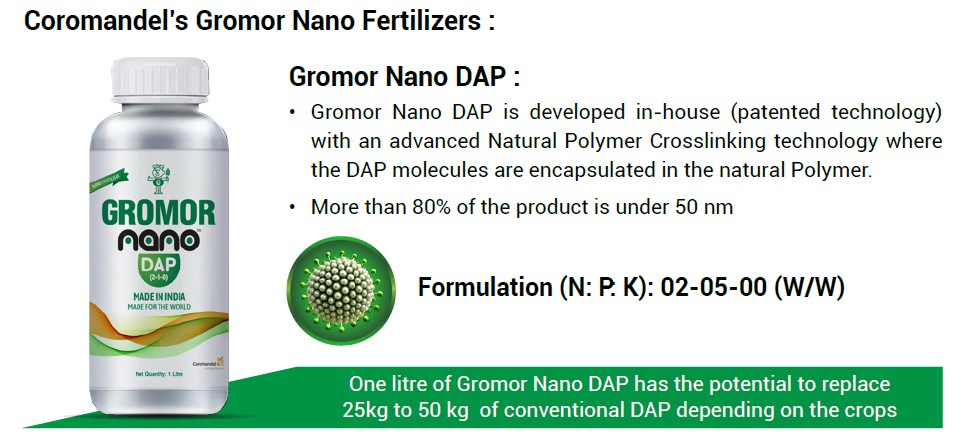
Los datos de rendimiento de una amplia gama de cultivos (cereales, legumbres, oleaginosas y hortalizas) de diversas zonas agroclimáticas indicaron claramente que la aplicación foliar de dos dosis de Gromor Nano DAP en combinación con 75% de la dosis recomendada de fertilizante (RDF) aumentó consistentemente el rendimiento en 5-17%, con la excepción de una hortaliza (calabaza de botella) que produjo un rendimiento 28% superior a su respectiva RDF. Incluso con 100% de RDF y la aplicación foliar adicional de Nano DAP, se observó un aumento del rendimiento de 2-22%, lo que demuestra la importancia de la aplicación foliar.
Se realizaron más de 2500 ensayos con agricultores en toda la India. Para una mayor eficiencia en el uso del fósforo, la aplicación combinada de DAP al suelo y foliar (Nano DAP) es ideal.
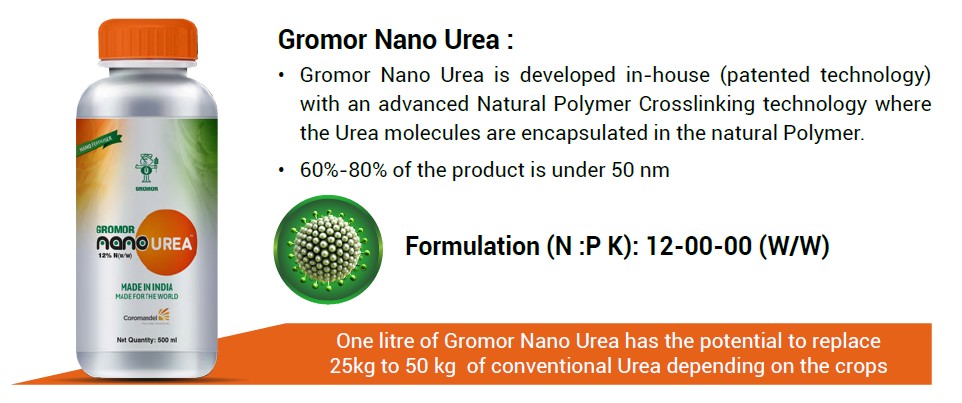
Lanzado recientemente en 2024, los datos de rendimiento de una amplia gama de cultivos que incluyen cereales, legumbres, oleaginosas y hortalizas de diversas zonas agroclimáticas indicaron claramente que la pulverización foliar de dos rondas de Gromor Nano Urea en combinación con 75% RDF (Dosis Recomendada de Fertilizante) ha aumentado de forma constante el rendimiento entre 4% y 6%.
Se realizaron más de 700 ensayos con agricultores en toda la India. Para una mayor eficiencia en el uso del nitrógeno, la aplicación combinada de urea al suelo y foliar (nanourea) es ideal.

Contáctenos:
[email protected]
[email protected]
gromornanodap.coromandel.biz