


NANO TECHNOLOGY IN FERTILIZERS
A NEW ERA FOR GLOBAL AGRICULTURAL ADVANCEMENTS
What is Nanotechnology?
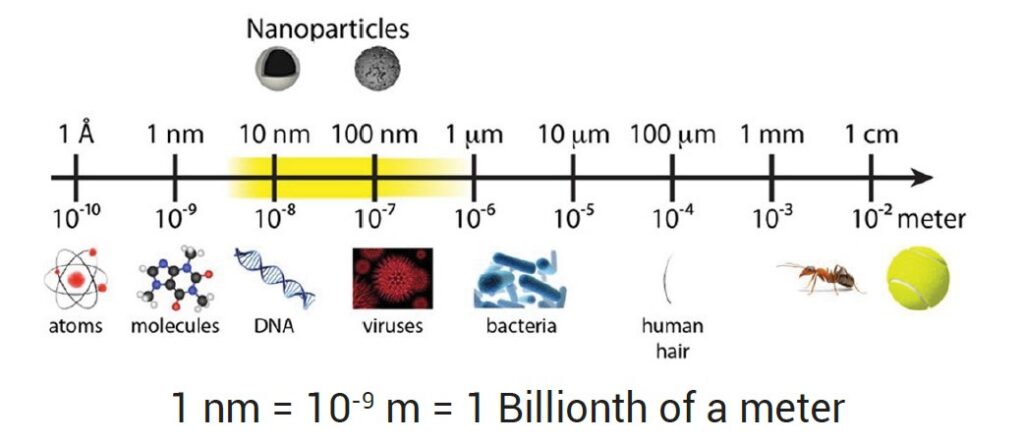
Nanotechnology is an enabling technology. It lies at the interface of basic sciences and engineering and has potential to impact a wide array of disciplines. Nanotechnology involves the study of nanomaterials.
As per ISO definition, nanomaterial is defined as:
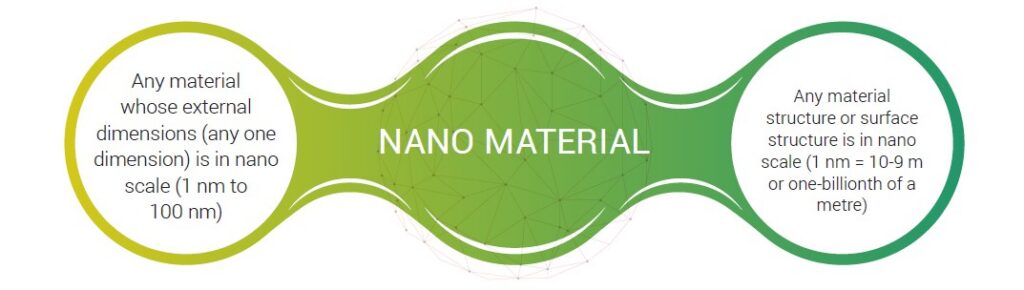
As per certain regulatory bodies (US FDA, Health Canada, EU Commission for Food, DBT Regulatory Guidelines for the use of Nano-Agri Inputs and Food Products, India etc.), this size can be extended to 1000 nm if the material exhibits properties or phenomena that are characteristic for nanomaterials especially for food products.
Based on origin nanoparticles can be of two types:
a) Natural nanoparticles: These are particles from smoke, clay, protein/lipid, ocean mist etc.
b) Engineered nanoparticles: Manmade nanoparticles which have more precise control over the
properties (targeted for different applications).
Silicon chip industry was the major influence for studies in nanotechnology where, as per the famous Moore’s law, the number of transistors on a semiconductor microchips would double every two years. To overcome the physical limitations, nanotechnology had to step up to produce smaller and faster computers.
Applications of Nanotechnology:
Traditionally, nano was restricted to metals, oxides and semiconductors. This is because, nanoparticles of these materials demonstrate optoelectronic and physicochemical properties that are totally different from their bulk counterparts.
For example, gold nanoparticles are red/blue in colour; silver nanoparticles are yellow/orange in colour; Cadmium selenide nanoparticles show fluorescence etc. All these properties are non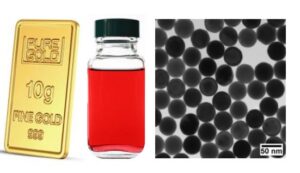 existing in their bulk counterparts. These properties make them suitable for different applications such as sensing, catalysis, imaging etc. Hence, nanoparticles are attractive.
As years passed by, focus shifted to other aspects of nano: its particle size and surface area and not the traditional opto-electronic properties. Here the purpose of nano is different; it’s the small particle size that makes them attractive to enter biological cells. This led to the studies on penetration of inorganic nanoparticles (gold, silver, iron oxide etc.) in biological cells, animal and human systems and recently into plant systems.
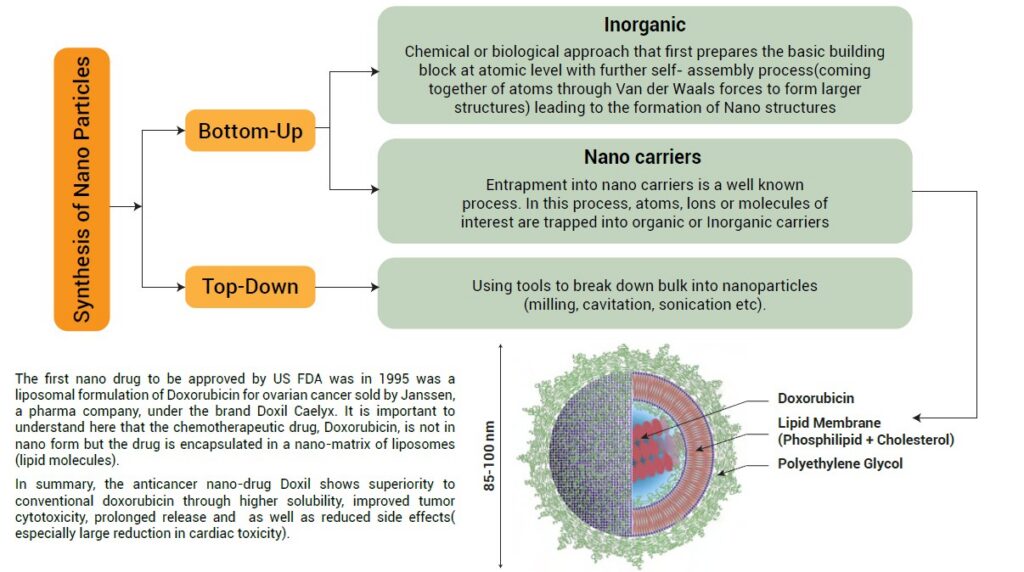
These studies led to the use of nanomaterials in pharma. Besides contrast agents for imaging and photothermal therapies, applicability of inorganic nanoparticles in pharma was limited. Hence in pharma, the focus shifted to “soft nanoparticles”
Soft Nanoparticles:
Soft nanoparticles can be engineered to encapsulate pharmaceuticals and release them at targeted sites, reducing systemic toxicity and improving pharmacokinetic profiles. Here the drug molecules are in their original form and not nano.
Nano Fertilizers:
Nano-Fertilizer is one of the strongest solutions of precision agriculture for sustainable intensification of global agricultural production.
An important discovery was the observation that nanoparticles can be taken up by plants through roots or stomata. This encourages the use of nanoparticles as delivery vehicles of active ingredients to crops. When the active ingredient is a pesticide, the system classifies as nano pesticides, whereas if the active ingredient is a nutrient, the product falls under the nano fertilizer category. Globally, there have been several studies that describe different approaches for nano fertilizer preparation and probe its utility as a superior option to conventional fertilizers.
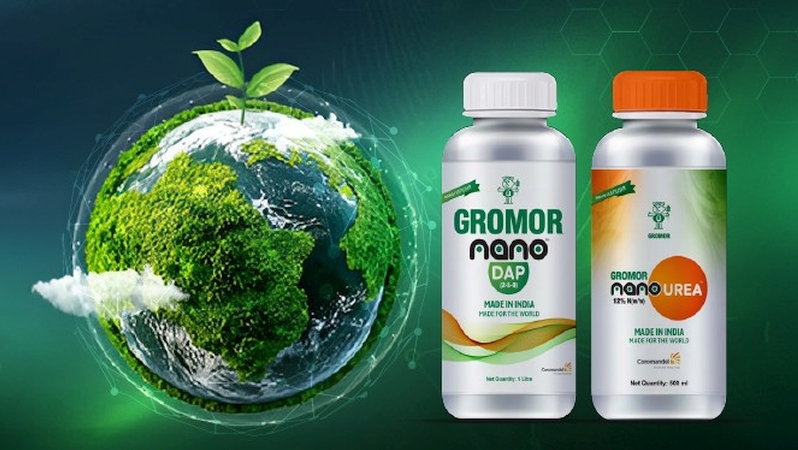
In case of crop nutrition, plant has very specific requirements – that the nutrient has to be in the plant available form. Plants take up nutrients as ions (cationic – NH4+, Zn2+, Fe2+ etc., or anionic – NO3- H2PO4– or HPO4 2–, etc. Hence to supply proper form of nutrient to plants, typically, nano carrier (nano emulsions, lipids, inorganic carrier such as silica etc.) are used as carriers of plant available nutrient forms. More particularly, in the case of Coromandel’s Gromor Nano DAP and Gromor nano urea, molecules of diammonium phosphate or urea are entrapped in nano carriers (Natural Polymer). These can be taken up directly by roots or leaf stomata.
Need for Nano fertilizers?
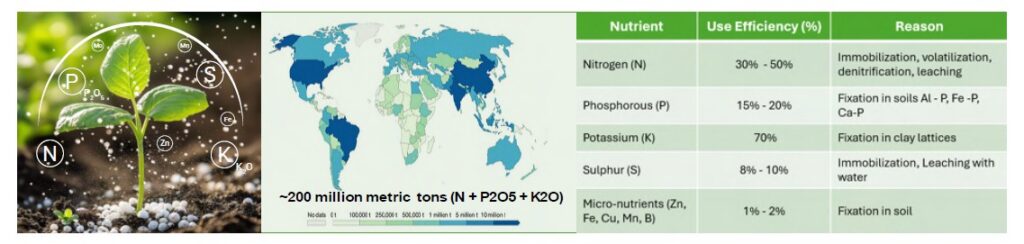
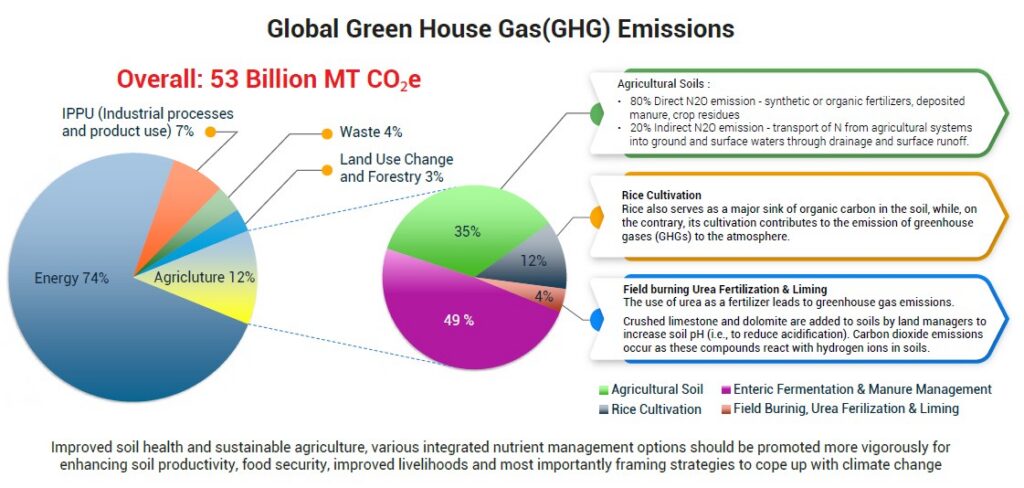
~ 200 million metric tons of conventional chemical fertilizers (N + P2O5 + K2O) are consumed annually with significantly less use efficiency, leaving the remaining to the environment which will lead to pollution of ground water, aquifers, greenhouse gas (GHG) emissions.
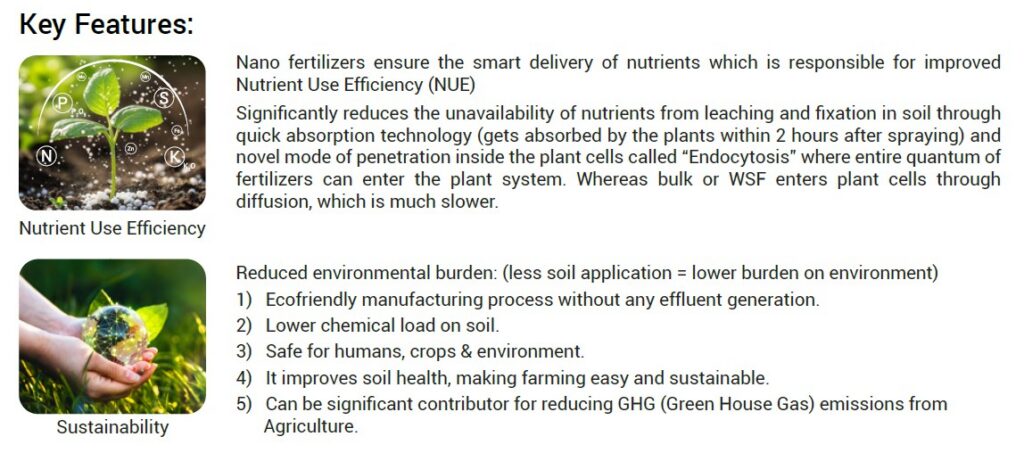
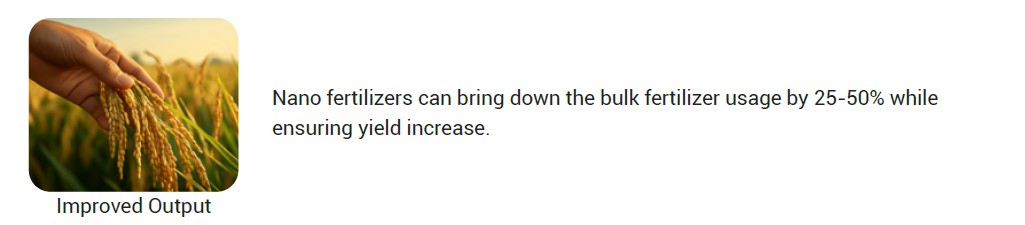
Mechanisms: For nano fertilizers a few mechanisms have been proposed in scientific literature which include:
1) Faster Absorption and Assimilation
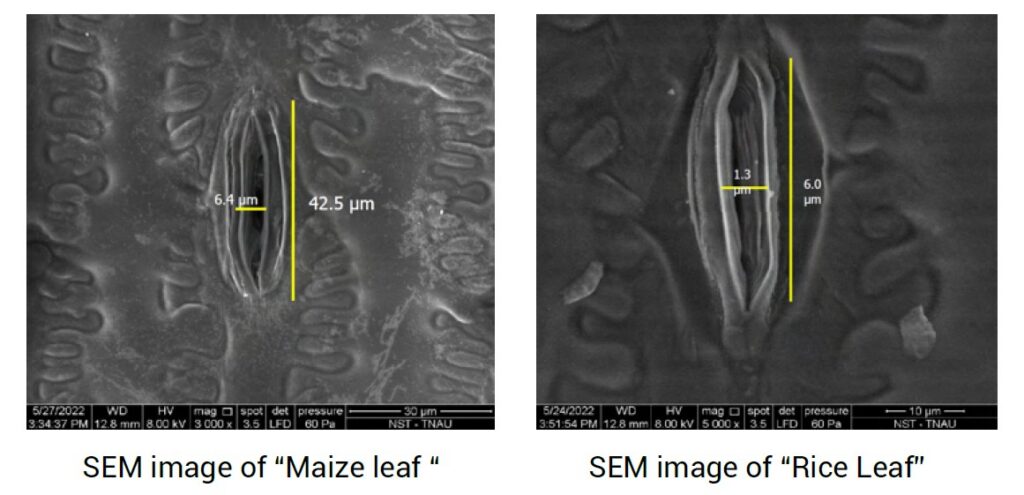
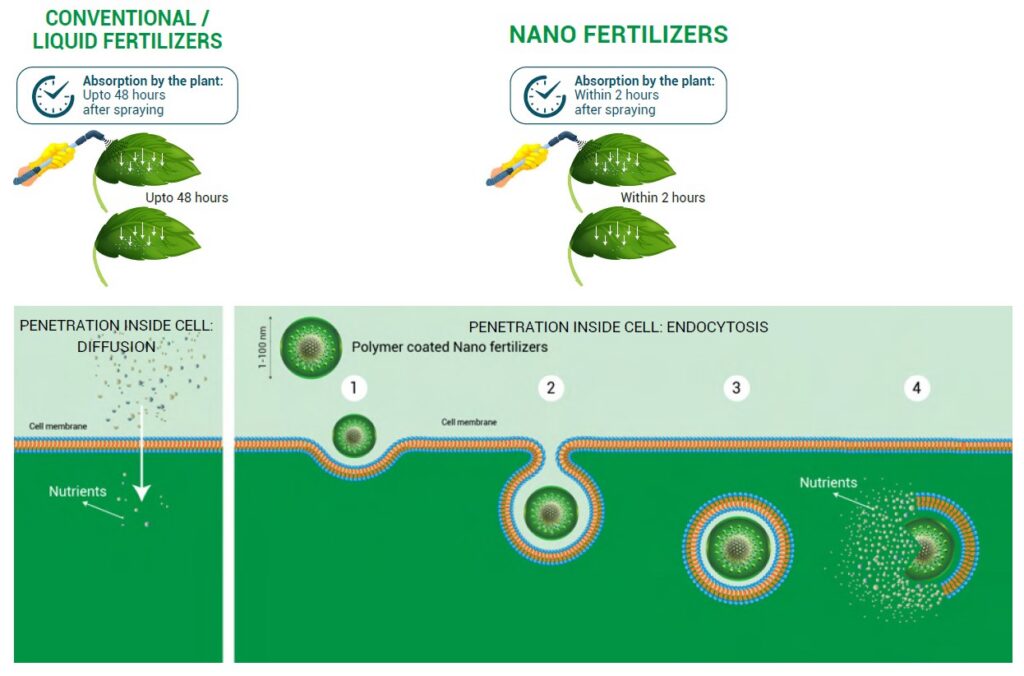
Due to small size and high surface area, nano fertilizers are taken up through stomata and leaf pores within 2 hours after spraying. In case of other liquid fertilizers and water-soluble fertilizers the nutrients enter the plant system within 10 – 48 hours after spraying. Stomata are positioned in both adaxial (upper surface) and abaxial (lower surface) of the leaves irrespective of crops. The Center part of the stomata is referred as the pore which dimension is from 0.17 to 0.93 μm (170 to 930 nm) for most of the crops. Stomata intensity is highly variable from 40 – 400 per mm².
2) Unique mode of penetration into the plant cell- Endocytosis.
Nano fertilizers penetrate the cell through unique mechanism called “Endocytosis” where post entering the plant system through stomata the polymer encapsulated nano fertilizers reach the exterior membrane of a cell. The cell membrane folds and engulfs the polymer encapsulated nano fertilizers and takes them inside. The membrane comes back to its original shape after endocytosis. Then the polymer encapsulated nano fertilizer is transported inside the cell and stored in intracellular compartment. Here the polymer breaks down and releases the nutrients which are transported to different cells by symplastic pathways. Since polymer encapsulated nano fertilizers contain a significantly higher amount of active ingredients, at one shot, entire consignment is delivered inside cells.
In case of other liquid fertilizers and water-soluble fertilizers their uptake into cells has a different mechanism and endocytosis is not possible in this case. They enter cells through diffusion method. This is a much slower mechanism.
3) Targeted Delivery and Controlled Release:
Nano fertilizers, inside cell cytoplasm are metabolized slowly to release plant available nutrients. This slow release over a period of time addresses the plant hunger.
4) Triggering the Activity
Nano fertilizers can also trigger up/down regulation of plant genes and enables the plant to absorbmore soil nutrients. The plant releases more organic acids and biomolecules in the soil which can result in liberation of fixed P or other nutrients.
Coromandel’s Gromor Nano Fertilizers:
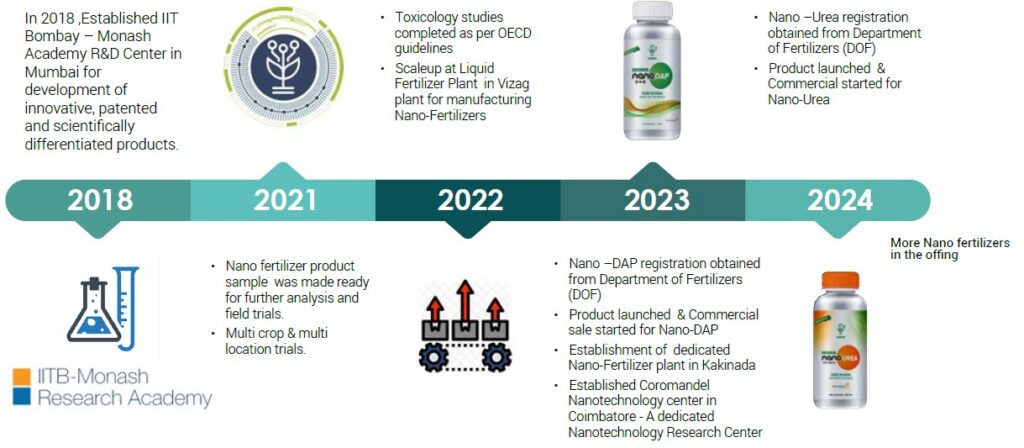
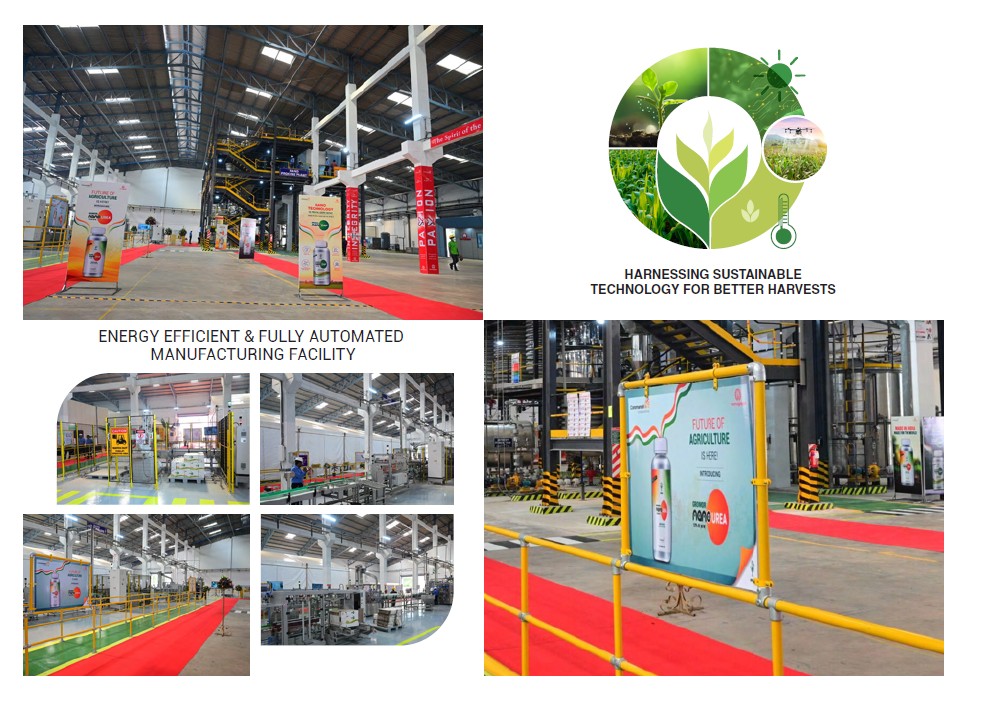
Product development journey: The journey started in 2018 when Coromandel set up a state of art R&D facility at IIT Bombay Monash academy in Mumbai. The facility houses 7 scientists with highlyinterdisciplinary expertise. The laboratory is equipped with advanced infrastructure and analytical facility. The need to develop the product came from business. The detailed process involved the following simple steps.
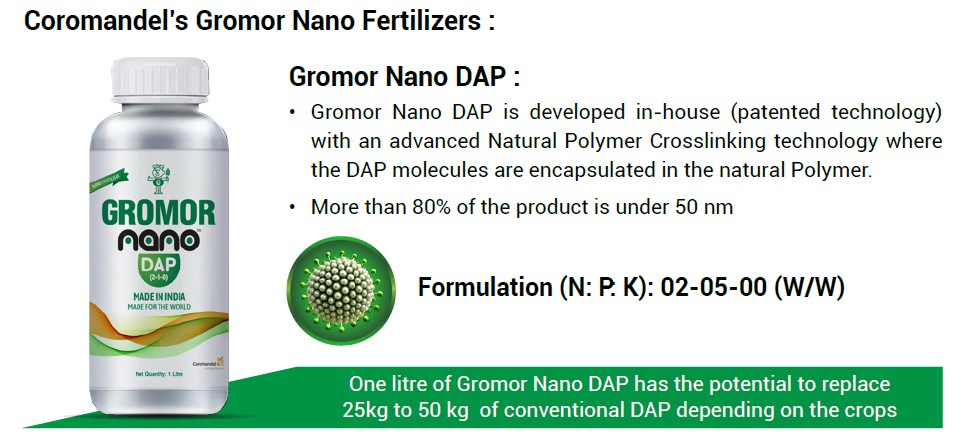
The yield data of a wide array of crops encompassing (cereals, pulses, oilseeds and vegetables) from various agro-climatic zones clearly indicated that foliar spray of two rounds of Gromor Nano DAP in combination with 75% RDF(Recommended Dose of Fertilizer) has consistently increased the yield by 5-17% with the exception of a vegetable( bottle gourd which gave 28% higher yield than their respective RDF). Even at 100% RDF with add-on foliar spray of Nano DAP has shown such yield increase to the tune of 2-22% indicating significance of foliar spray.
A total of 2500+ Farmer trials were conducted across India.For higher Phosphorous use efficiency, combined application of both soil and foliar (Nano DAP) application of DAP is ideal
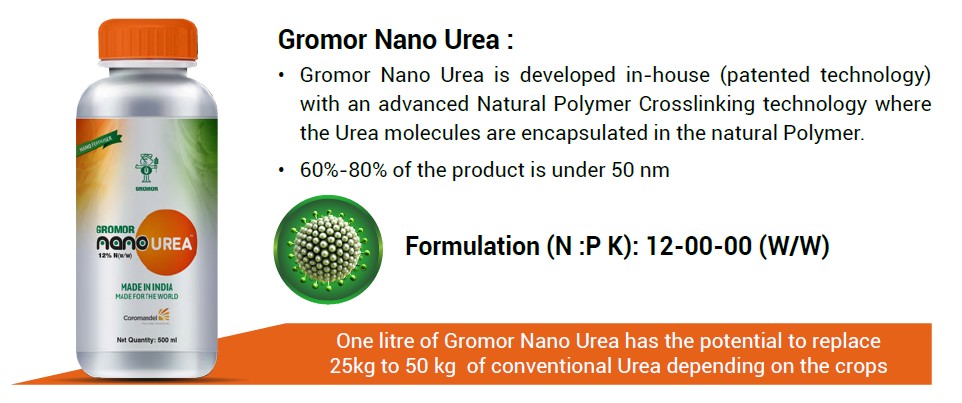
Launched recently in 2024, the yield data of a wide array of crops encompassing (cereals, pulses, oilseeds and vegetables) from various agro-climatic zones clearly indicated that foliar spray of two rounds of Gromor Nano Urea in combination with 75% RDF (Recommended Dose of Fertilizer) has consistently increased the yield by 4%-6%.
A total of 700+ Farmer trials were conducted across India.For higher Nitrogen use efficiency, combined application of both soil and foliar (Nano Urea) application of Urea is ideal.

Contact us:
[email protected]
[email protected]
gromornanodap.coromandel.biz