Colombian Agriculture: A Market in Transition
Colombian agriculture continues to show strength, diversity, and adaptability. It remains a key pillar of the national economy, supporting food supply, rural employment, exports, and agro-industrial development. Although 2025 showed a slight recovery in market value, this was a sign of increased agricultural activity, indicating that the productive base remains solid and well established.
The crop protection market, representing just over two-thirds of a billion, increased by around 5% year-over-year. This increment was mainly driven by price adjustments, inventory corrections, and more cautious purchasing decisions, rather than lower planted areas or reduced crop activity. In practical terms, Colombian agriculture is recovering, becoming more efficient and selective.
What’s Trending
Several clear trends are shaping the agricultural landscape.

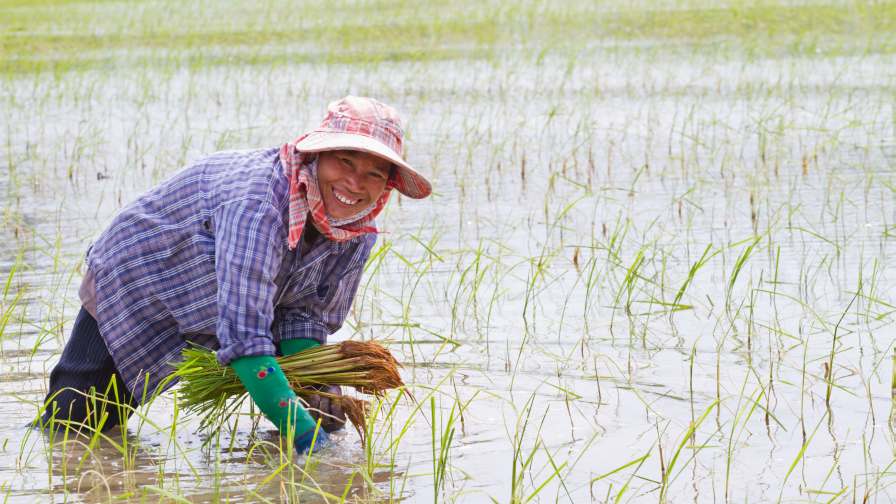
Rice has strengthened its position as Colombia’s most important crop, leading the agricultural sector in both total planted area and crop protection value. Photo: Envato
There is a strong focus on staple and domestic crops. Rice has strengthened its position as the most important crop in the country, both in planted area and crop protection value. Potatoes, corn, and vegetables continue to play a central role in food security, while coffee remains economically and culturally important, even with lower input intensity.


Herbicides remain the main driver of the crop protection market. Herbicides now represent just under half of the total crop protection market. This growth is closely linked to larger rice areas, extensive pasture systems, and ongoing labor shortages. Weed control has become the top agronomic priority, particularly in mechanized and semi-mechanized production systems.
There’s more selective use of fungicides and insecticides. Farmers have reduced preventive applications and optimized spray programs, especially in vegetables, fruits, cut flowers, and bananas. This has led to a contraction in fungicide and insecticide volumes, with a stronger focus on targeted and timely applications.
There has been a rising importance of local and post-patent companies. Local and post-patent players now account for nearly two-thirds of the crop protection market. Their growth reflects competitive pricing, faster decision-making, and strong on-farm execution. This has clearly shifted market leadership away from traditional multinationals in several segments.
There exists a clear segmentation of agricultural business models. Colombian agriculture can be grouped into four main segments:
- Smallholder farming: The largest segment, characterized by fragmented production, high crop diversity, and strong price sensitivity.
- Agro-industry: A similarly important segment with more professional operations, scale efficiencies, and structured demand.
- Export-oriented agriculture: A smaller size but strategically relevant, focused on high-value crops and international standards.
- Livestock and pasture systems: A secondary but important segment with extensive production and lower input intensity.
Each segment has very different needs, purchasing habits, and expectations from technology providers.
Market Influences
Several factors are coming together to shape today’s market. There are lower prices for key agricultural commodities, especially grains and industrial crops, putting pressure on farm margins. There is also a correction in raw material and formulation costs, resulting in lower crop protection prices as well as high inventories carried over from 2023, which delayed purchasing decisions in 2024.
Farmers are becoming more technically informed and focused on return on investment, so there is a growing use of biological products, mainly as complementary tools in high-value and export crops. However, with labor shortages, there is a greater reliance on chemical weed control.
Together, these factors have shifted the market away from volume growth and toward value optimization.
Main Challenges Facing Colombian Agriculture
Despite its strengths, the sector faces several ongoing challenges.
Climate variability continues to impact the country. El Niño and La Niña continue to affect yields, disease pressure, and planting decisions across major crops such as rice, coffee, bananas, and corn.
Cost pressure and tighter margins represent a challenge as well. Lower farmgate prices force growers to prioritize inputs carefully and increase price competition throughout the value chain.
There is also high market competition. The expansion of generic products has intensified competition, making differentiation more difficult and compressing margins.
Finally, there exists a growing technical complexity throughout the industry. Combining chemical, biological, and cultural practices requires more technical knowledge and stronger advisory support at farm level.
Colombian farmers are responding to these obstacles in a practical and results-oriented way:
- Wider use of integrated crop management programs.
- More precise application timing and dosage decisions.
- Biologicals used as part of broader management strategies.
- Greater reliance on local technical advisers and field support.
- Purchasing decisions increasingly based on performance and value, rather than brand alone.
Instead of reducing technology use, farmers are using inputs more carefully and more strategically.
Outlook for the Coming Year
The outlook for Colombian agriculture is cautiously optimistic.
The crop protection market is expected to stabilize and possibly return to modest growth as inventories normalize. Herbicides will remain the backbone of crop protection demand, especially in rice, pastures, and agro-industrial crops. Fungicides could recover if weather conditions increase disease pressure.
Local and post-patent companies are likely to continue gaining share. Lastly, export crops such as flowers, bananas, avocados, and berries will continue to lead to technical standards and sustainability.
Final Thoughts
Colombian agriculture is moving away from rapid expansion and toward a model built on efficiency, precision, and resilience. Its diverse crop base, strong domestic demand, and increasingly professional producers make Colombia one of the most relevant agricultural markets in Latin America.
Success going forward will depend on understanding local realities, delivering real value, and supporting farmers with practical, flexible, and economically sound solutions. Colombia is not simply adjusting; it is building a more competitive and sustainable agricultural future.
Get The Newsletter Today!