Sustainable Podcast: Eric White of Brand Maven Consulting Discusses Biostimulant Registration
 26 November 2026
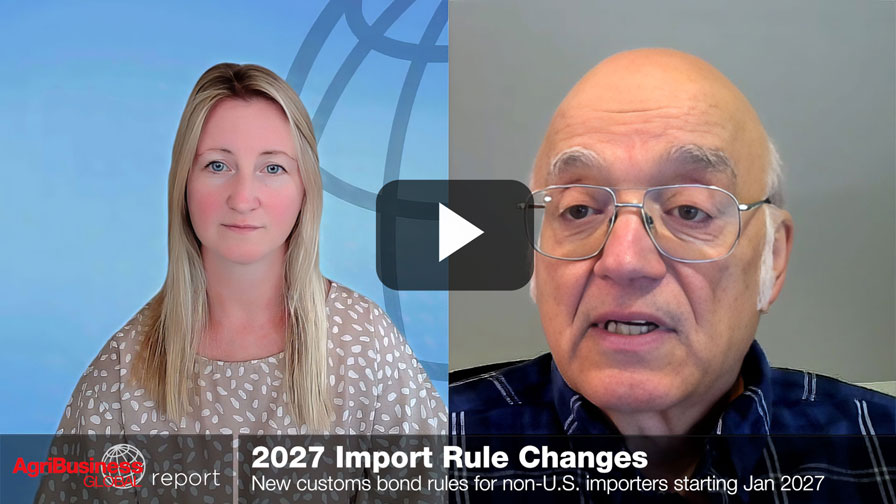
In this Sustainable Podcast episode by AgriBusiness Global, Eric White, Chief Maven of Brand Maven Consulting, delves into the registration process for biostimulants in the U.S., regulatory updates in the coming years, and more. This episode is sponsored by Chengdu Newsun.


*This is an edited and partial transcript.
AgriBusiness Global: How would you characterize the current state of biostimulant registration in the U.S.? And what are some of the biggest regulatory hurdles that companies still face?


Eric White: The hurdles have always been that these types of products are regulated on the state level. There’s no national or federal overarching regulation that regulates these types of products. It has always been a state-by-state deal.The consequence is that there are 50 sets of laws, regulations, rules, requirements that a manufacturer has to navigate in order to have national registration.
It’s not only just the different sets of laws, but a lot of times, it goes into the individual regulator and how they interpret those laws. We always take a 50-state lens when we develop labels for clients.The last part of this is we’re making progress. The Association of American Plant Food Control Officials (AAPFCO) has settled on a definition that it’s a substance that’s contributing to the growth of the plant independently of its nutrition. So, it’s not a fertilizer. Think humic acids; think kelp extract; think microbes that are contributing to its growth, but not due to fertilizer content.
ABG: Because biostimulants haven’t fit neatly into a traditional fertilizer or pesticide category, I’m sure that complicates registration even more. Can you expand on that?EW: I’ll start prior to 2024 because that’s when The Beneficial Substance Bill was passed by AAPFCO, but prior to that, they weren’t recognized at all. There was no category, and honestly, it was a bit of a wild west out there. It came down to what claims you could get away with.In 2024, AAPFCO passed the Uniform Beneficial Substance Bill, and it finally created a category for biostimulants. It finally defines what a beneficial substance is.
ABG: With lack of uniformity [among states], what’s your advice to companies to manage those differences?
EW: I think the best way to manage that lack of uniformity is to have a really good understanding of the law yourself. It’s talking through what the intention of those laws or regulations are, and how they apply to a label.
ABG: What mistakes do you see companies most often making when preparing their products for U.S. market registration? And how early should they be thinking about regulatory strategy as they’re in product development?
EW: There is one huge mistake we see over and over again. That big mistake is thinking about compliance one state at a time. Your label has to be ready to be compliant in any state; otherwise you might be in a pickle when you get there.
Probably the second one … is printing packaging before the label is approved. It’s a balancing act, but as much as possible, wait to print until you have an approved label.
ABG: Looking ahead, what regulatory developments should biostimulant companies be watching over the next couple of years?
EW: On the national level, the Plant Biostimulant Act would create a federal definition into Federal Insecticide, Fungicide, and Rodenticide Act (FIFRA) that would make clear that biological biostimulants aren’t plant regulators.
Second is if EPA gets around to finalizing their draft guidance [on biostimulants], we’ll keep an eye on that.
Get The Newsletter Today!