


¿De verdad se puede conseguir más con menos?
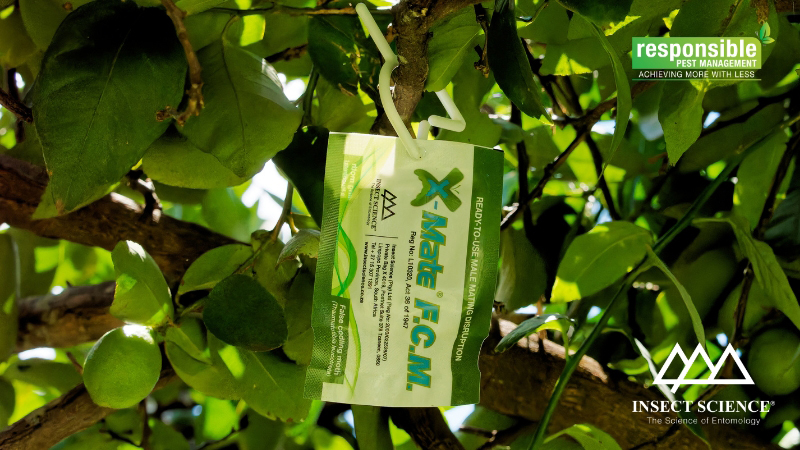
La ciencia detrás de las RPM de Insect Science® eslogan
“La frase ”lograr más con menos» corre el riesgo de sonar más a ideal que a algo alcanzable. Sin embargo, en el control de plagas, y en particular en el control de la polilla del manzano, resulta ser tanto literal como cuantificable.
Para los productores y la industria en general, la eficiencia no es una preferencia filosófica, sino una necesidad operativa. La pregunta clave es sencilla: ¿cuál es la cantidad mínima de feromona necesaria para lograr un control fiable y eficaz al menor coste posible? Responderla requiere más que saber que la interrupción del apareamiento funciona; requiere comprender cómo funciona.
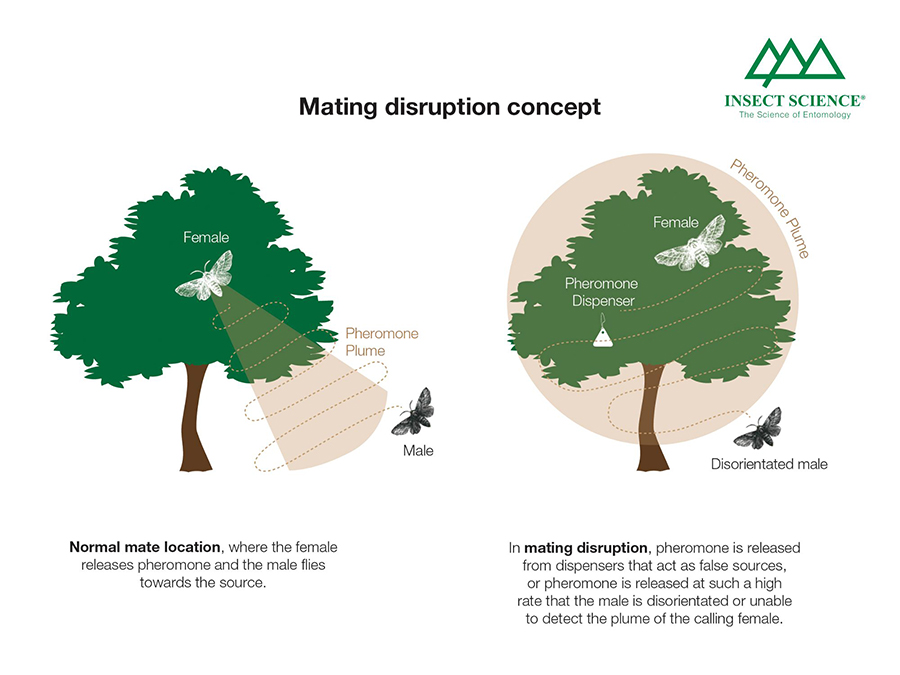
Cuando el Dr. Vernon Steyn comenzó su investigación de posgrado, ya estaba claro que la interrupción del apareamiento era una herramienta eficaz contra la polilla del falso manzano (FCM; Thaumatotibia leucotretaLo que seguía sin estar claro era el mecanismo detrás de ese éxito. Las polillas se veían afectadas, pero no se sabía si los machos se alejaban de las hembras debido a la competencia de los dispensadores de feromonas, o si los altos niveles de feromonas anulaban por completo su capacidad para encontrar pareja. Esa laguna en la comprensión se convirtió en la base de su trabajo doctoral. Lea el artículo de investigación completo. aquí.
Siguiendo a las polillas
La investigación del Dr. Steyn se propuso examinar la interrupción del apareamiento no como un producto, sino como un proceso conductual. Mediante una extensa serie de 48 experimentos de campo de marcado, liberación y recaptura con polillas estériles, midió la respuesta de los machos en un amplio rango de dosis de feromonas y densidades de puntos de liberación, tanto en huertos de frutales de hueso como en viñedos de uva de mesa.
Mediante la aplicación de un marco analítico riguroso desarrollado por Miller y sus colegas, el estudio distinguió entre dos modos de disrupción fundamentalmente diferentes: competitivos y no competitivos. Los resultados fueron a la vez elegantes y prácticos.
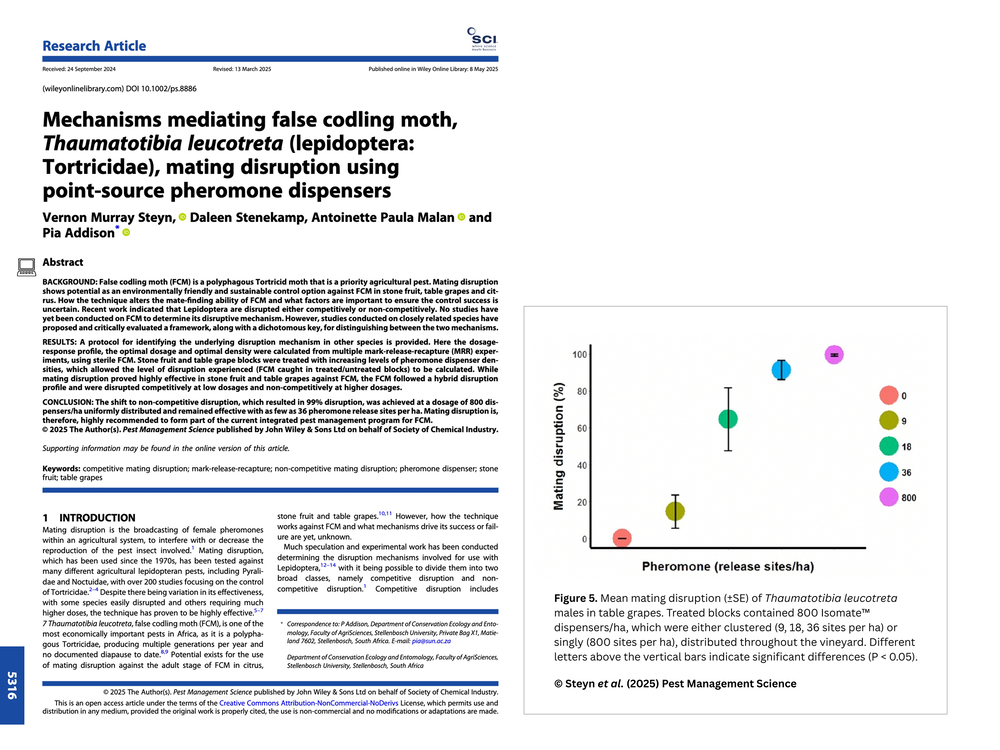
Con dosis bajas de feromonas (hasta unos 600 dispensadores por hectárea), los machos de FCM se vieron afectados por la competencia. Los dispensadores competían con las hembras que emitían llamadas, desviando a los machos. El efecto fue real, pero limitado: cada dispensador adicional proporcionaba un beneficio menor que el anterior. Sin embargo, con dosis más altas, algo cambió.
Con 800 dispensadores por hectárea, la interrupción del apareamiento aumentó drásticamente, llegando a una reducción de hasta 99% en la captura de machos en las trampas. A partir de este punto, añadir más dispensadores tuvo escaso efecto. Las polillas ya no estaban simplemente confundidas; eran prácticamente incapaces de encontrar pareja. La interrupción se había vuelto no competitiva. Lo que sucedió después fue aún más sorprendente.
Menos puntos, misma potencia
Cuando se administró la misma dosis de feromona a través de menos puntos de liberación (agrupados en tan solo 36 sitios por hectárea), la alteración siguió siendo igual de efectiva. Esto confirmó que el efecto no dependía de una cobertura densa y uniforme. El mecanismo en sí había cambiado.
Este hallazgo tiene profundas implicaciones. La disrupción no competitiva es en gran medida independiente de la densidad de plagas, tolera mejor las brechas y es mucho más resistente en condiciones de alta presión. Además, y esto es crucial, es donde el lema “más con menos” deja de ser un eslogan y comienza a convertirse en una estrategia.
Un camino paralelo en el campo
Al mismo tiempo que el Dr. Steyn profundizaba en estas conclusiones mediante su investigación doctoral formal, la revista Insect Science observaba de forma independiente el mismo patrón en ensayos de campo en la agricultura comercial. En diversos sistemas de producción, los datos de campo comenzaron a apuntar al mismo resultado: una vez alcanzado un umbral crítico de feromonas, el control mejoraba de forma desproporcionada y se mantenía estable incluso al reducirse la densidad de dispensadores. Esta convergencia, tanto académica como aplicada, experimental y operativa, resultaría significativa posteriormente.
En 2019, el Dr. Steyn se unió a Insect Science como Científico de Campo Sénior. En 2020, fue nombrado Director de Investigación y Desarrollo, y en 2023, asumió el cargo de Director General. Durante el proceso de entrevista, se hizo evidente que el trabajo de campo de la empresa apuntaba en la misma dirección que su investigación doctoral. Abordando el problema desde diferentes perspectivas, ambos llegaron a la misma conclusión: un control efectivo no requería más recursos, sino una mejor comprensión. Fue un momento de excepcional coincidencia. La ciencia se encontró con el trabajo de campo, y el trabajo de campo confirmó la ciencia.
Esa afortunada coincidencia dio forma a una idea que ya se estaba gestando dentro de la empresa: Lograr más con menos. No como una estrategia de marketing, sino como un principio basado en la evidencia, que llegaría a sustentar la Gestión Responsable de Plagas de Insect Science.™ Filosofía (RPM).
En esencia, RPM refleja una convicción simple: que un control de plagas verdaderamente eficaz solo es posible cuando los productos se desarrollan con rigor científico, conocimiento biológico y respeto por las consecuencias a nivel sistémico. En este sentido, la innovación no consiste en añadir complejidad, sino en eliminar la ineficiencia.
Al basar el desarrollo de productos en mecanismos en lugar de suposiciones, Insect Science continúa buscando soluciones que no solo sean efectivas, sino también precisas, diseñadas para hacer exactamente lo que se necesita, y nada más.
Por qué importa el mecanismo
La distinción entre la interrupción del apareamiento competitiva y la no competitiva no es una mera cuestión teórica. Determina si un programa de control es ineficaz o eficaz. La interrupción competitiva requiere una alta densidad de dispensadores, una distribución uniforme y una presión de plagas relativamente baja. Funciona, hasta que deja de hacerlo.
Por el contrario, la disrupción no competitiva suprime el comportamiento de búsqueda de pareja a nivel sensorial. Su eficacia no disminuye a medida que aumentan las poblaciones. Permite reducir el número de puntos de liberación, agrupar los dispositivos y crear espacios intencionados sin sacrificar el control. El trabajo del Dr. Steyn proporciona la primera evidencia clara de que la FCM puede pasar de un modo a otro utilizando dispensadores disponibles comercialmente a tasas de campo realistas.
En definitiva, la clave para lograr más con menos no reside en reducir los recursos, sino en aumentar el conocimiento. Lo que comenzó como una cuestión científica (cómo funciona realmente la interrupción del apareamiento en el control de plagas) se convirtió en un punto de convergencia entre la investigación y la práctica. El trabajo del Dr. Steyn demostró que, al aplicar feromonas con precisión, el mecanismo se modifica, proporcionando un control más eficaz y duradero sin un aumento proporcional del esfuerzo ni del coste. Al mismo tiempo, la experiencia de campo de Insect Science apuntaba a la misma conclusión, alcanzada no en teoría, sino en huertos y viñedos bajo condiciones reales. Esta coincidencia dio forma a una filosofía: la gestión responsable de plagas.™ Se trata de diseñar soluciones que hagan exactamente lo que se necesita, y nada más. En esa precisión residen tanto la eficacia como la responsabilidad, y la prueba sutil de que, a veces, menos es más.
Ciencia de los insectos Es una empresa líder en biotecnología agrícola con sede en Sudáfrica, que desarrolla y fabrica soluciones de control de plagas basadas en semioquímicos para una agricultura sostenible.