


Metarhizium Foundry™: Turning nature’s intelligence into practical solutions for farmers

At Lipofabrik, Elephant vert R&D center, innovation starts with a simple belief: the best agricultural solutions are often inspired by nature itself.
This vision led to the creation of the Metarhizium Foundry™: an integrated scientific platform was created to accelerate microbial innovation—from fungal strain characterization to field-ready biological solutions capable of addressing some of agriculture’s most pressing pest management challenges.
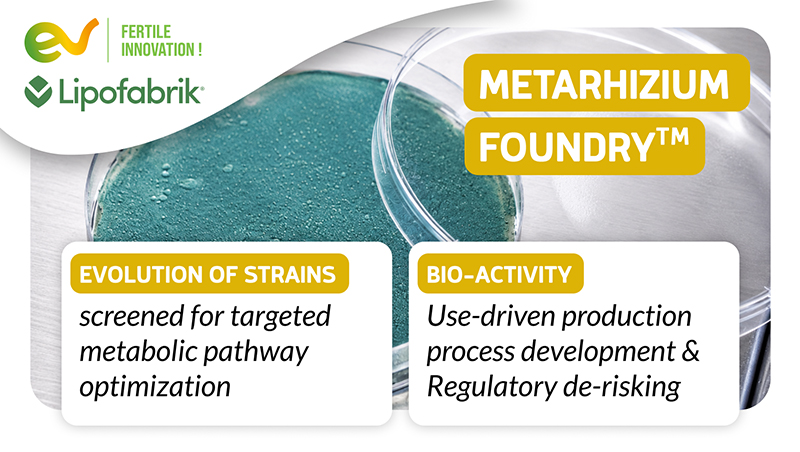
Metarhizium Foundry™ is built on three core pillars: strain selection and production efficiency, development of application technologies adapted to field variability, and product safety. Together, these capabilities translate scientific discoveries into reliable, scalable biosolutions suited to practical farming conditions.
Why Metarhizium? Nature’s insect control specialist
Metarhizium is a soil-dwelling fungus naturally present in many ecosystems. Over time, it has developed a highly effective way to regulate insect populations.
Its mode of action differs fundamentally from chemical insecticides. Spores attach to the insect surface, germinate, and penetrate the cuticle through a combination of mechanical action and enzymatic processes involving enzymes such as proteases, chitinases, and lipases.. Once inside, the fungus develops and eventually leads to the insect’s death through nutrient depletion and bioactive compounds (St. Leger & Wang, 2020; Al Abdallah et al., 2026).
Beyond insect control, certain strains also interact with plant roots, contributing to plant vigor and resilience (Mesquita et al., 2023). This dual functionality makes Metarhizium a particularly versatile tool for modern and sustainable crop protection.
A unique biodiversity resource
The performance of a biological solution starts with the right strain. Each environment creates unique adaptations. Some strains are naturally more resilient to heat, others perform better under challenging field conditions, while some show exceptional persistence and efficacy against specific pests.
By studying and comparing this diversity, our scientists identify the strains with the greatest potential and select those capable of delivering consistent performance under real agricultural conditions.
Elephant Vert has built a diverse microbial collection through years of exploration across varied environments, particularly in Africa. Studying this diversity allows our scientists to identify strains that are not only effective in controlled conditions, but also robust in real agricultural environments—where variability is the rule rather than the exception.
A distinctive strategy: beyond the strain
In biological crop protection, selecting a strain is only part of the equation. Field performance depends just as much on how the organism is delivered, survives, and interacts with its environment.
This is where the Metarhizium Foundry™ takes a different path from many approaches in the market.
Rather than focusing solely on strain discovery, the platform integrates four key dimensions:
• Biodiversity as a performance driver
Instead of relying on a limited number of model strains, the approach leverages wide natural diversity to identify solutions adapted to specific environments.
• Application technology as a core capability
Delivery is treated as a central scientific challenge. Specific technologies are developed to improve spore deposition, survival, and interaction with target pests under field conditions. These detailed investigations of the mode of action allow the teams to better understand host-pathogen interactions, optimize application timing, and continuously improve product performance against target pests.
• Full biological cycle understanding
The focus goes beyond efficacy at application. From spore adhesion to infection and dissemination, each step is studied to ensure consistent performance.
• Managing field variability, not avoiding it
Rather than optimizing only in controlled conditions, solutions are designed to remain effective despite temperature, humidity, or agronomic variability.
This integrated approach leads to proprietary application strategies that enhance persistence, improve efficacy, and facilitate practical use in farming systems.
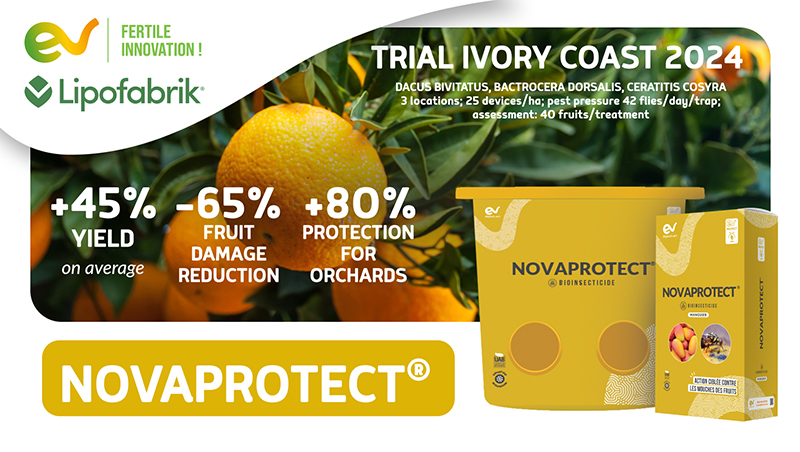
“Ensure that innovative biosolutions fit into agricultural practices”
For farmers, the value of innovation lies in consistency, usability and reliable results in the fields.
From early development stages, solutions are evaluated under real farming conditions. Field trials, agronomic expertise, and grower feedback continuously inform development choices. This close link between laboratory work and field experience helps refine both performance and usability.
The objective is not only to develop effective biological products, but to ensure they fit into existing agricultural practices and deliver reliable results.
“Bridge the gap between scientific potential and field reality”
Agriculture is entering a period of rapid transformation. Climate variability, evolving pest dynamics, and regulatory pressure are reshaping crop protection strategies.
Biological solutions will play an increasing role—but their success depends on their ability to perform consistently in real conditions.
The Metarhizium Foundry™ reflects an effort to bridge the gap between scientific potential and field reality. By combining biodiversity, applied science, and a system-level understanding of biological performance, it contributes to a new generation of solutions designed for resilient and sustainable agriculture.
References
- St. Leger, R.J. & Wang, C. (2020). Metarhizium: Jack of all trades, master of many. Open Biology.
- Mesquita, E. et al. (2023). Utilization of Metarhizium as an insect biocontrol agent and plant bioinoculant. Frontiers in Fungal Biology.
- Al Abdallah, Q. et al. (2026). The chitinolytic enzymes from Metarhizium anisopliae. Frontiers in Fungal Biology.
- Villavicencio Vásquez, M. et al. (2025). Biological control agents: mechanisms of action, selection, formulation and challenges in agriculture. Frontiers in Agronomy.