• 关于
  • 接触
  • 订阅
  • en_US
  • es_MX
  • zh_CN
  • pt_BR
Ask The Expert: Dr. Tingzhuo Chen of Chengdu New Sun on Positioning Biologicals As Viable Tool - AgriBusiness Global
  • 订阅
  • 广告
  • 订阅
  • 广告
  • 农用化学品
    • 除草剂
    • 杀虫剂
    • 杀菌剂
    • 佐剂
    • 种子与性状
  • 农业科技
  • 可持续性
  • 生物农药
  • 植物健康
    • 生物刺激素
    • 微量营养素
    • 氮磷钾
  • 市场
    • 美洲
    • 亚洲
    • 欧洲
    • 非洲/中东
  • 活动
    • ABG 活动
  • 报告
全球农业贸易峰会 | 2026年8月5-6日 | 内华达州拉斯维加斯
赞助内容

提出者 成都新闻

Ask The Expert: Dr. Tingzhuo Chen of Chengdu New Sun on Positioning Biologicals As Viable Tool

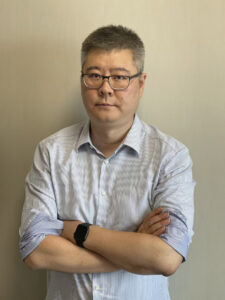
Dr. Tingzhuo Chen

Dr. Tingzhuo Chen, Vice Dean of the Biotechnology Research Institute at Chengdu New Sun Crop Science Co., Ltd., discusses how companies can educate their customers on biologicals use, how biologicals can complement traditional chemistries and more.

AgriBusiness Global: How can companies educate the market on the proper use of biologicals?

Dr. Tingzhuo Chen: This is a very important but also very difficult question. Market education for biologicals cannot rely on one universal approach because agricultural systems and grower decision-making structures differ greatly from region to region.

In China, our approach is mainly based on field demonstration and trusted channels. We participate in national key R&D projects and government-supported demonstration programs, and we also work with partners that have strong distribution and grower service capabilities. Through these channels, we help growers understand not only whether a biological product works, but also how it should be used in real production.

In more mature agricultural markets, such as Brazil, education needs to be more localized and technically grounded. From our cooperation with our Brazilian strategic partner Juliagro, we have learned that growers there often rely heavily on agronomic consultants and technical advisers when making crop protection decisions. Therefore, companies need to provide local evidence and practical explanations that fit specific crops, regions, pest or disease pressures, and existing crop protection programs.

For biological products, market education must be realistic and application oriented. Good data is important, but the real goal is to turn scientific evidence into practical knowledge that growers and advisers can use correctly.

ABG: How can biological products be evaluated in a more reasonable way, beyond simple efficacy or price comparisons with chemical products?

Chen: I think biological products should be evaluated from the perspective of return on investment, not only from product price or direct efficacy.

If we simply compare cost per hectare or immediate control effect, the evaluation is incomplete. The goal of crop protection is not only to kill a pest or suppress a disease. The ultimate goal is to protect yield, improve crop quality, reduce production risk, and help growers achieve better economic returns.

Biological products may help crops maintain better growth, reduce early pest or disease pressure, improve stress tolerance, and support better quality, appearance, or marketable yield. In many cases, better quality also means a better selling price.

Timing is also important. Many biological products are more valuable when used earlier, before the problem becomes severe. A small early investment can work like insurance: It may reduce the probability or severity of later outbreaks and reduce the need for heavier chemical inputs later in the season.

Therefore, it is not scientific to evaluate biologicals only by asking whether they are cheaper than chemicals or whether they deliver the same immediate killing effect. A more reasonable evaluation should look at the whole production system, including yield protection, quality improvement, input reduction, residue management, and final economic return.

ABG: In what ways can biologicals complement traditional crop protection products?

Chen: We do not see chemical products and biologicals as a replacement relationship. The future is integration and synergy, especially in integrated pest management and integrated resistance management programs.

Chemical products are still important for fast control under high pest or disease pressure. Biologicals can complement them by providing preventive management, supporting plant defense, and helping reduce over-reliance on a single chemical mode of action.

So, biologicals are valuable not only as control products, but also as preventive, resistance-management, and system-stabilizing tools within integrated crop protection programs.

ABG: What advice do you have for companies looking to position biologicals in the market as a viable tool?

Chen: My advice is to start with the real value of the product and communicate it honestly. Many biological products lose growers’ trust because they are over-positioned or over-promised at the beginning.

Biologicals have a different use logic from conventional chemicals. Companies need to clearly define where the product fits: the crop, timing, target problem, and application method. They also need to understand whether it can be integrated with the products and practices growers already use.

This positioning should be supported by sufficient field trials. Only by identifying the best use timing and program combination can biologicals become practical tools that growers trust and continue to use.

ABG:您还有什么要补充的吗?

Chen: I would like to add that, for New Sun, biologicals are not only a business opportunity. They are also an important way for us to contribute to more sustainable agriculture.

Over the years, we have invested heavily in R&D and accumulated many biotechnology platforms, natural active resources, and scientific achievements, but good technology cannot create value if it only stays in the laboratory. Our goal is to bring these technologies into real fields and make them useful for growers.

To achieve this, we need partners. We need commercial partners who understand the market, distribution channels, and grower needs. We also need local technical partners, such as Juliagro in Brazil, who can help us better understand local agricultural challenges and translate technology into practical field value.

We hope our R&D investment can create not only corporate value, but also broader social value. We look forward to working with more like-minded partners around the world to bring biological technologies closer to growers and jointly empower sustainable agriculture.

更多来自这个赞助商

专利花粉多糖:品牌差异化的新途径

赞助: 成都新闻

从基因引导发现到现场解决方案:Newsun推出六款基于GeneNavX™技术的功能性生物刺激剂

赞助: 成都新闻

专家问答:成都新讯的叶云田探讨中国五年规划、对生物制品的影响以及可持续农业

赞助: 成都新闻

最新消息

行业新闻

先正达集团中国与麦当劳和麦凯恩合作,打造更可持续的马铃薯供应链

作者: 先正达|2026年六月24日
三方签署了一份谅解备忘录,旨在改变当地…….
行业新闻

Rovensa Next参与BIO²倡议,将循环经济材料转化为农业创新

作者: Rovensa Next|2026年六月24日
Rovensa Next 是重要的工业研发合作伙伴…….
除草剂

ADAMA推出用于美国农作物的高浓度液态吡唑磺隆除草剂

作者: 安道麦有限公司|2026年六月24日
Novali 每加仑汽油的 AI 含量比其他品牌高出 40%...
欧洲

法国财团启动300万欧元项目,开发番茄生物作物保护解决方案

作者: Gene&GreenTK|2026年六月24日
Gene&GreenTK、Lipofabrik、INRAE 和 Enigma 已携手合作…….

AgriBusiness Global

  • 接触
  • 关于
  • 咨询委员会
  • 广告
  • 订阅
  • 使用条款
  • 隐私政策
  • 转载权限
  • 取件须知
  • 您的隐私选择
  • 迈斯特传媒全球
  • Meister 定制业务解决方案

© 2026 迈斯特媒体全球