Metabolites: Challenges, Solutions, and the Road Ahead for Biostimulants
As functional drivers of nutrient use efficiency (NUE), metabolites are increasingly understood not as generic plant growth enhancers, but as molecules to stimulate the natural biological pathways that modulate plant and soil processes governing nutrient capture, assimilation, and retention.
Lately, products based on microbial fermentation metabolites represent second-generation metabolite platforms, which use multistage fermentation to produce complex, naturally balanced metabolite mixtures rather than single active ingredients.
As the agricultural industry explores the benefits of metabolites for crop growth, there are formulation approaches that incorporate fermentation-derived metabolites into nutrient solutions. In recent years, amino acids, peptides, phenolics, and algal/plant extracts have become well-known and proven technologies on which many biostimulant products are built.
Real-World Usage
Technically, metabolite-based NUE products are broadly applicable across crop types because all crops rely on fundamentally conserved biological pathways for nutrient uptake, assimilation, and stress response.
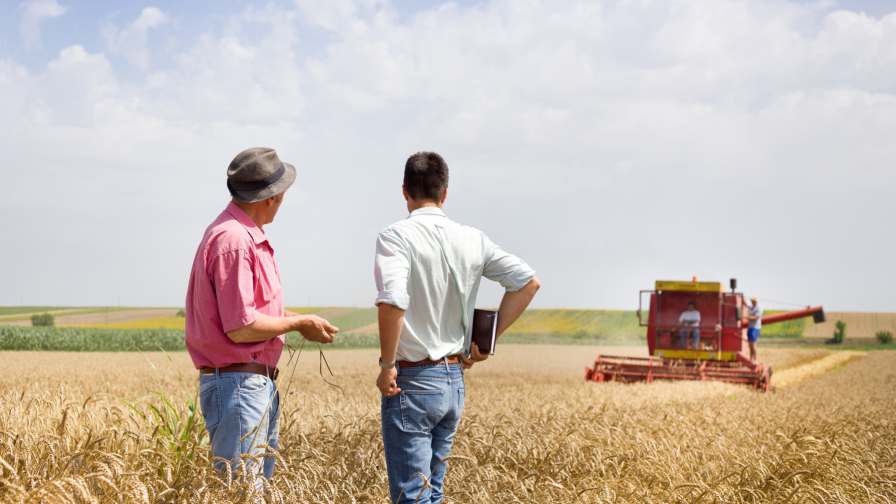
In reality, however, adoption is strongest in systems where fertilizer cost, yield sensitivity, and environmental stress converge. Row crops, such as corn, soybeans, cotton, and wheat, represent the largest volume market driven by increasing pressure to control ag input costs and the volatility of commodity fertilizer costs.


Demand for these products is higher in specialty crops, such as tree fruits, vegetables, and orchards, where premium quality, gains in nutrient density, and stress tolerance justify input costs, with additional spillover into turf and other nontraditional agricultural systems where consistent stress mitigation and water use efficiency are critical.
From a regional demand pattern perspective, adoption of metabolite-based products reflects both regulatory and agronomic drivers. For example, South Asia and Latin America are experiencing rapid growth due to nutrient-depleted soils, frequent abiotic stress, and strong crop responsiveness to these products.
In North America, the demand is also growing, but mainly due to nutrient stewardship regulations and pressure to improve fertilizer product return on investment. In EU regions, the formal recognition of biostimulants through regulation has accelerated adoption where NUE benefits are clearly substantiated.
Obstacles to Adoption
There are several key challenges that limit the broader adoption of these types of products. First, inconsistent field performance makes it difficult to extrapolate results from regional field trials to diverse agro-ecosystems, as product performance can be highly context dependent, with efficacy varying across environments and soil systems.
Secondly, many products suffer from unclear or poorly articulated modes of action, which can undermine grower confidence and complicate regulatory review.
Last, the fragmented global regulations on these types of products, with inconsistent definitions and allowable claims, create barriers to product development and commercialization.
To overcome these obstacles, companies can implement mitigation strategies centered on improving scientific clarity and application precision. Positioning metabolite-based products around science-driven physiological mechanisms helps move beyond generic yield claims.
Finally, omics-supported validation is increasingly recognized as essential for next-generation metabolite platforms, providing mechanistic credibility and more consistent field performance.
What’s Ahead
The metabolite-based segment can grow to be the main driver of the next generation of biostimulant products, particularly in the following areas:
- Precision metabolite design to target specific phenotype events informed by metabolomics rather than empirical blends.
- Integration with digital agronomy and AI tools, linking stress forecasting, nutrient models, and metabolite timing.
- Convergence of NUE and climate resilience, positioning metabolites as efficiency tools under constraint rather than yield boosters alone.
- Metabolite platforms that move toward custom fermentation metabolite-based products with greater formulation robustness, clearer physiological narratives, and expanded use in stress-limited systems.
Read more articles like this one in AgriBusiness Global’s 2026 Biologicals Deep Dive.
Get The Newsletter Today!