Satellite Intelligence, Risk, and the Future of Ag Decision-Making
 8 April 2026
 As climate volatility, geopolitical tensions, and input disruptions reshape agriculture, satellite-driven crop intelligence is emerging as a critical tool beyond the farm gate. Once primarily used for precision agriculture, these insights are now informing national policy, global trade, and food security strategies.
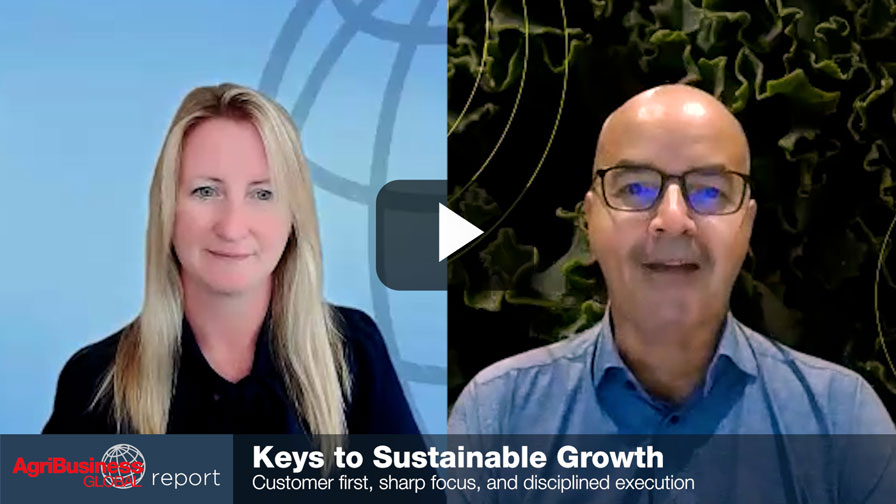
In an interview with AgriBusiness Global, Andrew Pylypchuk, Global Director of Business Development, Agriculture, at EarthDaily, explains how advances in Earth observation, AI-ready data, and real-time monitoring are helping agribusiness leaders better manage risk, improve timing, and make more informed decisions across the value chain.
AgriBusiness Global: Satellite-based crop intelligence has traditionally been positioned as a farm-level or precision ag tool. What’s driving its evolution into a policy and food security decision-making resource at the national or global level?
Andrew Pylypchuk: Remote sensing technology has advanced significantly over the past decade, particularly with government-backed programs like Europe’s Sentinel missions. These have expanded both the scale and consistency of available data, not just for ag tech companies, but also for governments and agribusinesses.
As more regions contribute to space-based observation, we now have a much clearer global view of crop development. That allows us to compare conditions across North America, South America, Europe, and Australia, helping identify supply pressures and inform broader market and policy decisions — while still delivering value back at the farm level.


ABG: There’s no shortage of Earth observation data, but adoption at the institutional level still lags. What are the biggest barriers preventing governments and agribusinesses from translating satellite insights into real-time decisions?
AP: One of the biggest barriers is consistency across datasets. While we’ve had strong contributions from NASA, Europe, and private missions, those datasets haven’t always aligned well enough to support reliable, large-scale decision-making.
Our focus is on cross-calibrating and normalizing this data to create consistent, machine-readable, AI-ready datasets. Once that foundation is in place, organizations can better understand crop growth patterns and extract insights — not just at the field level, but across national and global landscapes.
ABG: With fertilizer disruptions, geopolitical instability, and climate variability all converging, how should agribusiness leaders rethink risk management heading into the 2026 growing season and beyond?
AP: There are multiple layers of risk right now: input costs, commodity prices, weather variability, and geopolitical pressures. Agribusiness leaders and farmers alike need to balance all of these while understanding how they impact their local markets.
Risk management ultimately comes down to assessing exposure, securing the right insurance or coverage, and maintaining flexibility in operations. Farmers have had a tough couple of years, particularly in North America, so there’s a growing need for better tools and insights to help navigate uncertainty and maintain profitability.
ABG: As upstream intelligence improves, how do you see ag retailers, distributors, and input suppliers evolving their role, particularly in helping farmers act on predictive insights rather than reactive information?
AP: Timing is everything. These technologies help stakeholders understand when to act — whether it’s applying a fungicide or engaging with a grower on a specific issue.
This goes beyond precision ag at the field level. Retailers and cooperatives can use these insights to better align product recommendations and services with real-time conditions. It also supports programs like guaranteed outcomes, where performance can now be measured more accurately. Ultimately, it’s about improving operational efficiency across the value chain.
ABG: As more players enter the Earth observation and ag analytics space, how important is standardization, transparency, and data validation in ensuring trust across the value chain?
AP: Trust is critical. With new technologies, stakeholders need to know the data is reliable and actionable.
Building that trust comes from validation — working with farmers, institutions, and academia to prove value. One of the strengths of satellite-based tools is their ability to provide unbiased, objective measurements. That helps inform decisions around inputs, fertilizer use, and resource allocation.
AI will also play a role in making these insights easier to interpret, which should further support adoption.
ABG: To what extent could real-time crop monitoring reshape commodity markets, pricing volatility, and global trade flows if early warning systems become widely adopted?
AP: Greater transparency will likely lead to more stability in the market. With better visibility into production at local, regional, and global levels, stakeholders can make more informed decisions about supply and demand.
That said, there are still factors we can’t predict — geopolitics and extreme weather being the biggest ones. While these tools improve forecasting and awareness, they don’t eliminate uncertainty. What they do is help the industry adapt more effectively to changing conditions.
Get The Newsletter Today!