Exports: Worth The Toll
 19 December 2008
 | 2003 | 2004 | 2005 | 2006 | ||
| United States | 0.2 | 5.5 | 3.4 | 2.9 | |
| Western Europe | 2.1 | 2.1 | 2.8 | 3.2 | |
|
Asia/Pacific |
7.3 | 6.2 | 5.7 | 6.0 | |
| Rest Of World | 3.4 | 4.7 | 4.1 | 4.1 | |
|
The chart shows the percent change in chemical production volume for various industrial regions. Growth in Asia dominates the US and Europe. |
|||||
Manufactures small and large, foreign and domestic, all have the same goal: going global. Multinational companies (MNCs) have the advantage of being large enough to expand into several countries, where they can enter into toll processing with foreign manufacturers unwilling or unable to take on the issues involved with international direct marketing.
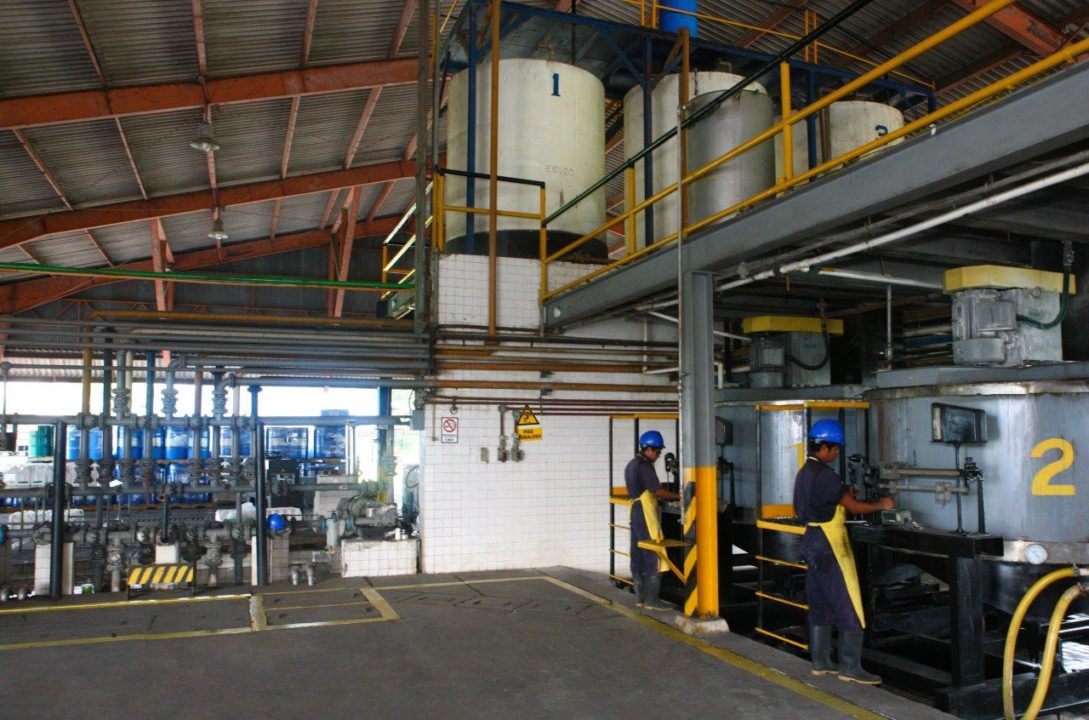
Toll manufacturing is a type of contract manufacturing; the generic manufacturer supplies the ingredients to the MNC, which then engages in mass production and export of the company’s product. For MNCs, toll processing has advantages: It’s treated as a manufacturing activity, and both goods and profits may be moved from country to country without changing legal ownership. This is beneficial, as labor and equipment costs in countries such as India, China, and many parts of Southeast Asia are much less expensive than in the US. And with natural gas costs higher in the US than almost anywhere else in the world, for some US businesses, staying alive means manufacturing overseas.
With more employees, better research abilities and resources, and more facilities in more locations, MNCs usually find it easier to make inroads to foreign markets, while smaller players must find their own niches.



Smaller Players’ Success Strategies
Exporters must face similar issues as those handled in the US, such as brand identification and price competition; however, marketing internationally brings new complications, as well.
According to Kim Klatt of American Chemet Corp, “registration and distribution are key.” These are often the main obstacles manufacturers face when it comes to exporting.
Each country or region has its own set of regulations that must be met before product can be brought in and sold. For example, REACH (Registration, Evaluation and Authorisation of CHemicals) will go into effect on June 1, 2007 for the EU, requiring registration for all substances produced or imported in quantities over 1 tonne per year. Meanwhile, Brazil has a registration system that is, as AllierBrasil Consulting & Advisory Co.’s Flavio Hirata says, “very complex … (with) elevated costs, and lots of paperwork.” Various parts of Asia each have their own regulatory legislation, as well.
Belco Resources resolved these problems by utilizing their overseas partners: “Local issues concerning regulations and registration are generally managed locally by our sales agents and distributors with our full support,” the company’s Jim Wendling says. Meanwhile, Klatt advises that overcoming these obstacles took “Persistence, investigation of the market, and working with government agencies.”
One agency’s program that American Chemet found useful was the US Department of Commerce’s (USDOC) Gold Key service. This service, for which companies are charged a fee that varies according to the program, will assign a trade specialist to perform extensive research and find potential business partners in the country or region of the company’s choice. The company will then choose those with which it wishes to meet, and USDOC will set up meetings, provide interpreters, and assist with travel and accommodations. Afterwards, USDOC’s trade specialist will discuss the interview and advise follow-up plans.
Companies can also let overseas partners come to them: Advertising in print, in person at international trade shows and conferences, and via the internet are great ways for a manufacturer to get its name out. Wendling cites brand identification as a problem, even though Belco has been in business for over 30 years and is very well-known in key areas such as Latin America.
“The players change regularly with consolidation and new companies being created and others leaving the market, so we are constantly marketing our product lines,” Wendling says. Belco’s method? “Regular and consistent direct marketing and the use of media such as Farm Chemicals International, trade shows, and conferences.”
Additionally, having a distributor or sales agent in the area can be one of the most effective ways to bring product into that region; coupled with advertising, a company can soon build a name for itself simply through name recognition, repeat business, and customer referrals. Wendling advises that most of their partners in primary markets “came through years of being in the business, or from referrals from companies or individuals who know us and how we operate.” Belco Resources does not actively search for new sales agents, he says, “and we are selective about our partnerships/distributors because of our interest in long-term results.”
Companies take different paths to prosperity; depending upon the size of a business, its resources, and its leaders’ forward thinking and willingness to invest and try new things, a US company can find its niche and enjoy success. However, surprises can await a company once its product reaches US or foreign customs and it discovers that it needs a certain license, a pre-shipment inspection, a stamped document from a foreign consulate, or any number of documents that may prevent the shipment from leaving the US port or entering the foreign one. A ship in a foreign port stores cargo until the proper documentation, payment, or permission is received, billing astronomical warehousing fees to the US company while it waits.
Most problems are foreseeable and avoidable; a company only needs to educate itself and research before it starts. Finding international companies to work with can be accomplished through agencies designed to help US businesses; face-to-face meetings at trade events or industry conferences; or through distributors or agents in-country. Wendling advises that “a consistent, steady approach to developing the market through local sales agents who share the same philosophy … is the best way to ensure success in most markets.” He also recommends “using a sound and practical plan that focuses on long-term results,” and “staying at the leading edge of product design and delivery.” Equally important, as Klatt says, is to not “try to do too many markets too quickly — focus, and remain persistent.”
Get The Newsletter Today!