Showcasing the 2026 AgriBusiness Global Visionary Award Winners (Part 4)
 20 May 2026
 As part of the AgriBusiness Global 2026 Visionary Awards, ABG asked 2026’s 20 winners about challenges they’ve faced and overcome, how they’re using technology at their companies, and more.
 AgriBusiness Global Trade Summit: Where Markets Connect
Join global crop protection and plant health leaders in Las Vegas in August for sourcing, networking, and market insights. Learn more >>
The honorees, who exemplify foresight, flexibility, and innovation, were chosen by the AgriBusiness Global Advisory Board and an internal team at Meister Media Worldwide.
Over the next month, AgriBusiness Global will feature five winners each week. In this part, we highlight Deepak Shah, Founder & Chairman, SML Group; R. K. Shetty, Co-founder & Managing Director, Heranba Industries Ltd.; Steve Sibulkin, CEO, BioLumic; Yaqi Yan, CEO, Sichuan Guoguang Agrochemical Co., Ltd.; and Zhu Xianding (David Zhu), Founder & Chairman, Iprochem Group.
 Deepak Shah
Founder & Chairman
SML Group



ABG: What trends are you noticing in the market, and how are you navigating those trends?
Shah: One of the most significant trends shaping our industry is the growing emphasis on sustainability and input efficiency. Farmers are increasingly expected to produce more while using fewer resources, and this is driving interest in solutions that improve the efficiency of both crop protection and plant nutrition inputs. In this context, technologies that help optimize nutrient use and reduce dependency on conventional fertilizers will become increasingly important.
A second trend relates to the evolving geopolitical environment and its impact on global fertilizer supply chains. In the coming years, ensuring reliable and efficient plant nutrition will become even more critical. This creates an opportunity for companies to focus on innovations that help farmers achieve better productivity with lower fertilizer usage.
The third important trend is the increasing focus on safety and green chemistry in crop protection. Markets such as Europe are already moving toward stricter regulatory frameworks, and similar expectations are emerging in other regions. This will lead to greater demand for safer formulations, lower-dose products, and solutions based on green chemistry, biologicals, and integrated crop management approaches.
TIPS
To navigate these trends successfully, companies need to stay committed to innovation while remaining closely connected to farmers and market realities. Organizations that combine strong technology capabilities with practical field solutions will be better positioned to support the future of agriculture.
ABG: How have you turned challenges into opportunities throughout your career? How are you using technology at your company?
Shah: Over the past decade, the crop protection industry has seen increasing regulatory scrutiny, resistance management challenges, and a growing expectation for safer and more sustainable agricultural solutions. At SML, we have always believed that such challenges should encourage innovation rather than slow it down.
One of our core strengths has been formulation science. By investing consistently in technology and product development, we have been able to create solutions that improve efficiency while also addressing safety and sustainability concerns.
We have also invested in technologies such as micronization, which has enabled us to develop advanced plant nutrition solutions. Alongside this, we continue to strengthen our intellectual property portfolio and introduce new products based on these technology platforms.
Another important shift we see is the growing importance of plant nutrition and sustainable farming systems. As agriculture evolves, there is increasing focus on improving nutrient efficiency and soil health. In line with this, we are expanding our work in crop nutrition, biological solutions, and technologies that support regenerative and sustainable agriculture.
At the same time, we are steadily expanding our global footprint and strengthening our engagement with markets, including our B2C initiative through our Brazil subsidiary. We also believe that collaboration will play a key role in the future of agriculture, and we continue to work with research institutions and industry partners to develop practical solutions for farmers.
 R. K. Shetty
Co-founder & Managing Director
Heranba Industries Ltd.
ABG: What trends are you noticing in the market, and how are you navigating those trends?
Shetty: The crop protection industry in 2026 is being shaped by several important trends. First, there is a growing emphasis on crop nutrition products, driven by rising global food demand and the need for higher agricultural productivity. This includes increased adoption of advanced fertilizers and biostimulants, ensuring the right source, rate, time, and place for nutrient application.
Second, data analytics is emerging as a powerful growth driver. Beyond improving efficiency at scale, modern agricultural technology is generating valuable data and insights that help optimize everyday operations and decision-making.
Third, smart farming continues to gain momentum. By leveraging information technology to monitor and respond to variations in crops, soil, and weather, farmers can manage their land with greater precision and intelligence. The availability of detailed data — from soil mapping to yield patterns — offers unprecedented visibility into farm operations.
TIPS
To navigate these trends successfully, companies should focus on two key strategies. First, invest in digital capabilities and data-driven tools to stay competitive and deliver value to farmers.
Second, prioritize sustainability and innovation, ensuring that products and practices align with evolving environmental standards and global agricultural needs.
ABG: How have you turned challenges into opportunities throughout your career? How are you using technology at your company?
Shetty: Over the past decade, our company has strategically leveraged technology to drive transformation and unlock new opportunities. A key shift has been toward the formulation business, where automation has become essential. To support this, we have invested in automated filling and packaging lines, significantly reducing reliance on manual labor while improving efficiency and consistency.
At the same time, we have implemented technological upgrades across our production facilities to address environmental challenges. These improvements not only ensure compliance with evolving regulations but also support more sustainable manufacturing practices.
In addition, we have expanded our portfolio by introducing new molecules, enabling us to enter regulated international markets. We have also strengthened backward integration by manufacturing key raw materials in-house, reducing dependency on external suppliers and enhancing supply chain resilience.
 Steve Sibulkin
CEO
BioLumic
ABG: What trends are you noticing in the market, and how are you navigating those trends?
Sibulkin: Agriculture is at an inflection point where legacy tools and timelines no longer match the scale of the challenges ahead. Three trends stand out in 2026. First is the growing importance of integrated, multitrait systems — where yield, resilience, and input efficiency are delivered together. Many innovations have made real progress on resilience, though often with tradeoffs, so there’s increasing focus on approaches that can be layered together without introducing yield penalties.
Second is the expansion of where innovation can be applied. Historically, advanced traits have been concentrated in a few major crops and markets because of cost, complexity, and regulatory encumbrances. That’s changing, with faster, lower-cost approaches making it possible to bring performance gains to a much broader set of crops and geographies.
Third is the rise of approaches that work with plant systems more dynamically — working with, and in some cases going beyond, adding chemistry or modifying DNA, toward activating and coordinating biology that already exists. We think this is a meaningful shift in how innovation gets delivered.
Approaches that scale through seed production and leverage the plant’s own systems can move faster and more efficiently and ultimately unlock a broader set of outcomes than traditional methods alone.
TIPS
First, build for complementarity — solutions that integrate with breeding and biotech pipelines will scale far faster than anything trying to replace them.
Second, maintain discipline around a few core imperatives: time, risk, real farm-level value, shared upside, scalability, and ease of adoption. That’s not really a tip — it’s a daily reminder, and one that’s easy to lose during product design and validation. Miss any one of these and you fail — or at best, underdeliver.
Over the years, I’ve found that reducing complexity for farmers is what most often gets lost — not just in the product itself, but in how it fits with everything else farmers are already managing. Do the hard work so the farmer doesn’t have to.
ABG: How have you turned challenges into opportunities throughout your career? How are you using technology at your company?
Sibulkin: We start with the problem, not the technology. In agriculture, that means farmers, our partners — seed companies and dairies — and the land itself. If something isn’t easy to adopt, doesn’t scale, or doesn’t solve a real problem, it won’t last. Simplicity often beats optimization, and fast, practical testing matters more than being theoretically perfect. Aligning economics across the system — so all parties benefit — is what really unlocks change. Agriculture is an incredible space to innovate, but it runs on seasonal cycles, not software timelines — you have to design for that reality, not fight it.
That thinking defines BioLumic. Our platform uses light signals to instruct and program plants — activating and coordinating genetic expression already present in the plant, creating new traits that improve yield, composition, and resilience — without rebreeding, without regulatory delay, and without requiring farmers to switch varieties. It gives our partners a faster, lower-risk way to get more out of the genetics they already trust, often at ~5% of the time and cost of traditional trait development. We can work across all major seed crops — today focusing on corn, soybeans, rice, and pasture — working alongside leading partners to extend the value of their best genetics. In practice, that means driving higher yields in corn, enabling rice cultivation with less reliance on flooded paddies, and increasing energy and fat in pasture, reducing methane emissions while improving milk solids. Ultimately, if we’re not reducing risk and delivering value to farmers faster, we’re not doing our job.
 Yaqi Yan
CEO
Sichuan Guoguang Agrochemical Co., Ltd.
ABG: What trends are you noticing in the market, and how are you navigating those trends?
Yan: A first trend to be aware of is that climate-driven production risks will intensify. Climate change is increasingly disrupting agricultural production, with more frequent droughts, floods, and heat waves causing yield instability and crop failures. Enhancing crop resilience and ensuring yield stability will become critical priorities.
There is also a shift toward proactive crop regulation. The industry is transitioning from reactive crop protection to proactive crop performance management. Growers are adopting plant growth regulators and specialized fertilizers not only to prevent losses but to actively enhance crop development, quality, and productivity.
Lastly, there is an acceleration of smart agriculture. Digital and intelligent technologies are transforming farming practices. AI-powered diagnostics enable early pest and disease detection, while precision nutrient management improves input efficiency and sustainability, driving a more scientific approach to agriculture.
TIPS
A first tip is to integrate AI with proprietary agronomic data. Additionally, AI-driven climate forecasting allows proactive strategies to mitigate environmental stress.
A second tip is to transition to holistic crop health management. Agricultural management must evolve beyond reliance on pest and disease control toward a holistic crop health approach. By combining crop protection, targeted regulation, and balanced nutrition, this integrated approach ensures consistent high-quality yields while strengthening long-term agricultural sustainability.
ABG: How have you turned challenges into opportunities throughout your career? How are you using technology at your company?
Yan: We have consistently prioritized strategic investment in R&D to advance innovative biological plant growth regulator (PGR) formulations and specialized fertilizers — two core pillars that drive improvements in crop yield and quality. A key scientific principle underlying PGR application is its synergy with balanced crop nutrition. Unlike single-function agricultural inputs, PGR functions as a plant’s “growth regulation system,” enabling precise modulation of physiological processes across critical growth stages. When applied strategically, a PGR can promote uniform flowering to increase fruit set, enhance nutrient accumulation to improve coloration and internal quality, and reduce preharvest fruit drop to secure final yields.
Supported by our Crop Technology Regulation and Research Institute, we have conducted extensive global field trials and developed data-driven crop management models. These innovations have delivered measurable breakthroughs in both yield and quality across major staple and high-value crops, including grains, soybeans, onions, and tomatoes — effectively overcoming environmental constraints and unlocking crop productivity potential. **Extensive field validations have proven that our solutions can achieve yield increases of more than 30% while simultaneously enhancing crop quality.**
Over the past decade, traditional crop protection tools — such as insecticides, fungicides, and herbicides — have reached a saturation point, limiting their ability to generate incremental value. In response, we have strategically evolved from addressing isolated crop issues to delivering full-cycle, systematic crop care solutions. Rather than replacing conventional crop protection, we enhance it through integrated programs combining PGR and tailored nutrition strategies. By aligning interventions with key developmental stages — such as flowering, fruiting, and maturation — we enable precise growth regulation, optimize resource efficiency, and deliver sustainable improvements in both yield and crop quality. This integrated model represents a transformative pathway for modern agriculture.
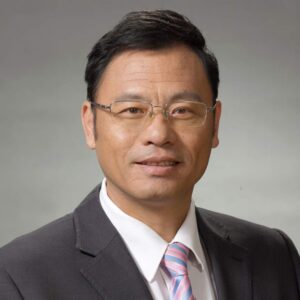 Zhu Xianding (David Zhu)
Founder & Chairman
Iprochem Group
ABG: What trends are you noticing in the market, and how are you navigating those trends?
Zhu: Green and low-carbon development has become a mandatory standard, with biopesticides and green control fully replacing traditional highly toxic pesticides. Global carbon peaking and carbon neutrality goals, together with stricter environmental regulations worldwide, as well as the full implementation of China’s “one product one registration” policy, have stabilized the total volume of chemical pesticide use and accelerated the phase-out of highly toxic and high-residue pesticides.
The coverage rate of green plant protection technologies such as biopesticides (including Bacillus thuringiensis, Bacillus subtilis), beneficial insects, and pheromone trapping is rising rapidly. Market demand is shifting from “chemical-dominated” to “biological + chemical synergistic,” while low-carbon, eco-friendly and sustainable performance has become the bottom line for product market access.
There is also a deep integration of digital intelligence, shifting plant protection from “experience-based control” to “precision data-driven.” AI, the internet of things, Beidou Navigation, and drone technologies are fully penetrating the plant protection sector. Plant protection drones equipped with multispectral sensors enable accurate pest identification and variable-rate pesticide application. Field sensors monitor temperature, humidity and soil conditions in real time, working with AI models to achieve early pest and disease warning. Outdated conventional application methods will be rapidly phased out.
Finally, (there is) intensified global competition, with full-industry-chain technology and compliance capabilities as a matter of survival. Against the backdrop of the global food security crisis, countries are imposing increasingly stringent requirements on plant protection product registration, quality standards, and traceability systems.
Meanwhile, Chinese agrochemical enterprises are accelerating their globalization, leading to fierce competition between international giants and local players. Pure trading and low-tech enterprises are gradually being eliminated due to lack of registration, production, and technical service capacity. Only enterprises with full-industry-chain advantages covering R&D, production, global registration, and technical services, and capable of adapting to policies and technical standards in different countries, can gain a foothold in global competition.
TIPS
Focus on the dual technology tracks of “Green + Smart” and build a full-link technological innovation system. Increase R&D investment in biopesticides, microbial inoculants, new plant growth regulators, and low-toxicity chemical pesticides. Cooperate with universities and research institutes to overcome technical bottlenecks in the large-scale production and stability of biopesticides.
Deploy digital technologies including AI-powered pest identification and precision pesticide application. Combine intelligent equipment with products and services to provide growers with full-process solutions covering “precision monitoring + intelligent prescriptions + scientific application + efficacy evaluation.” Transform from a single product supplier to a crop health technology service provider to enhance added value and competitiveness.
Build “global compliance + full industry chain” capabilities to forge a competitive moat in globalization. Strengthen global compliance layout: Conduct in-depth research on pesticide registration, environmental, and tariff policies in various countries in advance. Establish a dedicated global registration team and arrange product registrations ahead of schedule for key markets. Build a global operation system featuring “compliance first, quality foremost” to break through trade and technical barriers.
Optimize full-industry-chain layout and abandon the single-segment profit model and integrate resources across R&D, production, testing, trade, and technical services.
ABG: How have you turned challenges into opportunities throughout your career? How are you using technology at your company?
Zhu: Technology has been the core engine enabling IPROCHEM to grow from a single trading company into a full-industry-chain agrochemical group over the past two decades, especially in the last decade. We have always adhered to the development philosophy of “Building a Foundation with Technology, Breaking Through via Innovation.”
1. Building a Full-Link Technology R&D System to Strengthen Core Competitiveness
Since its inception, IPROCHEM has been well aware that without independent technologies, an enterprise can only linger at the low end of the industrial chain.
In 2011, we established a joint venture with DVA to set up the Shanghai IPRO-DVA Testing & Technology Center, creating a world-class R&D and testing platform with dual CNAS/CMA certifications. Equipped with cutting-edge equipment, its testing capabilities cover more than 200 pesticides and five major categories of fertilizers, ensuring products comply with international standards such as CIPAC and FAO. This has laid a solid foundation for our quality control.
In 2015, we founded IPROCHEM ENVIRONMENTAL TECHNOLOGY CO., LTD. Leveraging the strengths of universities, we have devoted ourselves to technologies including microbial treatment, TK concentration and purification, and waste salt recovery. These technologies not only address key environmental pain points in agrochemical production but also extend to soil remediation and black and odorous water treatment, forming a dual-technology track of “Agrochemicals + Environmental Protection” that has reached an advanced level in China.
In 2023, our 10-hectare manufacturing base in Hubei Province was officially put into operation. Adopting fully automatic production lines integrated with advanced synthesis and formulation technologies, it focuses on the R&D and production of core technical materials such as chlorantraniliprole and dinotefuran. This has realized a closed technology loop from R&D to production, transforming IPROCHEM from a trader into a manufacturer.
2. Empowering Products and Services with Technology to Create Differentiated Advantages
On the product side, we focus on crop health technologies and have developed and promoted the “Kangleshou” series of yield-increasing products. By regulating crop growth mechanisms, we achieve higher yields and improved quality. This series has been replicated from China to overseas markets and will be vigorously promoted this year, enabling China’s plant protection technologies to be efficiently implemented worldwide.
Over the past decade, the agrochemical industry has faced multiple challenges, including rising international trade barriers, stricter environmental policies, shrinking markets for traditional pesticides, and the global food security crisis. We have taken the initiative to break through in every crisis:
1. Responding to Trade Frictions: Going Global with Technology to Build Global Barriers
Over the past decade, international trade protectionism has risen, with escalating tariff and registration barriers. We abandoned the traditional model of “high volume at low prices” and broke through with independent technology plus global registration. We increased investment in overseas registrations and obtained product registration certificates in more than 50 countries; we developed customized products tailored to the climate, pest and disease characteristics of different regions. These efforts have enabled IPROCHEM’s products to break through barriers and gain a firm foothold in more than 100 countries worldwide.
2. Responding to Market Competition: Technological Innovation to Open Up Incremental Space
The traditional pesticide market suffers from severe homogenization and thin profit margins. We have made early arrangements in emerging technology sectors such as plant growth regulators and microbial fertilizers.
Leveraging university research teams, we developed the new Kangleshou serie plant growth regulator. Meanwhile, we integrate AI with plant protection to explore precision pesticide application and intelligent early warning schemes for pests and diseases, shifting from “selling products” to “selling technical solutions” and creating a blue-ocean market out of the red-ocean competition.
Get The Newsletter Today!